
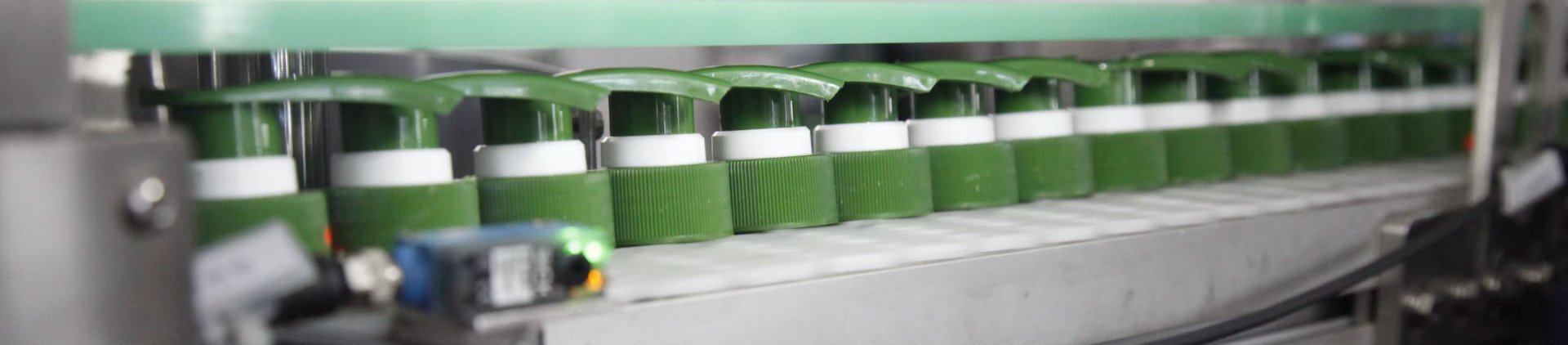
A shampoo filling machine for bottles should not be selected from fill volume alone. A line may need to run 250 ml, 500 ml and 1 L formats, yet the real compatibility questions are bottle height, neck opening, shoulder geometry, container stability, nozzle clearance and what must change each time production switches from one format to another.
The practical buying method is to treat each bottle as a separate production format, record the actual packaging data, and require a sample run that proves positioning, filling and changeover with the bottles and shampoo intended for production.
1. Capacity Is Only the Starting Point
The purchasing question is not simply, “Can the filler dispense 250 ml, 500 ml and 1 L?” The more useful question is, “Can the proposed machine run our actual bottles with repeatable positioning, suitable nozzle clearance and a practical format changeover?”
Two containers with the same nominal volume can have very different heights, bases, neck locations and shoulders. A short wide 250 ml shampoo bottle may behave differently from a tall narrow bottle with the same nominal capacity. A 500 ml shampoo bottle can also require different guide contact depending on whether the body is round, oval, rectangular or irregular. A 1 L format adds another consideration: the filled bottle may have a different center of gravity and therefore different stability during stopping and discharge.
|
250 ml Check small-format control Review the neck opening, body support and nozzle approach. Smaller does not automatically mean easier to handle. |
500 ml Check the actual body geometry Do not assume the middle capacity can share settings with the other formats. Guide positions depend on the real bottle. |
1 L Check filled-container stability Watch the bottle after filling, not only when empty. Tall or narrow packages may need different support conditions. |
For factories comparing several formats on one line, the relevant equipment family is Runtech’s daily chemical filling machines. The category is the logical starting point; the final configuration should still be confirmed from the actual bottle and sample test.
2. Record These Bottle Dimensions Before Comparing Machines
Send a bottle-format record for every production SKU. “250–1000 ml” is not enough information for a supplier to determine where the package will sit or how the filling head can access its neck.
| Bottle height Defines the vertical relationship between the conveyor, bottle mouth and filling head. |
Body width and depth Shows where guide rails or bottle-control parts can contact the package. |
| Base footprint Helps evaluate standing stability during stopping, filling and discharge. |
Neck outside diameter and opening The usable opening matters separately from the outside neck diameter. |
| Shoulder shape and neck position Irregular or steep shoulders can reduce useful nozzle clearance. |
Target fill volume Record the production fill target separately from nominal bottle capacity. |
| Bottle stiffness Flexible packages may react differently to guide pressure and accumulation. |
Representative shampoo Include the expected viscosity range and meaningful formula variation. |
Avoid assuming the endpoints prove the middle. A successful 250 ml test and a successful 1 L test do not automatically prove that the 500 ml package will position correctly.
3. Bottle Height, Neck Position and Stability Determine the Real Positioning Requirement
Reliable bottle positioning means that the neck arrives beneath the filling head in a repeatable location. Keeping a bottle somewhere between two guide rails is not the same thing.
Bottle height changes the vertical relationship between the bottle mouth and filling head. Body width determines where the guides can support the package. Neck position determines where the opening arrives. Shoulder geometry can reduce the available space around the nozzle. The combined effect matters more than any single dimension.
| 01 Base |
02 Body guide |
03 Neck |
04 Nozzle alignment |
05 Filled stability |
06 Discharge |
Center of gravity deserves attention during a live run. An empty bottle can travel cleanly and still become less stable after filling. Watch the container when it stops, while product enters, when the guide releases it and when the conveyor accelerates again.
|
Good evidence of stable positioning The bottle enters without repeated operator correction, stops in a consistent location, remains upright during filling and leaves without contacting adjacent containers or the filling head. |
Evidence that more work is needed Operators repeatedly push bottles into place, neck position changes from cycle to cycle, guides distort a flexible body or a filled bottle leans during release or accumulation. |
This is why a real bottle matters more than a generic “round bottle” or “square bottle” description. A molded handle, offset neck, narrow base or strongly tapered shoulder can change the mechanical problem even when the fill volume stays the same.
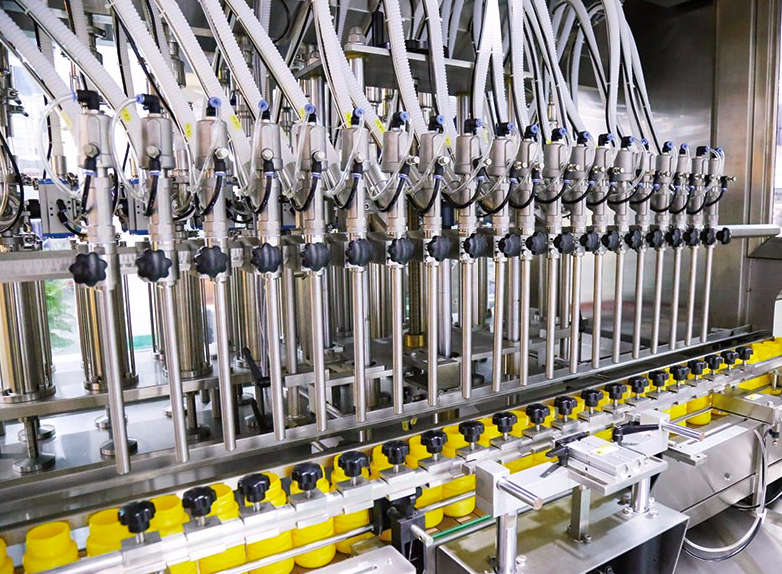
A real sample should be judged at the filling station, where guide position, neck location and nozzle access work together.
4. Fill-Volume Range Is Only the Start of Changeover Validation
A quoted fill range answers a metering question: can the filling system be configured to deliver the required quantity? It does not answer the format-change question: what must be adjusted when production moves from one bottle to another, and can the accepted setup be reproduced consistently?
|
A weak acceptance test The machine is prepared for 500 ml before the test begins, a few bottles are filled successfully, and only the final result is recorded. |
A more useful acceptance test Begin from the previous bottle format, perform the actual change, record every mechanical and control adjustment, fill representative product and then record the accepted settings. |
|
1 Establish Record the current bottle, product and settings. |
2 Change Perform the real format change instead of starting pre-adjusted. |
3 Run Use actual shampoo and the actual production bottle. |
4 Record Save the accepted settings and observed results. |
Ask what changes when moving from 250 ml to 500 ml and then to 1 L. Depending on the proposed machine design, this may include bottle-guide position, filling-head height, nozzle spacing, bottle stops, positioning parts and filling parameters. Do not assume every adjustment is stored electronically.
The Runtech product page for the Fully Automatic Daily Chemical Filling Machine states that the machine is intended for daily chemical products including shampoo and provides multi-group parameter storage; the actual bottle-format adjustments and final compatibility still need confirmation during project testing.
5. Check Nozzle Entry, Following Movement and Neck Clearance
The bottle neck is where dimensional compatibility becomes visible. A nozzle can appear to fit a drawing and still leave too little practical clearance once normal bottle movement, guide tolerance and package variation are considered.
For every format, inspect the complete sequence: approach, alignment, entry where required, filling position, withdrawal and release. If a nozzle enters or follows the fill level, verify the movement with the short bottle as well as the taller format.
What to observe
Nozzle approach, neck alignment, nozzle clearance, contact with shoulder or neck, withdrawal and whether the bottle needs manual repositioning before filling.
Repeated operator intervention is useful evidence. If a person must push the bottle into position before every cycle, the test is not yet proving automatic positioning.
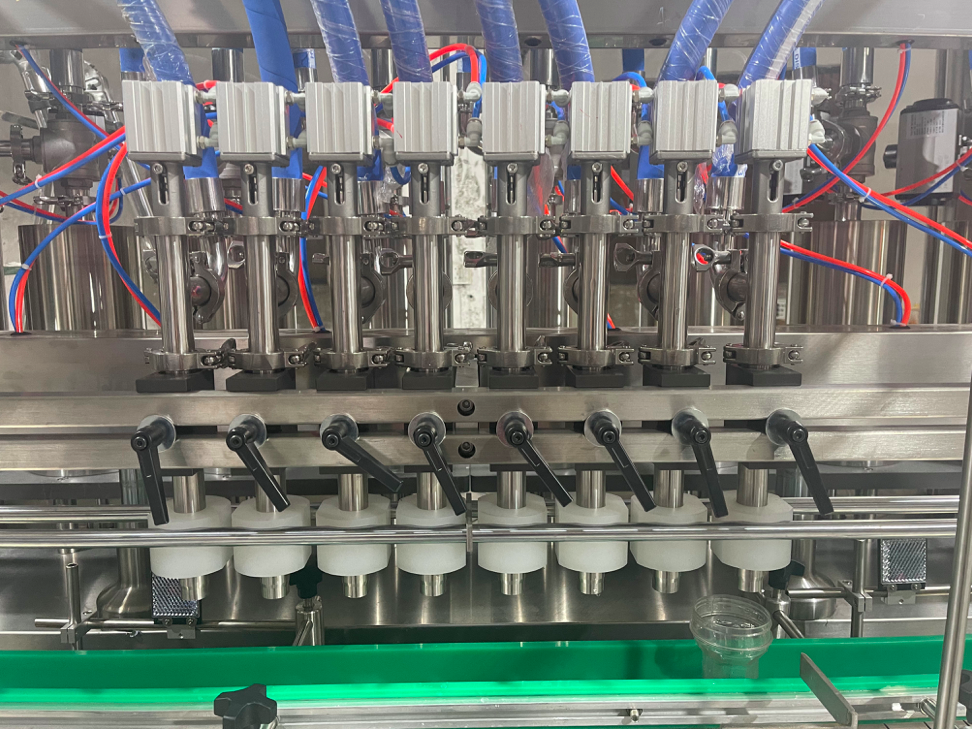
Nozzle clearance should be judged against the actual neck and shoulder geometry of each production bottle.
6. Keep Viscosity and Foaming as Sample-Test Variables
Shampoo viscosity and foam behavior matter, but this buying guide does not need to become a separate troubleshooting manual. Their role here is simple: they can change the real filling behavior, so the representative product should be included when the bottle formats are tested.
A water test can help screen basic bottle movement and alignment, but it should not be treated as equivalent to a shampoo test when product flow or foaming affects the intended process. Provide the expected viscosity range and include representative formulas if several SKUs behave differently.
The goal is not to prove that one generic setting fills every shampoo. The goal is to confirm that the proposed configuration can be adjusted and validated for the combinations the factory actually intends to run.
7. Three-Format Sample Submission and Acceptance Checklist
The clearest way to learn how to test different shampoo bottle sizes is to submit the formats together and request separate test records. The supplier can then show which settings stay common and which change for each bottle.
|
Send with the inquiry or test
|
Ask the supplier to record
|
Buyer recommendation
Provide the real bottles for every capacity, neck dimensions, representative shampoo, viscosity information and target output. Then ask for a format-by-format record of changeover adjustments and sample-filling results.
For wider line-planning questions involving filling, capping and downstream bottle movement, the Daily Chemical Filling Machine and Capping Line Guide is the natural next reference.
8. Products That Fit the Decision Stage
Products belong here only after the bottle-range questions have been defined. The two Runtech products below are relevant to shampoo and daily chemical packaging, but the final configuration still needs to be matched to the actual bottles, product conditions and production requirement.
|
Fully Automatic Daily Chemical Filling Machine Relevant when the main requirement is automatic daily chemical filling for shampoo and multiple bottle formats. The product page’s technical parameter table lists a 50–1000 ml filling range, 60–320 mm applicable bottle height and 25–110 mm applicable bottle diameter, while the same page states that multiple groups of filling parameters can be stored. Confirm the actual bottle set through sample testing. |
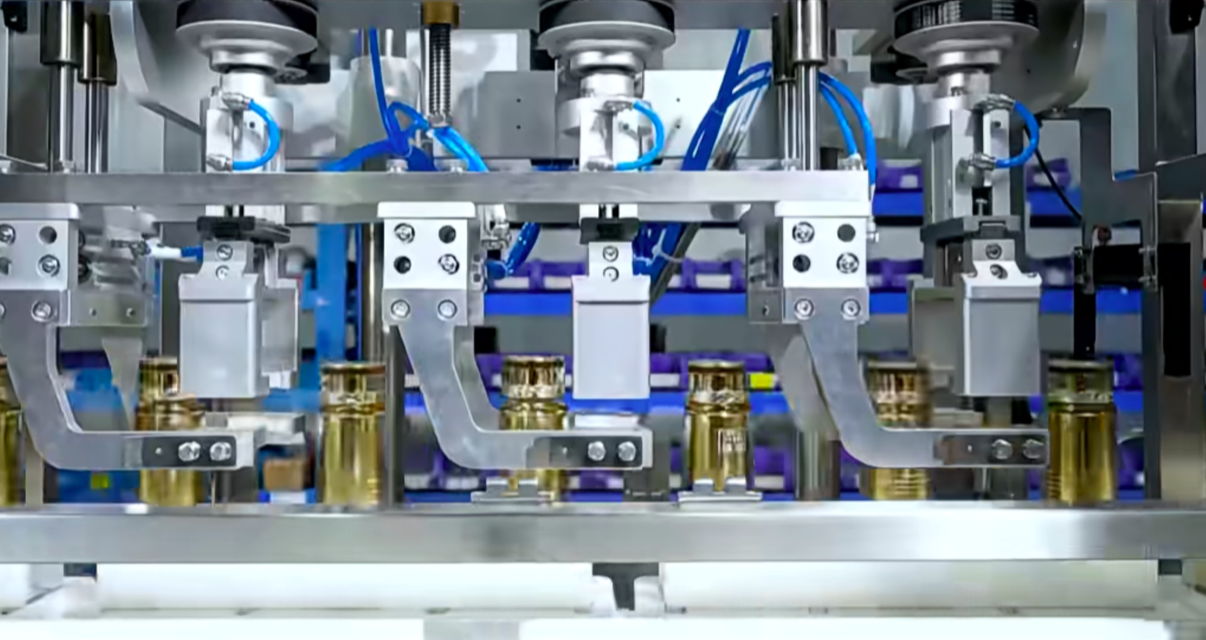
Automatic Cosmetic Filling and Capping Machine | Daily Chemical Bottle Screw Capper Relevant when the project also needs integrated filling and screw capping for shampoo and personal-care bottles. The product page lists multi-specification switching; confirm bottle geometry, neck access and the complete filling/capping workflow with real samples. |
The broader linear filling machine category is the better starting point when the bottle range is still being defined and the project has not yet settled on one machine configuration.
9. Choose the Machine After the Bottle-Range Test Is Defined
The final decision should be based on evidence from every format: the bottle stays stable, its neck arrives in the correct location, nozzle clearance is adequate, the target fill can be validated with representative shampoo, and the required changeover adjustments are understood.
That makes a project discussion much more useful than choosing a 1 litre shampoo filling machine or a multi-format filler only because the catalog lists the right nominal capacity.
Send the Bottle Range Before Finalizing the Configuration
Prepare the 250 ml, 500 ml and 1 L bottles together with bottle dimensions, neck-opening information, representative shampoo, viscosity range and required production output. Ask for a format-by-format review and recorded sample-test results.
|
|
Frequently Asked Questions
Can the same filling machine run 250 ml, 500 ml and 1 L shampoo bottles?
It may be possible, but fill-volume range alone does not confirm compatibility. Each bottle should be checked for height, body geometry, neck opening, positioning, nozzle clearance and stability, followed by a real changeover test.
How many bottle sizes should be tested before ordering?
Test every production format that creates a meaningful change in bottle geometry or filling conditions. For a line intended to run 250 ml, 500 ml and 1 L bottles, each of those three formats should be validated rather than assuming the smallest and largest prove the middle size.
Do bottle drawings eliminate the need to send physical samples?
Drawings are valuable for initial engineering review, but physical bottles allow the supplier to observe guide contact, container stiffness, neck access and filled-bottle stability. Samples are particularly useful when a package has an irregular shoulder or non-round body.
Is a water test enough when buying a shampoo filler?
A water test can screen basic bottle movement and alignment, but it does not reproduce shampoo flow or foam behavior. Final validation should include representative product whenever those characteristics influence the intended filling process.
What should be saved after a successful sample run?
Keep the approved fill settings, bottle-guide positions, nozzle or filling-head position, relevant recipe values, required mechanical adjustments and the acceptance observations for that format. The record should make the next changeover reproducible.
Should bottle compatibility be checked again if the bottle supplier changes?
Recheck the dimensions and handling characteristics whenever the replacement bottle may differ in neck geometry, body profile, base shape, stiffness or manufacturing tolerance. The same nominal capacity does not guarantee identical machine behavior.
Related Reading
|
Liquid Filling Machine Guide for Daily Chemical Products → Use the pillar guide for broader daily chemical liquid-filling selection context. |
Daily Chemical Filling Machine and Capping Line Guide → Continue here when filling, capping and downstream line planning need to be reviewed together. |