
A rotary liquid filling machine does not have one meaningful bottles-per-minute value for every fill size. A larger dose usually needs more filling time. Once that time approaches the available filling dwell, speed may need to come down unless the product can be dosed faster without creating filling or handling problems.
So the useful capacity question is not simply how fast the machine can run, but what output it can maintain for each important combination of fill volume, product and bottle.
|
Volume rises
Filling time usually rises
|
Dwell is the gate
The dose must fit the available time
|
Effective output
Handling may set a lower limit
|
| Quick Answer | Cycle Logic | Product Effect | Handling | Capacity Math | Example | Test Cases | What to Compare | FAQ |
1. Quick Answer: Why Bottles per Minute Changes as Fill Volume Increases
If fill volume increases while the effective dosing rate stays similar, the liquid-transfer part of the cycle takes longer. On a continuous rotary filling system, each bottle has a limited amount of time within the usable filling arc. Once the filling sequence approaches that limit, turret speed has to come down unless the liquid can be transferred faster without creating unacceptable filling behavior.
That is why teams evaluating rotary liquid filling machines should compare capacity by representative SKU rather than relying on one headline BPM for the entire fill range. Fill volume, product behavior, bottle format and target speed all matter.
A better way to compare capacity: look at effective output for representative fill volumes together with the liquid and bottle conditions behind each result.
2. Why Fill Volume Changes the Available Filling Time
For a continuously rotating turret, the basic relationship is simple when one container occupies each filling position: theoretical BPM equals the number of filling positions multiplied by turret rpm. Turret pitch is the angular spacing between positions, approximately 360 degrees divided by the number of stations.
Theoretical BPM = filling positions × turret rpm
Available filling time = (usable filling arc ÷ 360) × (60 ÷ turret rpm)
The second relationship explains why a larger fill can reduce output. As turret speed rises, the time available to each bottle inside the filling zone becomes shorter. The actual dosing sequence, nozzle movement, cutoff behavior and any settling time still have to fit inside that window.
Machine architecture also matters. If the project is still at the stage of choosing between layouts rather than comparing capacity at different fill volumes, compare rotary and linear filling options.
3. Why Viscosity and Foam Matter as Much as Fill Volume
At a first approximation, filling time equals fill volume divided by effective dosing rate. “Effective” matters because the average rate across a real filling cycle may be lower than a pump’s peak flow. Start and finish control, anti-drip behavior, pressure limits and the liquid itself can all change how quickly the complete dose is transferred.
Higher viscosity can increase transfer time, while product temperature may change how easily the liquid flows. Foam creates a different constraint: the machine may be physically capable of moving the liquid faster, but doing so can leave an unstable level or require a slower finishing stage and additional settling time. Fill volume alone therefore does not predict sustainable rotary filler speed.
This is also why two products with the same nominal fill volume can behave very differently on the same machine. Product condition, viscosity or flow behavior, temperature where relevant, foaming tendency and settling requirements can all change the practical speed.
4. Why Bottle Handling Can Become the Real Speed Limit
A dosing calculation may suggest that more turret speed is available while the bottle-handling path says otherwise. The infeed screw still has to create repeatable spacing, starwheels have to accept and transfer containers cleanly, and the discharge has to release filled bottles without instability. A tall, lightweight or irregular bottle may reach its handling limit before a short, stable container does.
This is why an effective capacity check has to look beyond the filling heads. Hesitation, bottle rotation, loss of pitch, guide contact, starwheel transfer problems and short stops can all reduce usable output even when the displayed turret rpm has not changed.
|
Process-time limit
The dose, cutoff and settle sequence no longer fits the available filling dwell. |
Handling limit
Infeed, starwheel or discharge behavior becomes unstable before the dosing limit is reached. |
5. A Practical Way to Compare Capacity at Different Fill Volumes
A useful capacity comparison separates three different numbers that are often treated as if they were the same.
The practical setpoint cannot exceed the lower of the mechanical and process-time limits, and it may need to be lower again if container handling becomes unstable. Stable-run BPM should also be kept separate from saleable output per shift, because cleaning, changeovers, replenishment and unrelated downtime answer a different production-planning question.
When two fill volumes are being compared, the most useful context is the product condition, bottle format, target BPM, stable observed BPM, test duration and the event that caused any reduction in speed.
6. Worked Example: How a Larger Fill Can Reduce Calculated Speed
Illustrative example: the numbers below show the calculation method and are not specifications, test data or performance claims for a Runtech machine.
Assume a hypothetical continuous rotary turret has 12 filling positions, a usable filling arc of 240 degrees and a proposed speed of 6 rpm. The theoretical rate is 72 BPM. One revolution takes 10 seconds, so the 240-degree filling arc provides about 6.67 seconds of usable process time.
A 4.0-second filling sequence fits that window. If another fill needs 7.5 seconds, 6 rpm no longer provides enough dwell. The process-limited speed becomes about 5.33 rpm, which corresponds to about 64 theoretical BPM with 12 positions.
The useful point is not the particular numbers, but the relationship behind them: when the required filling time grows beyond the available dwell, sustainable machine speed has to change. The result still needs to be checked through the complete filling and bottle-handling path.
7. Which Fill Volumes Are Worth Testing?
The easiest SKU rarely tells the whole story. A more useful trial includes a low-volume case, an important everyday production case and the combination most likely to expose a filling-time, product-behavior or bottle-handling limit. Production-intent material and bottles make those comparisons more meaningful whenever they are available.
A short dose may leave plenty of filling time, but the intended machine speed can still expose control or handling problems. This case helps show whether the highest-rate end of the range remains stable.
A commercially important SKU is useful because it shows how the machine behaves under the condition that matters most in regular production. A longer run can also reveal repeatability, minor stops and recovery behavior that a short demonstration may miss.
The most difficult case may be the largest fill, but it could also be a more viscous or foamy product or a bottle that is harder to transfer. This is often the case that reveals where the real capacity limit sits.
What makes the comparison useful: the same capacity claim means much more when the fill volume, product condition, bottle format and stable observed output are shown together.
8. What to Compare Before Accepting a Capacity Claim
A useful capacity comparison puts representative fill volumes, product behavior, bottle formats and target bottles per minute side by side. If foaming, settling or difficult bottle handling is expected, that context matters just as much as the headline speed.
When reviewing rotary filling equipment for liquid and paste, comparing competing machines under the same product, bottle and acceptance conditions makes the resulting BPM figures much more meaningful.
Relevant Runtech product reference
The product page below shows a multi-station rotary filling format for daily chemical liquids and links production speed with station count and fill volume. For a specific project, the useful comparison is still the effective output that can be achieved with the actual liquid, bottle and required fill range.
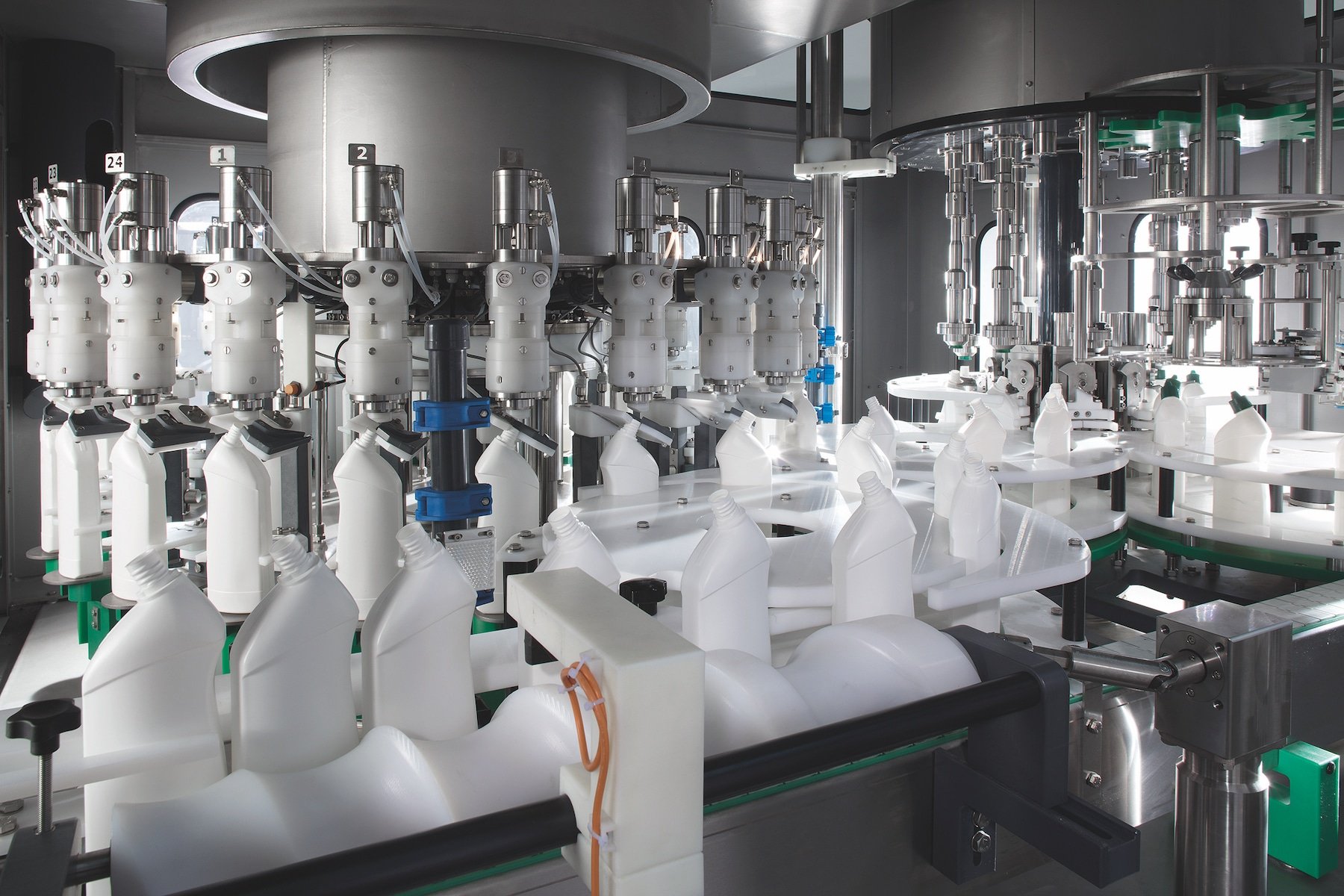
Automatic Rotary Daily Chemical Filling Machine | Full Auto Rotary Bottle Filler
Relevant when: the project needs a rotary, multi-station filling format for daily chemical liquids.
Why it relates: the page connects output with station count and fill volume rather than treating speed as independent of the filling task.
Useful project inputs: actual fill volumes, product behavior, bottle samples, target BPM and the conditions used to compare effective output.
Related reading
Linear vs Rotary Automatic Filling Machine →
Use this when the next decision is machine architecture rather than capacity by fill volume.
Compare the actual fill range before relying on one BPM figure
Representative fill volumes, product details and bottle samples make it possible to compare effective capacity under conditions that are closer to the real production job.
| Review Rotary Filling Capacity for Your Fill Volumes | Share Fill Volumes, Product and Bottle Samples |
Frequently Asked Questions
Does doubling fill volume cut rotary filler speed in half?
Not automatically. Filling time tends to rise when volume rises at a similar effective dosing rate, but the actual speed also depends on the filling profile, available dwell, product behavior and bottle handling.
What information is useful for a capacity comparison?
The most useful inputs are the important fill volumes, representative product, relevant flow or viscosity condition, foaming behavior where applicable, bottle samples or drawings and target BPM.
Should the sample test use the smallest or largest fill?
Several representative cases are more useful than testing only one end of the range. A large fill may expose a dwell-time limit, while another bottle or product may be more difficult to handle. The most useful test points are the ones that reflect process difficulty and production importance.
Can one bottle format run several fill volumes at the same speed?
Possibly. The bottle may stay the same while a larger dose needs more filling or settling time, so the sustainable machine speed can still change even when the container format does not.
What should be compared when reviewing a supplier’s BPM figure?
Compare the required effective BPM together with fill volume, product condition, bottle format, test material, how acceptable output is counted and the operating conditions used during the run.