

Rotary capping machine capacity begins with a simple mechanical relationship: capping head count multiplied by turret revolutions per minute. That gives theoretical bottles per minute when each head processes one bottle per revolution.
For planning, adjust theoretical BPM for successful cap presentation, actual running time and acceptable yield. Bottle size, cap geometry and pitch can also limit practical head count and turret speed.
|
Start here
Heads × RPM
Calculate the theoretical cycle rate before applying production losses. |
Then verify
Package limits
Bottle pitch, stability, cap feeding and dwell time can constrain usable speed. |
Accept on
Good output
Use a timed test with rejects, micro-stops and downtime recorded. |
1. Quick Answer: Rotary Capping Machine Capacity Formula
For a rotary capper where one capping head handles one bottle on each turret revolution, the starting formula is:
Theoretical BPM = capping head count × turret RPM
Effective good BPM = theoretical BPM × cap-presentation factor × runtime availability × quality yield
The first equation gives the cycle rate. The second estimates acceptable output during a defined period. That distinction is central to how to calculate rotary capping machine capacity for production planning. Use observed turret RPM for the period being evaluated; if bottles do not occupy every station on every revolution, account for that separately rather than treating runtime availability as the only loss factor.
Avoid double-counting losses. If a missing-cap event stops the machine and its duration is already included in runtime availability, do not also deduct the same event as a separate cap-feed loss. If the turret keeps cycling while individual bottles receive no cap, record those misses in cap presentation or quality yield instead.
2. Which Variables Build Theoretical Bottles per Minute?
Head count and turret speed are the direct variables. More heads increase bottles processed per revolution; higher RPM increases revolutions per minute. Both still depend on package spacing, transfer control and the time needed to apply the closure.
Head count and bottle pitch
Bottle pitch is the center-to-center distance between containers through the rotary system. Larger packages can require greater pitch and may reduce practical station count. Quote head count together with the bottle format used to establish it.
Turret speed and dwell time
Higher turret speed raises theoretical BPM but reduces time for transfer, engagement and tightening. For a defined angular working zone, dwell time can be expressed as (working angle ÷ 360) × (60 ÷ turret RPM). Required dwell should be verified with the intended package.
When reviewing high-speed rotary capping machines, ask for the head count and operating turret speed behind the proposed BPM, plus the bottle and cap conditions used to establish that rate.
3. How Bottle Diameter, Height, Cap Type and Bottle Pitch Change the Cycle
Capping capacity by bottle size is not a single diameter lookup. Package geometry affects how many bottles can be controlled around the turret and how quickly they can enter, remain stable through capping and leave without losing control.
Bottle diameter: Wider containers generally require more pitch and more transfer clearance. That can change feasible station spacing and head count.
Bottle height and stability: A tall or top-heavy package can impose different acceleration and guide-control limits from a short, stable bottle even when the neck finish is similar.
Cap geometry: The closure affects feeding, presentation, pickup or engagement and the time required for controlled application. A nominal cap diameter alone does not define those conditions.
For RFQ work, supply representative bottle and cap samples together with the bottle drawing, overall height, relevant neck dimensions and any closure feature that affects orientation or handling. A sustainable line speed should be confirmed against that complete package, not inferred from one dimension.
4. How Cap Feed Rate and Missing-Cap Events Reduce Output
The turret cannot sustain usable output unless successful cap presentation keeps pace with the required bottle rate. Nominal feeder speed matters less than correctly presented caps available where the capper needs them.
During a test, separate correct presentations, missed caps while cycling continues, and feed events that stop the machine. Misses affect presentation success or yield; stops affect availability.
Risk to watch: repeated five- or ten-second corrections can remove meaningful production time even when there is no long machine fault. Record these micro-stops instead of treating a short peak-speed run as proof of sustained capacity.
Treat cap feed rate as part of capacity sizing. It must support the intended operating condition with the actual closure and normal replenishment behavior.
5. Use Availability to Convert Theoretical Speed Into Planned Output
Once a feasible theoretical rate has been established, use observed running time to estimate what the capper can actually deliver during a scheduled period.
Availability = actual running time ÷ scheduled observation time
If a 60-minute observation contains 55 running minutes, availability is 91.7%. Record stop reasons such as cap-feed interruption, bottle-handling correction, machine fault or operator intervention.
Plants that use OEE consistently can evaluate Availability × Performance × Quality. Keep loss boundaries consistent so the same event is not deducted twice.
If the capper passes its own test but the complete packaging line still misses the planned rate, use the separate filling and capping line bottleneck analysis to investigate the wider line.
6. Example Calculation: Method Demonstration Only
This example is hypothetical and explains the calculation method only. It is not a Runtech product specification, test result or output commitment.
Assume a proposed rotary capper is being evaluated with 12 capping heads, a turret speed of 10 RPM, 98.5% successful cap presentation, 93% runtime availability and 99.2% acceptable capping yield.
| Theoretical output | 12 × 10 = 120 BPM |
| After cap presentation | 120 × 0.985 = 118.2 BPM |
| After availability | 118.2 × 0.93 ≈ 109.9 BPM |
| Good output | 109.9 × 0.992 ≈ 109.0 good BPM |
The difference between 120 theoretical BPM and about 109 good BPM illustrates theoretical vs effective capper output. It does not mean the same loss factors should be assumed for another machine or package.
Before comparing quotations, align definitions. Missing-cap events may be counted as rejects or downtime depending on machine behavior, so loss categories must use the same basis.
7. What to Record During a Rotary Capper Capacity Test
A rotary capper capacity test should use representative bottles and caps and run long enough to expose normal interruptions. Agree the duration in the RFQ or acceptance protocol.
Record the package: bottle and cap sample identification, relevant format condition and any special handling setup.
Record the machine: active head count, commanded and actual turret speed, and any adjustments made during the run.
Record the counts: bottles presented, caps successfully presented, capped bottles, acceptable bottles and rejected or missing-cap bottles.
Record the time: test start, test end, actual running time, every stop and every micro-stop that meets the agreed recording rule.
Record the intervention: reason for each stop, operator corrections, restart behavior and any manual assistance not intended in normal production.
Keep sample conditions constant. Selected bottles, manually prepared caps or extra operator assistance should be documented rather than treated as normal production conditions.
Define the good-product condition before testing. Package-specific compatibility, closure condition and sustainable speed should be confirmed with representative samples.
8. RFQ and Acceptance Checklist for Capacity Sizing
A useful RFQ makes the capacity claim testable. Instead of requesting only “a capper for 100 BPM,” state the package, target good output and required test basis.
Package data: bottle drawing and dimensions, representative bottle samples, cap drawing and representative cap samples.
Capacity basis: target good bottles per minute, proposed capping head count, proposed turret operating speed and cap-presentation basis.
Test conditions: sample condition, agreed continuous run duration, good-product definition, reject count and treatment of operator intervention.
Loss record: downtime, micro-stops, cap-feed interruptions and the agreed calculation method for effective output.
Buyer recommendation: require the quotation to state theoretical speed, sample conditions, continuous running duration, good-product yield and downtime record together. That prevents a procurement comparison from being reduced to whichever proposal shows the highest maximum BPM.
Related Runtech product reference
After the calculation and acceptance basis are defined, this Runtech product page provides a concrete equipment reference. It describes continuous inline screw capping with servo torque control, cap feeding, positioning and screw tightening. This is an inline alternative rather than a rotary-turret example, so the head-count × RPM formula above should not be treated as this product’s specification. Exact package compatibility and sustained output still require sample confirmation.
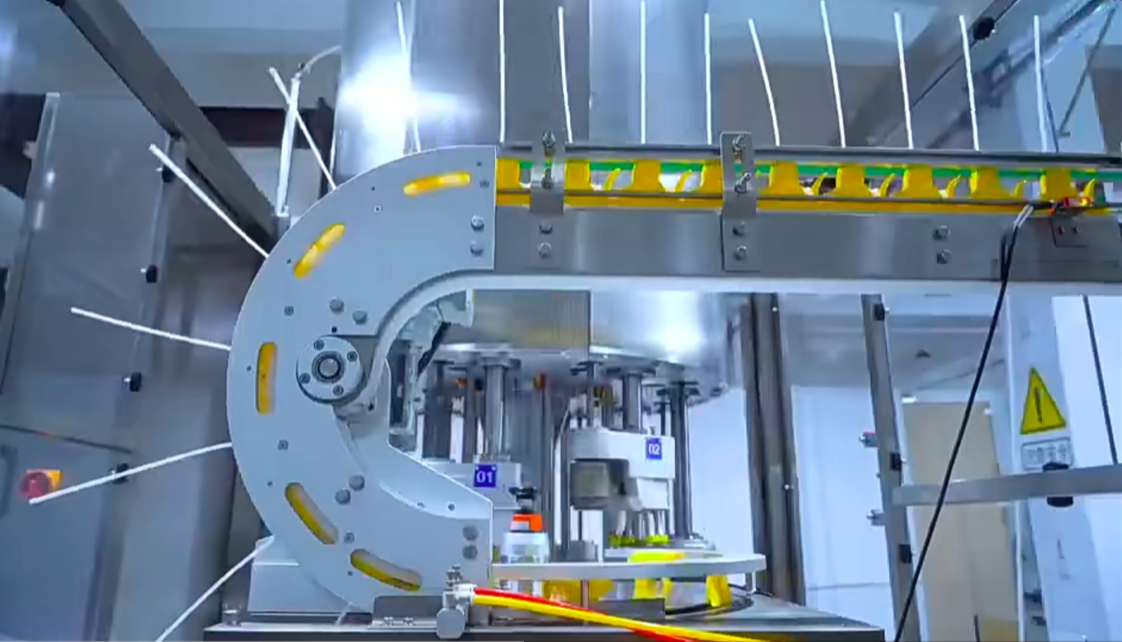
High Speed Automatic Screw Capping Machine
Applicable situation: a project evaluating automatic threaded-cap application in a continuous inline layout.
Why it is relevant: the product page covers cap feeding, positioning and screw tightening, so it is a concrete reference after the capacity method has been defined.
Confirm before selection: the intended bottle, cap, target good BPM and sample-test conditions for the quoted machine.
Related reading
Filling and Capping Line Bottleneck Analysis →
Use this when the capper passes its own test but the complete line still misses target output.
Size the capper from your package and target good output
Use the actual bottle and cap to review rotary capper capacity options, or send the package details needed to review a capper against your target bottles per minute. Base the final rotary capping machine capacity decision on a traceable calculation and representative test run, not peak speed alone.
| Review Rotary Capper Capacity for Your Bottle | Share Your Bottle Size and Target BPM |
Frequently Asked Questions
How much capacity margin should be added above the required BPM?
There is no universal percentage. Use the required good-product rate plus observed presentation, availability and yield for the actual package.
Should physical bottles and caps be sent before a final capacity commitment?
Yes. Drawings do not show every handling or presentation behavior, so compatibility and sustained output should be confirmed with representative samples and an agreed test.
Can two bottles with the same diameter use the same capping capacity assumption?
Not necessarily. Height, stability, body shape, neck geometry and cap type can change usable speed even when bottle diameter is the same.
What matters more in acceptance: peak BPM or average good output?
Average acceptable output over an agreed continuous run is more useful for planning because it captures rejects and recorded interruptions.
How should cap-feed problems be counted in the calculation?
Count individual missed presentations in presentation success or yield; count feed events that stop the capper as downtime. Do not deduct the same event twice.
What should procurement ask suppliers to state beside a quoted BPM?
Ask for sample conditions, head count, operating speed, continuous test duration, good-product definition, yield and stop record so quotations use the same basis.