
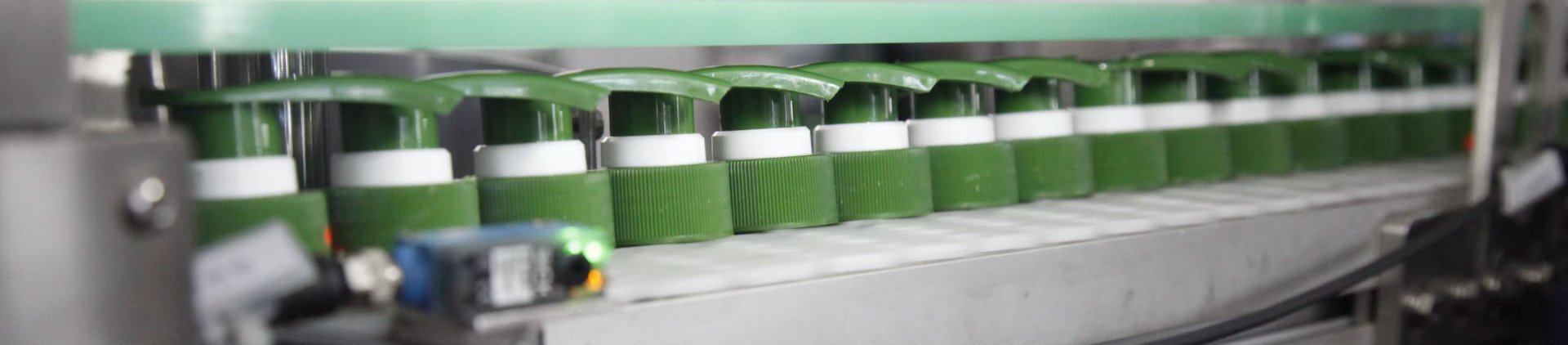
Automatic pump feeding becomes worth serious consideration when manual placement starts limiting sustainable output, the lotion pump and dip tube can be handled repeatably, and the production schedule uses the automation often enough to justify the added feeding system.
The decision should not come from operator count alone. It should come from actual order volume, shifts, stable manual placement capacity, SKU changeover losses, pump feedability and the economic value of recovering line capacity.
|
Demand
Orders & shifts
Use scheduled production, not headline machine speed, to define how much placement capacity is actually needed. |
Feedability
Pump & dip tube
Check separation, cap orientation, tube tangling, transfer and bottle-neck entry with real closures. |
|
Complexity
SKU changeover
Frequent pump, tube and bottle changes can reduce the utilization and payback of dedicated feeding automation. |
Economics
Labor & losses
Count avoidable labor, line starvation, rework, rejects and changeover time that can genuinely be recovered. |
| Quick Answer | Manual Cost | Pump Features | ROI Inputs | Automation Level | Bottle Control | Sample Test | Next Step |
1. Quick Answer: Use Four Variables to Decide Whether Automatic Feeding Is Worth It
The right question is not whether a pump capper can be automated. It is whether automatic feeding removes a real production constraint at a cost that makes sense for the actual order mix. Start with required output, pump feedability, SKU complexity and labor economics.
Required output is the sustainable rate needed for scheduled orders. Pump feedability asks whether the complete pump can be separated, oriented, transferred and inserted repeatedly. SKU complexity covers pump, tube and bottle changes, while labor economics covers placement cost and recoverable production losses.
Buyer rule: calculate from real order volume, shifts, stable manual placement capacity and changeover losses. Do not justify automation from operator headcount alone.
2. Manual Pump Placement Can Become the Real Line Bottleneck
Manual pump placement can look inexpensive because it needs very little equipment. In practice, however, the operator may end up setting the rhythm of the whole line. Each cycle requires picking up the pump, controlling the dip tube, guiding it into the bottle, bringing the threaded collar into a usable starting position and releasing the bottle before the next one arrives.
A short observation can make manual placement look faster than it really is. What matters is the stable rate of correctly placed pumps that operators can sustain through replenishment, breaks, tube corrections and normal production variation. Record how often the capper waits for a correctly placed pump and how often operators have to recover bent or crossed tubes. The value of automation may come from recovering line capacity rather than simply removing one person.
Track good placements per labor-hour, staffing, pump replenishment time, microstoppages, placement-related rework and production lost when the downstream process waits for correctly placed pumps.
If this station is already a structural bottleneck, compare the required handling level across rotary capping machine options before focusing on tightening speed alone.
3. Pump and Dip-Tube Features Can Increase Automation Difficulty
This is where pump handling differs from feeding a simple round closure. A complete pump cap is an irregular assembly: the actuator affects how the part settles, the collar provides the threaded interface, and the dip tube can overlap neighboring pumps or move outside the intended transfer path. A feeder that looks straightforward on paper can therefore behave very differently with real production parts.
Cap orientation and actuator shape
Define the required orientation. A pump may only need a usable placement position, while another package may require the finished actuator to face a label, tray or carton. A clear orientation reference can still be lost during transfer if support changes.
Dip-tube length, flexibility and curvature
Long or flexible tubes can cross, hook or curve toward nearby pumps, then catch the shoulder or neck during insertion. Test production-length tubes in their normal supplied condition rather than unusually straight demonstration samples.
For the broader package-selection context beyond this feeding decision, see the pump capper selection guide for lotion and shampoo bottles, including bottle stability, tube entry and final pump direction.
4. Calculate the Decision from Orders, Shifts, SKU Count and Labor
The business case becomes much clearer when it is built from the actual production schedule instead of a headline machine speed. Start with units by important SKU, shifts, campaign length and demonstrated manual placement output. Long runs of one pump family create a very different automation case from frequent changes in pumps, tube lengths and bottles.
Manual placement labor hours = required production units ÷ demonstrated good placements per labor-hour
Simple payback = incremental automation investment ÷ annual net benefit
Use the loaded labor rate if that is the plant standard, and add only losses that can realistically be recovered. Extra speed has little value when orders do not require it, and labor counts only when hours are removed or productively redeployed.
SKU changeover belongs in the same model. If automatic feeding saves placement labor but creates substantially more setup, verification and restart time for a highly mixed schedule, that lost production reduces the payback.
5. Match Manual, Assisted or Fully Automatic Feeding to the Real Constraint
Manual vs automatic pump cap placement is rarely a simple either-or decision. The useful question is which level of assistance removes the real bottleneck without creating a new one during changeovers, replenishment or difficult pump handling.
More suitable when formats change frequently, tubes need operator correction or production volume does not keep a dedicated feeder busy enough. Confirm that manual placement can still sustain the required line rhythm.
Worth evaluating when better pump presentation would remove part of the labor burden but full bulk feeding is difficult to justify. The assistance must address the actual delay rather than add another handoff.
More attractive when a pump family runs repeatedly, representative closures can be sorted and transferred reliably, and the recovered labor or capacity supports the investment. Compatibility still needs confirmation with the intended package.
Where full feeding is technically and economically justified, automatic pump capper options can then be reviewed against the actual pump, dip tube, bottle and production plan.
6. Bottle Holding and Capping Stability Still Control the Result
Even a reliable feeder cannot compensate for an unstable bottle. Once the pump has been presented correctly, the dip tube still has to enter the neck and the collar still has to reach a repeatable starting position. Tall, narrow, lightweight or flexible containers can move during insertion or tightening, so bottle support should be evaluated with representative filled weight where relevant.
Keep the diagnosis separated into three questions: can the pump be presented consistently; can the tube enter without creating a tilted starting position; and can the closure then be tightened while the bottle remains controlled? Treating every failure as one “capping problem” hides the first point where control was lost.
Risk reminder: product residue around the neck, unstable spacing or poor bottle centering can create apparent feeding or tightening faults. Check the upstream condition before adding complexity to the pump feeder.
7. Build the Approval Around Sample Testing and ROI Inputs
A useful sample test should answer a production question, not just prove that one carefully selected bottle can run once. Use representative bottles and complete pumps with production-length dip tubes, then include both the highest-volume format and the package expected to be most difficult to automate.
What the sample test should show
- Pump separation and presentation across repeated parts, not one isolated closure.
- Cap orientation through transfer and the final approach to the bottle.
- Dip-tube behavior under normal curvature, accumulation and restart conditions.
- Tube entry, starting position on the neck and bottle stability.
- Finished closure condition and repeatability across the important SKUs.
Payback inputs to collect before quotation
- Annual production by relevant SKU, shifts and normal campaign length.
- Current sustainable manual placement output and loaded labor rate.
- Avoidable labor hours or labor that can be productively redeployed.
- Measured reject, rework and lost-production costs related to placement.
- Number and duration of SKU changeovers.
- Incremental operating, maintenance and format-change requirements for the proposed automation.
Approval principle: count only benefits that can be measured and realistically captured. A feeder that works well on the easiest SKU but struggles on the formats that dominate changeovers has not yet proven the business case.
8. Turn the Automation Decision Into a Useful Pump Capper Inquiry
A useful inquiry is easier to evaluate when it starts with the production problem rather than a machine model. State the main pump-and-bottle formats, the hardest manual placement, order volume, shifts, meaningful SKU changes, normal dip-tube condition and any final actuator-direction requirement.
This supports a clear choice between flexible manual placement, assisted handling or full automatic feeding after representative samples prove the proposed handling sequence.
Relevant equipment reference after the feeding decision is clear
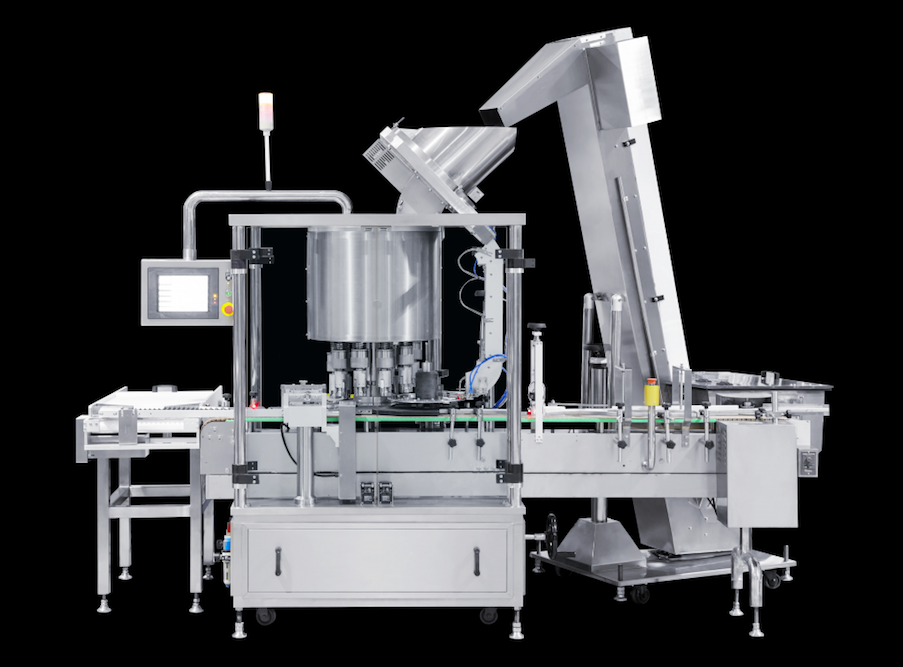
Fully Automatic Pump Cap Capping Machine | High Precision Bottle Capper
Relevant when: the project has moved beyond manual placement and requires automatic pump sorting, orientation, conveying and capping to be evaluated as one handling sequence.
Confirm before selection: actual pump geometry, dip-tube behavior, bottle stability, important SKUs and the required feeding arrangement through sample testing.
Related reading
Pump Cap Capping Machine for Lotion and Shampoo Bottles →
Use this for the broader machine-selection context once the manual-versus-automatic feeding decision has been defined.
Evaluate the feeding level with real production inputs
Use order volume, shift pattern, stable manual capacity and changeover loss to decide whether automatic feeding deserves a sample trial. Then send the complete pump, production-length dip tube and representative bottle so the proposed pump capper can be reviewed against the actual package.
| Evaluate a Pump Capper for Your Lotion Line | Share Pump, Dip-Tube and Bottle Samples |
Frequently Asked Questions
Can annual bottle volume alone decide whether automatic pump feeding is worth it?
No. Volume has to be considered with campaign length, shifts, stable manual placement capacity, pump feedability and changeover burden. Similar annual volumes can create very different payback on a standardized line and a highly mixed line.
Can one automatic feeding setup handle several lotion pumps?
It may be possible, but it should not be assumed from similar thread dimensions. Actuator geometry, handling points, dip-tube length and orientation requirements can change feeding behavior. Each commercially important format should be reviewed and tested.
What should be included in a pump capper sample test?
Use representative bottles and complete pumps with production-length tubes. The test should show separation, orientation, transfer, tube entry, starting position, bottle stability and repeatability across normal component variation.
Should reject rate be included in the automation ROI?
Yes, when the reject or rework cost is measurable and genuinely caused by pump placement. Do not assign every closure defect to manual labor; bottle movement, neck contamination and the tightening stage can create separate faults.
What should procurement send with a pump capper RFQ?
Send representative bottle and pump samples, production volume by key SKU, shift pattern, current manual placement performance, changeover expectations, dip-tube details, required finished pump direction and the specific production constraint the project is intended to remove.