

A comparable RFQ gives every capping machine manufacturer the same package samples, target production condition and acceptance rules. At minimum, identify each bottle-and-cap combination, provide available drawings, state the target BPM, define how a good capped bottle will be judged, and agree what the factory acceptance test must prove.
Do not let missing information turn into supplier assumptions. If torque, cap-feeding details, line interfaces or service scope are not yet confirmed, mark them to be confirmed and require every bidder to quote against that same open point.
|
Same samples
Bottle + closure basis
|
Same target
Speed + duty basis
|
Same acceptance
FAT + torque rules
|
1. Quick Answer: What a Comparable Capping Machine RFQ Must Include
A useful capping machine RFQ answers six practical questions: what packages must run, what physical samples represent production, what target speed is required, what counts as an acceptable capped bottle, what cap feeding and changeover functions are in scope, and what evidence must be produced during FAT.
Put those requirements into one RFQ attachment or user requirement specification (URS) and issue the same revision to every bidder. Procurement comparisons become unreliable when one supplier receives drawings, another receives only a cap diameter, and a third receives production samples.
Teams that are still deciding which machine architecture to specify can review available capping solutions before issuing the RFQ. The RFQ should still describe the package and required result rather than assume that an untested machine configuration is automatically suitable.
2. Bottle, Cap, Inner Plug and Product Sample Information
The answer to what to send a capping machine manufacturer is the complete package, not just the nominal cap diameter. For each SKU, identify the bottle and closure, and include any liner, inner plug, insert, pump component or other part that changes how the package is assembled.
Useful RFQ inputs include representative bottle and cap samples, a bottle drawing and closure drawing where available, neck-finish information supplied by the packaging component source, confirmed bottle dimensions, and any finished orientation requirement. If filled-product behavior could affect bottle stability or handling, describe the intended test condition rather than assuming an empty bottle represents production.
Sample rule: send normal production-representative parts, not only the cleanest or easiest samples. Where several formats share one machine, identify the combinations most likely to challenge bottle handling, cap presentation or changeover.
There is no universal bottle cap sample quantity for machine trial. Agree the quantity from the test plan: setup consumption + planned trial consumption + inspection or destructive-test samples + expected rejects + reserve quantity. Ask the supplier to confirm that total before shipment.
3. Define Target Speed, Shift Conditions, Good Product and Torque Acceptance
“High speed” is not an acceptance criterion. State the target BPM for each relevant format and define how it will be measured. Clarify whether the count is based on correctly capped bottles leaving the machine, whether automatic cap feeding is included, and whether normal stop-and-restart behavior forms part of the test.
Add production context such as intended shifts, SKU change frequency and any operating condition that materially affects the quotation. A short demonstration and sustained production duty are not the same commercial requirement, so the RFQ should state what the project actually expects.
Write the acceptance definition before discussing torque settings
For threaded closures, torque acceptance should come from the package requirement. State the approved torque window when one already exists, identify whether the measurement is applied torque, removal torque or another defined package test, and note the instrument, timing or conditioning method where these are controlled internally.
If the torque window has not been established, write to be confirmed through package validation. Do not ask the supplier to invent a packaging specification. Other acceptance checks may include cap height, seal condition, leak verification, tamper-feature engagement or finished orientation, but only where the project has defined how those checks will be performed. The related automatic capping machine setup guide is useful when the project needs to separate bottle control, cap placement and final tightening issues.
4. Specify Cap Feeding, Missing-Cap Detection and Changeover Scope
Separate the capping function from the cap-supply function. A machine trial with manually placed caps can help evaluate holding or tightening, but it does not validate automatic sorting, transfer and placement. If automatic feeding is part of the production requirement, include it explicitly in quotation and FAT scope.
Cap supply: ask how each closure is presented and what operator involvement is expected during normal production.
Detection: define the condition to detect—such as missing cap or failed presentation—and the required machine response. Do not assume one sensor verifies every fault.
Changeover: identify every bottle-cap format, required guides or tooling, adjustments, included change parts and any format that still requires sample confirmation.
A format matrix is safer than a statement such as “suitable for all our bottles.” Use one row per bottle/closure combination with its target BPM, feed requirement, acceptance method and changeover scope.
5. Set FAT Sample Quantity, Run Duration and Recording Method
A FAT protocol should be agreed before the factory acceptance test starts. Otherwise, “successful run” may mean one thing to procurement, another to packaging engineering and something else to the supplier.
|
Define the test condition
Formats, sample condition, target speed, automatic feeding scope, run sequence, stop/restart checks and any inspection frequency. |
Define the evidence
Accepted and rejected packages, measured values, interruptions, adjustments, configuration references and final agreed condition. |
Do not choose FAT sample quantity independently of run duration. Determine how many parts are needed to set up each format, complete the agreed run, inspect the package, investigate failures and retain a reserve. The same logic applies to duration: specify the operating period or sample sequence needed to demonstrate the agreed acceptance criteria rather than requesting an arbitrary test time.
Critical point: write pass/fail criteria before FAT. A video can support the record, but it should not replace agreed measurements and documented observations.
6. Define Drawings, Manuals, Spare Parts and Training Deliverables
Technical acceptance is only part of the purchase. The RFQ should also state which project and service documents must be delivered so that bidders do not hide important scope in general phrases such as “standard documentation included.”
- Approved layout and interface information required by the project, including available floor space, conveyor height and direction, electrical and compressed-air supply, upstream/downstream connections, and any inspection or rejection interfaces.
- Operating and maintenance manuals plus applicable electrical or pneumatic documentation.
- Format/changeover records and final FAT documentation.
- Recommended routine spare parts, with included and separately quoted items distinguished.
- Training, commissioning or installation scope, including where the work is expected to occur.
For training, define the audience and objective: operation, changeover, maintenance or troubleshooting. For documentation, state the required language and file format if those are project requirements. Any undecided point should remain clearly marked to be confirmed.
7. Use the Quote Comparison Table to Expose Scope Gaps
Commercial comparison should start only after the technical basis has been normalized. A lower price can simply mean less scope: manual cap placement instead of automatic feeding, fewer formats, omitted change parts, reduced FAT work, missing documents or separately charged service.
| Comparison line | What should match the RFQ |
| Package formats | Same bottle/cap matrix and same sample basis. |
| Speed basis | Same target BPM definition and operating condition. |
| Acceptance | Same torque/package tests and pass/fail method. |
| Included scope | Feeding, detection, change parts, FAT, documents and service shown separately. |
| Open items | Assumptions, exclusions and “to be confirmed” points explicitly listed. |
Buyer recommendation: make every supplier quote against the same bottle and cap samples, target speed and acceptance rules. If a data point is unavailable, label it “to be confirmed” rather than letting each bidder complete the specification differently.
Relevant equipment reference after the RFQ basis is defined
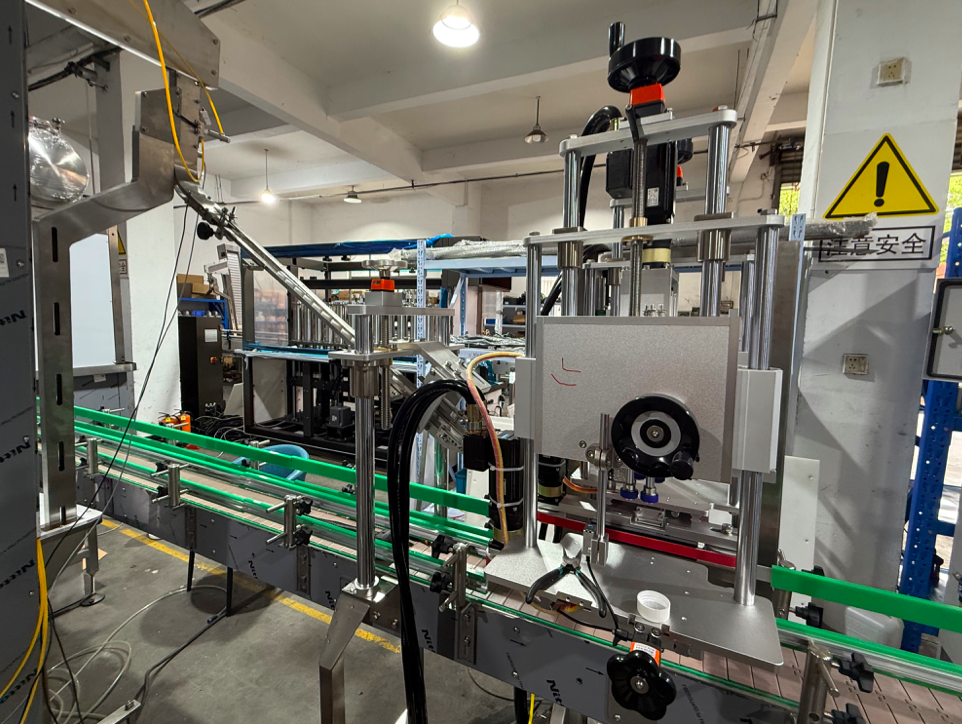
For projects involving threaded closures, Runtech’s product page below is a useful reference when discussing custom bottle capping equipment. Its page describes servo torque control together with cap feeding, positioning and screw tightening. Compatibility with a specific bottle, cap and acceptance window should still be confirmed against the actual RFQ and sample test.
|
High Speed Automatic Screw Capping Machine Useful when: the RFQ concerns threaded bottle closures and the project is evaluating an automatic capping workflow. Why it relates: the product page describes cap feeding, positioning, screw tightening and servo torque control. Confirm before selection: bottle/cap compatibility, target BPM, feeding method, torque window, changeover and FAT acceptance for the actual samples. |
8. Copyable Capping Machine RFQ Checklist and Inquiry CTA
Use this capping machine RFQ checklist as a final pre-issue review. The goal is not to fill every field with an estimate; it is to distinguish confirmed requirements from open items so every supplier is working from the same scope.
Package: bottle/SKU, closure/SKU, representative samples, drawings, liners/plugs/inserts and production-representative condition.
Production: target BPM by format, operating duty, cap-feeding method, line interfaces and changeover list.
Acceptance: torque window or to-be-confirmed status, package checks, FAT formats, run sequence, recording method and pass/fail criteria.
Project scope: site utilities and line interfaces, change parts, documentation, spare parts, training, commissioning/installation scope, assumptions and exclusions.
Once these fields are aligned, a capping machine manufacturer can respond to the actual application instead of pricing around hidden assumptions.
Send the same RFQ basis before comparing quotations
Use one package matrix, one target-speed definition and one acceptance method across all quotations. If package behavior is still uncertain, send representative bottle and cap samples and define the trial conditions before treating compatibility as confirmed.
| Send Your Capping Machine RFQ | Request a Bottle and Cap Sample Test |
Frequently Asked Questions
How many bottle and cap samples should be sent for a capping machine trial?
There is no universal quantity. Calculate it from setup consumption, the planned test sequence, inspection or destructive-test needs, expected rejects and a reserve. Confirm the requested quantity with the supplier before shipping.
Can bottle and closure drawings replace physical samples?
Drawings are useful for dimensions and interfaces, but they do not fully reproduce handling behavior, bottle rigidity or normal component variation. Representative physical samples are a stronger basis for the final machine trial.
Should every bottle and cap format be included in FAT?
The FAT should cover the formats needed to demonstrate the agreed scope. If testing every SKU is impractical, identify the representative or difficult formats in advance and define how untested formats will be validated later.
What if the required capping torque is not yet known?
Mark the torque requirement “to be confirmed” and establish it through the appropriate package-validation process. The RFQ can still define how the later value will be documented and tested.
Can automatic capping speed be accepted with manually placed caps?
Only if manual placement matches the purchased scope. If automatic cap feeding is required in production, the acceptance protocol should state whether feeding, transfer, placement and capping must run together at the agreed condition.
What should procurement compare besides the machine price?
Compare package formats, feed scope, change parts, acceptance tests, FAT coverage, documentation, spare parts, training, service scope, assumptions and exclusions. A price is only comparable when the technical and project scope is comparable.