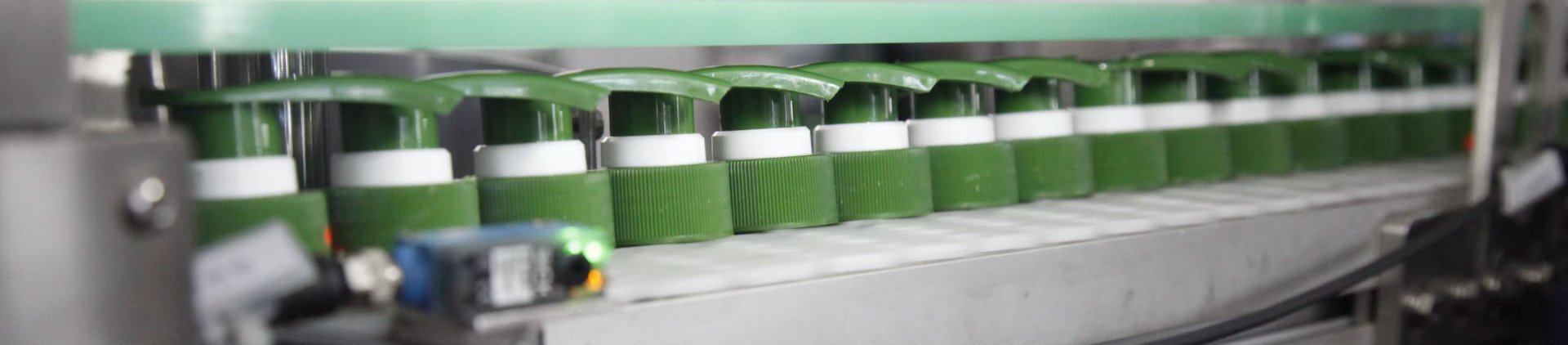
Daily chemical packaging looks simple on the surface. However, shampoo, lotion, detergent, hand soap, body wash, sanitizer, and cleaning liquids behave very differently during filling. Some products foam. Some drip. Others flow slowly, splash easily, or leave residue around the bottle mouth.
Therefore, equipment selection should start with product behavior, bottle shape, cap type, and line layout. For early comparison, the Runtech Capping liquid filling machine category is a practical starting point for reviewing linear filling equipment used in liquid, detergent, paste, and daily chemical packaging projects.
Recommended page: inline daily chemical automatic filling equipment for hand soap, shampoo, lotion, liquid soap, and detergent bottle lines.
Jump to: Overview / Products / Viscosity / Bottle & Cap / Automation / Scenarios / Line Plan / FAQ
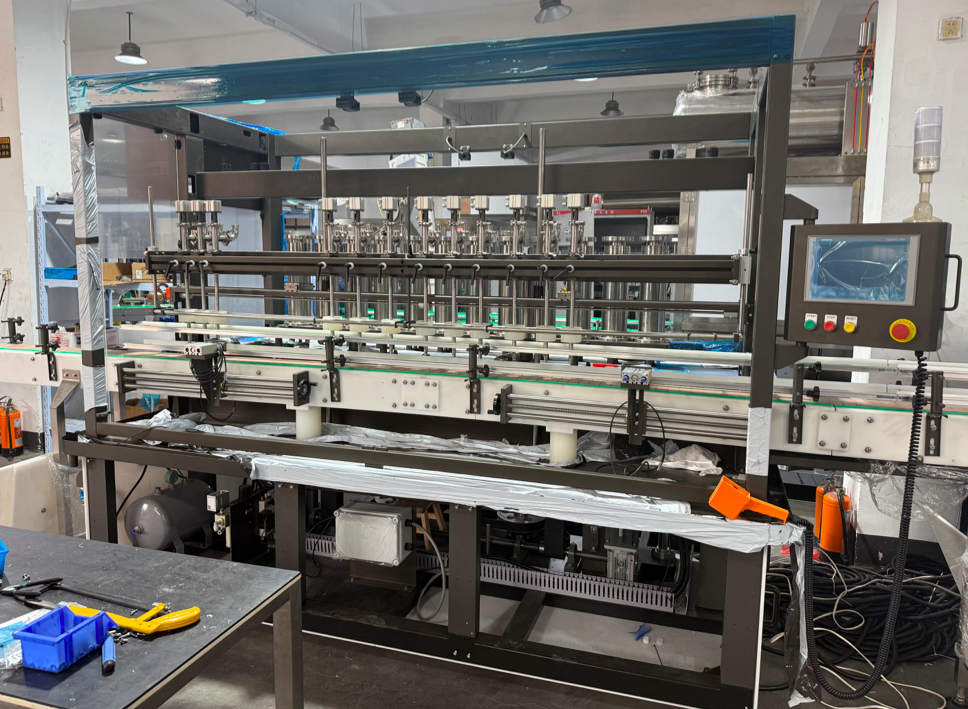
Related equipment: inline daily chemical automatic filling for hand soap, shampoo, lotion, liquid soap, and detergent bottle lines.
What Is Liquid Filling Equipment?
Simply put, filling equipment transfers a controlled amount of liquid into a container. In a daily chemical workshop, the container may be a small hand wash bottle, a flat detergent bottle, a lotion pump bottle, a trigger sprayer bottle, or a larger cleaning liquid container.
However, the filling process is not only about moving liquid from a tank into a bottle. The equipment must also keep the bottle stable, control the filling path, reduce dripping, and prepare the bottle for capping. Therefore, filling performance depends on both the liquid and the packaging format.
For example, a watery disinfectant may splash if the nozzle flow is too strong. Meanwhile, a thick lotion may not move smoothly through a narrow product path. In another case, detergent may foam during filling and create a false liquid level inside the bottle.
In a complete daily chemical packaging line, filling rarely works alone. Bottle feeding, filling, cap feeding, capping, labeling, coding, inspection, and final collection should connect smoothly. Therefore, the filling station should be planned together with screw caps, flip-top caps, lotion pumps, foam pumps, and trigger sprayers.
Practical point: the same machine layout can behave differently with two similar formulas. Therefore, product samples, bottle samples, and cap samples should be reviewed before final configuration.
Daily Chemical Products the Line Can Handle
Daily chemical products include many liquid and semi-liquid materials. However, equipment choice should not rely on the product name alone. Viscosity, foam level, bottle shape, cap type, and cleaning frequency all change the machine design.
Shampoo, conditioner, body wash, and liquid soap usually need clean filling with stable cut-off. These products may look smooth, but some formulas string after the nozzle lifts. As a result, nozzle design and shut-off timing become important.
Liquid detergent, dishwashing liquid, floor cleaner, and laundry products often bring foam challenges. Therefore, filling speed, nozzle height, and filling path must be reviewed together. If foam stays near the bottle neck, capping and visual appearance may suffer.
Lotion, cream cleaner, gel detergent, and thicker personal care products need stronger product transfer. Meanwhile, disinfectant, sanitizer, and thin cleaning liquid may need splash control and material compatibility review. In both cases, the product contact path should match the formula.
Some daily chemical formulas also change by fragrance, color, or active ingredient. Therefore, cleaning convenience should be part of equipment selection. If the same line handles several formulas, product-contact parts, hopper design, hoses, valves, and nozzles should support practical cleaning between batches.
Personal Care Liquids
Shampoo, conditioner, body wash, hand soap, lotion, gel, and cream wash.
Household Cleaning Liquids
Liquid detergent, dish soap, floor cleaner, fabric softener, and glass cleaner.
Special Cleaning Liquids
Sanitizer, disinfectant, bleach-type liquids, toilet cleaner, and stronger cleaners.
For hand soap, shampoo, lotion, and detergent packaging, the Runtech Capping daily chemical filling machine page gives a focused application reference. It connects inline filling with daily chemical bottle and cap handling needs.
Viscosity, Foam, and Filling Method
Viscosity means how easily a liquid flows. In simple terms, water flows quickly, while lotion flows slowly. However, daily chemical products can be more complex because foam, air bubbles, fragrance, and thickener systems also affect filling performance.
For thin liquids, splash control may matter more than pump strength. For medium-viscosity liquids, anti-drip filling and stable nozzle movement often matter most. For thick formulas, the product path, pump structure, valve design, and cleaning access require closer review.
Thin liquids
Thin products include some sanitizers, disinfectants, glass cleaners, and light detergents. These materials can fill quickly. However, they may splash when the nozzle flow is too aggressive. Therefore, nozzle height, bottle opening, and filling speed should be checked early.
Medium-viscosity liquids
Medium products include many shampoos, body wash products, hand soaps, and dishwashing liquids. These materials often need balanced filling. If filling is too fast, bubbles may rise. If filling is too slow, line efficiency may drop.
High-viscosity products
Thick lotion, conditioner, gel detergent, and cream cleaner may need stronger product transfer. In addition, these products can leave product tails at the nozzle. Therefore, anti-drip cut-off, filling path width, and cleaning access deserve attention.
Foaming liquids
Detergent and liquid soap often foam when air mixes into the product during filling. As a result, the visible level can look unstable. Foam control may involve slower filling, bottom-up filling, staged speed, or formula-specific testing.
In practice, the filling method should not be decided only by product category. A thin disinfectant may need splash control, while a thick lotion may need stronger transfer and a wider product path. Similarly, a foaming detergent may need slower filling even if its viscosity is not very high.
For stronger cleaning liquids, material compatibility and workplace chemical handling should also be reviewed. External guidance such as OSHA Hazard Communication can support SDS-based safety review alongside equipment selection.
Recommended Equipment Paths
A daily chemical filling project may need different equipment paths depending on formula behavior and packaging style. The following product pages are suitable reference points for different application directions. Each image and button links to the related Runtech Capping page.
Daily Chemical Application
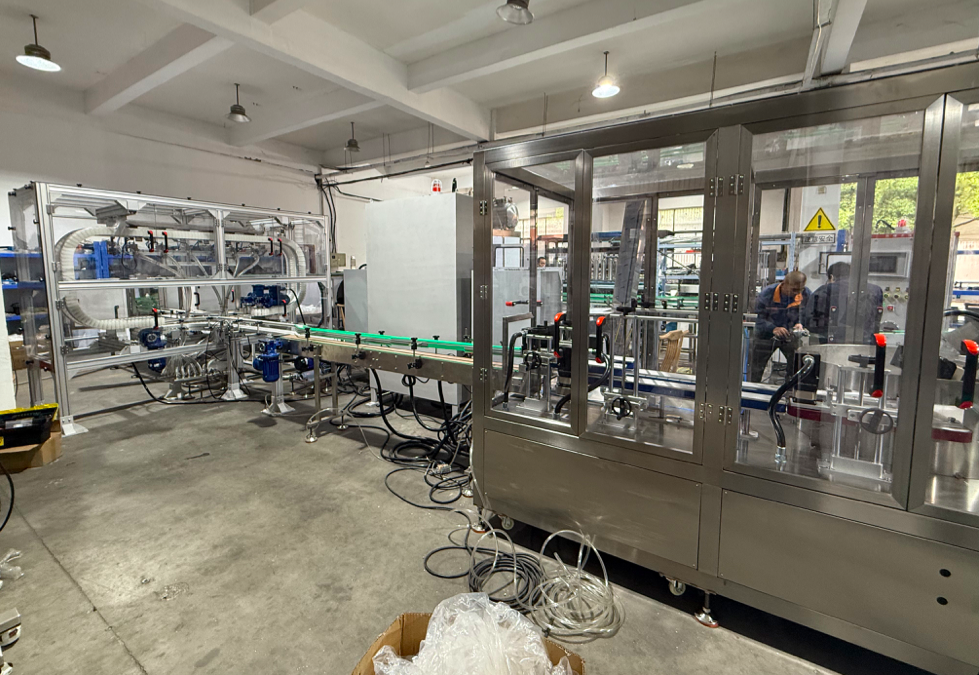
Inline Daily Chemical Filling
A practical route for shampoo, lotion, hand soap, detergent, and body wash bottle filling projects with flexible line planning.
Detergent and Paste Filling
Piston Filling for Detergent and Paste
Useful for reviewing medium-viscosity and thicker daily chemical formulas that need stronger product control.
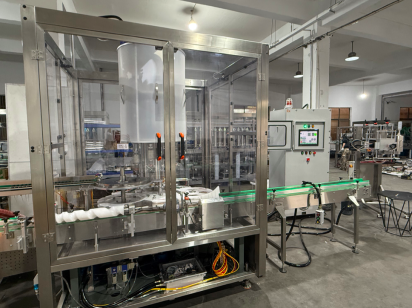
Servo Linear Filling
Servo Linear Piston Filling
A reference option for chemicals, detergent, paste-like liquid, and projects that need adjustable filling control.
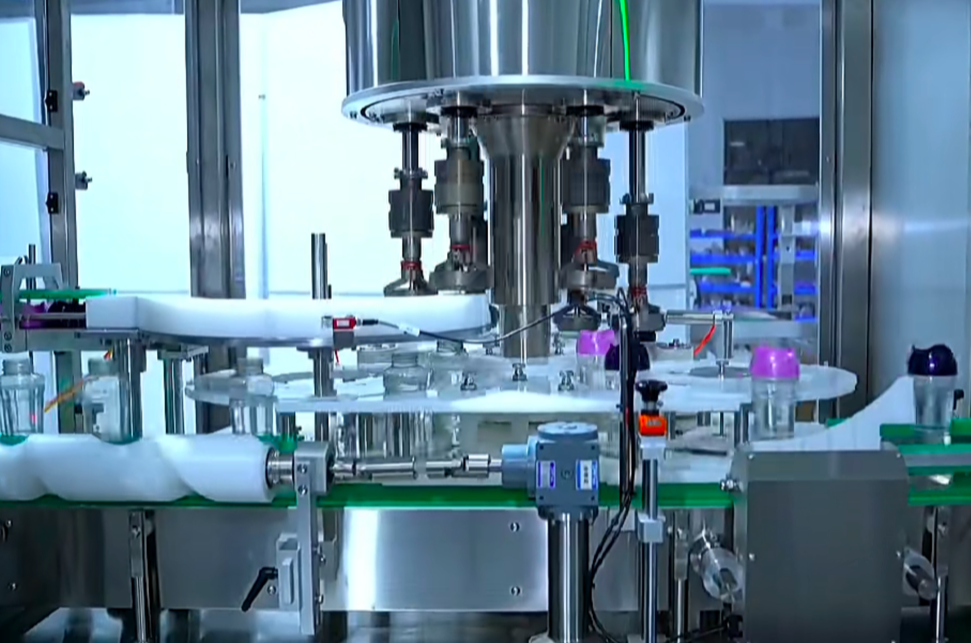
Pump and Trigger Capping
Pump and Trigger Cap Capping
Helpful for lotion pumps, foam pumps, dispenser pumps, and trigger sprayer packaging after filling.
Bottle Shape, Fill Accuracy, and Cap Type
Bottle design has a direct effect on filling stability. Round bottles often move smoothly through guide rails. However, flat bottles, oval bottles, soft bottles, and handle bottles may need better positioning. Therefore, bottle samples should be reviewed before line layout is confirmed.
Bottle mouth size also matters. A narrow opening may limit nozzle size, especially for thick lotion or gel detergent. Meanwhile, a wide opening may allow easier filling but still needs splash control. In addition, transparent bottles can make bubbles and small level differences more visible.
Fill accuracy should not be discussed as one fixed promise before project details are known. The real result depends on product viscosity, fill range, bottle shape, foam behavior, filling method, and final machine configuration. Therefore, accuracy review should be based on actual product and package samples.
Cap type can change the whole line. Screw caps need stable feeding and tightening. Flip-top caps may need careful seating. Pump caps require dip tube control. Trigger sprayers often need orientation and stronger placement control. As a result, filling and capping should be planned as one connected process.
For pump caps and trigger sprayers, the cap itself can become the main planning point. A long dip tube may bend before entering the bottle. A trigger head may need the same facing direction for packing. Therefore, cap sorting, cap placement, bottle holding, and tightening method should all be checked with real samples.
Screw Caps
Need stable cap feeding, bottle holding, torque control, and thread alignment.
Pump Caps
Need dip tube guidance, controlled placement, and clean tightening after filling.
Trigger Sprayers
Need orientation review, cap placement control, and reliable tightening movement.
Automatic Filling Machine Options for Daily Chemical Lines
Automation can improve repeatability and reduce manual handling. However, the right level depends on product range, bottle variation, cap type, available floor space, and target output range. Therefore, an automatic filling machine should be selected as part of a full packaging plan.
A semi-automatic setup may fit sampling, pilot production, or frequent small batches. Meanwhile, inline automatic filling can support steadier production with conveyors, multiple nozzles, and connected capping equipment. In addition, rotary equipment may suit stable formats when bottle and cap conditions remain consistent.
Linear filling layout
Linear filling equipment moves bottles along a straight conveyor. Bottles enter the filling area, stop or index, receive product, and move forward. This layout is practical for daily chemical packaging because it can support several bottle sizes and formulas with manageable adjustment.
Rotary filling and capping layout
Rotary systems use rotating tables or turrets to move bottles through several stations. They may save space in some layouts. However, they usually need more precise bottle handling and clearer format consistency.
Connected capping and labeling
Capping, labeling, coding, and inspection should match the same bottle movement. Otherwise, one downstream station may limit the full line. Therefore, filling, capping, and packaging should be reviewed together before final layout approval.
Automation should also consider daily operation. A line that is difficult to adjust may slow down when bottle formats change. Meanwhile, a line with clear adjustment points can support more stable production across several daily chemical products.
Suitable Production Scenarios
This type of equipment planning is suitable for daily chemical projects where filling, capping, and bottle handling must work together. It is especially relevant when products have different viscosities, several bottle sizes, or special caps that need careful handling.
It is also suitable for production lines that need a clear upgrade path. For example, filling and capping may be the first priority, while labeling, coding, inspection, or collection can be added as the line plan becomes more complete.
Flexible Bottle Changeover
Suitable for production lines that handle several bottle sizes, shapes, and fill volumes.
Pump and Trigger Cap Packaging
Suitable for lotion pumps, foam pumps, dispenser pumps, and trigger sprayer bottles.
Foaming or Viscous Products
Suitable for formulas that need foam control, anti-drip filling, or stronger product transfer.
Integrated Packaging Lines
Suitable for projects that need filling, capping, labeling, coding, and collection in one line.
How to Plan a Filling, Capping, and Packaging Line
A daily chemical line should begin with real production details. Product type is important, but it is only one part. Bottle shape, cap structure, cleaning frequency, automation level, and future product changes also affect the final solution.
First, the product family should be listed clearly. Shampoo, conditioner, hand soap, detergent, sanitizer, and lotion may need different filling behavior. In addition, the thickest or most difficult formula should receive special attention.
Second, bottles should be checked with real samples. Tall bottles may tip during transfer. Flat bottles may need better side guides. Soft bottles may deform under pressure. Therefore, conveyor and bottle positioning design must match the actual package.
Third, caps should be tested early. A normal screw cap can be easier to sort and tighten. However, pump caps and trigger sprayers require more careful handling. Dip tubes may bend, and trigger heads may need orientation before tightening.
Finally, downstream equipment should be reviewed before the layout is finalized. Labeling, coding, inspection, and collection should match the same bottle movement. Otherwise, a line may fill correctly but still lose efficiency after capping.
| Planning Area | Details to Confirm | Why It Matters |
| Liquid behavior | Viscosity, foam, dripping, stringing, corrosion risk | Decides filling method, nozzle type, and product contact design. |
| Bottle design | Volume, shape, mouth size, height, width, stiffness | Affects conveyor stability, nozzle alignment, and guide rail design. |
| Cap type | Screw cap, flip-top cap, pump cap, foam pump, trigger sprayer | Changes cap feeding, placement, tube control, and torque method. |
| Line layout | Filling, capping, labeling, coding, inspection, collection | Prevents one station from slowing the full packaging process. |
Inquiry Checklist Before Equipment Confirmation
A reliable equipment plan needs practical information before quotation and layout confirmation. Otherwise, the line may need changes after samples arrive. Therefore, the following details should be prepared as early as possible.
- Product name and product family
- Liquid viscosity, foam level, and dripping behavior
- Bottle volume, shape, height, width, and mouth size
- Bottle material, stiffness, and conveyor stability
- Cap type, cap size, cap sample, and tube length if applicable
- Target output range and required automation level
- Cleaning frequency, product changeover, and formula variation
- Need for labeling, coding, shrink sleeve, inspection, or collection
- Available floor space and preferred conveyor direction
In addition, samples should include product, bottle, cap, and label whenever possible. A liquid sample alone cannot show bottle stability or cap feeding behavior. Similarly, a bottle sample without the cap cannot confirm tightening and sealing conditions.
For broader line comparison, the linear filling equipment category can support early discussion. Then, detailed configuration can be reviewed according to bottle type, cap type, viscosity, output range, and automation needs.
Common Mistakes to Avoid
One common mistake is selecting equipment by product name only. For example, “detergent” does not explain foam level, viscosity, bottle shape, cap type, or cleaning routine. Therefore, the formula and package should be reviewed together.
Another mistake is focusing only on speed. A fast filler cannot solve unstable bottles, poor cap feeding, or excessive foam. In fact, speed may make those issues more visible during operation.
A third mistake is ignoring pump and trigger caps. These closures often create more handling difficulty than the filling process. Therefore, cap orientation, dip tube control, and torque adjustment should be part of the early review.
Finally, fixed performance claims should not be accepted too early. Filling result, line stability, and final layout depend on product viscosity, bottle size, cap type, automation level, and final configuration. As a result, those points should be confirmed after samples and line requirements are reviewed.
FAQ
What filling method works for shampoo and lotion?
Shampoo and lotion often need stronger product control than water-like liquids. Therefore, piston filling, pump-based filling, or servo-controlled filling may be reviewed according to viscosity, bottle mouth size, fill range, and anti-drip needs.
Can one line handle detergent, hand soap, and body wash?
One line can sometimes handle several related daily chemical products. However, viscosity, foam, bottle size, cap type, and cleaning frequency must be close enough. Otherwise, changeover may become slow or unstable.
How should foam be controlled during detergent filling?
Foam control may involve slower filling, bottom-up filling, staged filling speed, and suitable nozzle movement. In addition, product formula and bottle shape can affect the final result. Therefore, a foam test with real samples is recommended before final configuration.
Are pump caps and trigger sprayers harder to handle than screw caps?
Yes. Pump caps may have long dip tubes, while trigger sprayers may need orientation. Therefore, cap feeding, tube control, placement, and torque method should be confirmed with real bottle and cap samples.
What information is needed before confirming a filling line?
Product type, viscosity, foam level, bottle size, bottle shape, cap type, target output range, automation level, cleaning frequency, and available floor space should be prepared. In addition, bottle and cap samples help confirm the capping process.
Conclusion and Next Step
Daily chemical packaging needs more than a simple filler choice. Shampoo, lotion, detergent, liquid soap, sanitizer, and cleaning liquid all create different challenges. Therefore, the best solution should connect liquid behavior, bottle design, cap handling, automation level, and downstream packaging.
For project review, prepare product type, liquid viscosity, bottle style, cap type, target output range, and automation requirements. With these details, Runtech Capping can help confirm a suitable filling, capping, and packaging solution around the liquid filling machine.
- First, prepare real product, bottle, and cap samples before equipment confirmation.
- Second, review filling, capping, labeling, coding, and collection as one connected line.
- Finally, confirm the final configuration according to viscosity, bottle type, cap type, output range, and automation level.
Extended Reading
Filling Equipment
Linear Type Filling Machine
Compare linear filling options for liquid, paste, detergent, chemical, and daily care packaging projects.
Daily Chemical Application
Inline Daily Chemical Automatic Filling Machine
Review inline filling direction for hand soap, shampoo, lotion, and daily chemical bottle lines.
Capping Equipment
Pump Cap and Trigger Sprayer Capping
Learn why pump caps, foam pumps, and trigger sprayers need special capping consideration.
Liquid Filling Machine Guide for Daily Chemical Products | Runtech CappingRead More