
Shampoo, lotion and detergent filling looks simple only from a distance. In real production, viscosity, foam, product stringing, bottle shape, bottle mouth size, cap style and cleaning access all affect the final packaging result. Choosing a bottle filling machine should start with the actual product and package, not only the liquid name.
This guide explains how to select filling equipment for daily chemical products such as shampoo, lotion, hand soap, body wash, liquid detergent, fabric softener and household cleaner. It also shows how filling, pump cap tightening, trigger cap handling, bottle transfer and downstream packaging should work together as one practical line.
A good line plan should answer several questions before equipment is confirmed: how the product flows, whether it foams or strings, how stable the bottle is, whether the cap uses a dip tube, how often the line changes bottle sizes, and whether filling needs to connect with automatic capping, labeling, coding or packing.
Jump to: Overview / Products / Viscosity / Bottle & Cap / Automation / Scenarios / Line Plan / Mistakes / FAQ
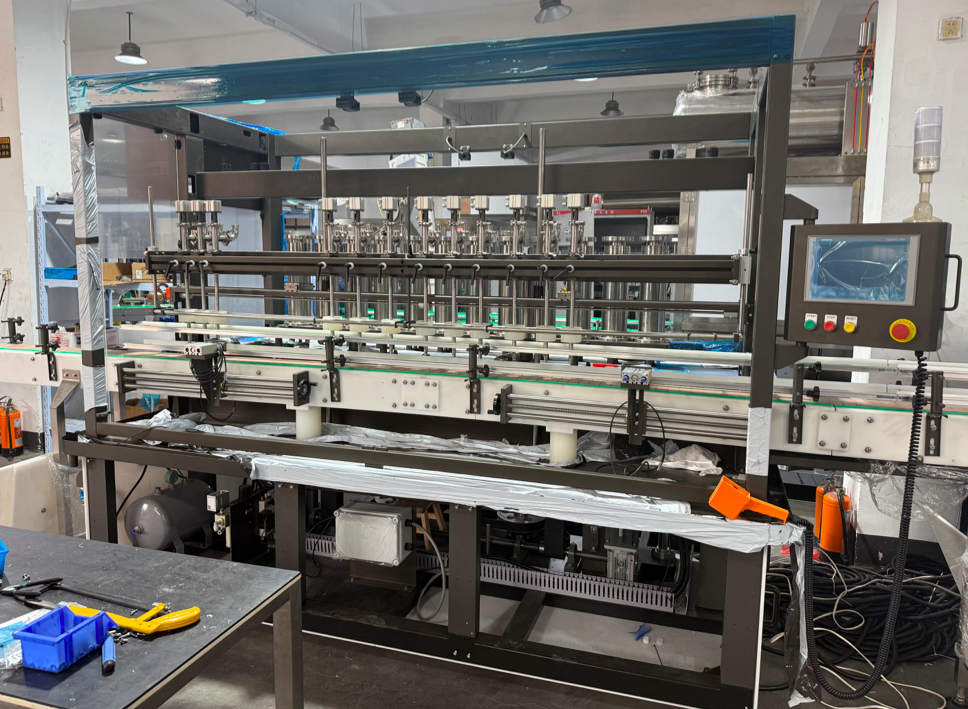
Inline Daily Chemical Filling Solution
For hand soap, shampoo, lotion, body wash and liquid detergent, an inline daily chemical filling layout can support practical bottle handling and flexible changeover. The final configuration should still be confirmed by product viscosity, foam level, bottle mouth size, bottle stability, filling range and cap type.
Why Filling Matters for Daily Chemical Products
Daily chemical packaging needs a clean and repeatable filling process. A shampoo bottle with residue on the neck may affect cap tightening. A lotion bottle with trapped air may look underfilled after the product settles. A detergent bottle filled too quickly may show foam, bubbles or an uneven visual fill height.
Daily chemical liquids do not flow in the same way. Shampoo may stretch at the nozzle. Lotion may cling to hoses, valves and filling heads. Detergent may foam when it enters the bottle too fast. Filling speed, nozzle movement, product path and anti-drip control should match the formula.
Filling is closely connected with capping. If liquid remains on the bottle thread, screw caps may not tighten smoothly. If the fill level is too high, pump tubes may push product upward during insertion. Filling level, headspace, nozzle control and closure handling should be reviewed together from the beginning.
Cleaner Bottle Neck
Cleaner filling helps cap tightening, sealing and label appearance stay easier to control.
Stable Fill Height
Transparent and semi-transparent bottles show a more consistent shelf appearance when fill levels are stable.
Balanced Line Flow
Stable filling reduces unnecessary stops before capping, labeling and packing.
Shampoo, Lotion and Detergent Filling Differences
Although shampoo, lotion and detergent all belong to daily chemical packaging, each product creates a different filling challenge. Machine selection should not rely on product name alone. Formula thickness, foam behavior, bottle mouth size, closure design, cleaning method and production rhythm all need review.
Shampoo often needs clean cut-off control because product tails may form at the nozzle. Lotion may need stronger product movement because it is usually more viscous. Detergent may need foam control because surfactants can create bubbles during fast filling. These differences affect filling heads, filling speed, product path, pump selection and cleaning access.
Shampoo Filling
Shampoo may be medium or high viscosity. It may also stretch between the nozzle and bottle mouth, leaving residue on the neck or shoulder.
- Anti-drip filling heads help reduce neck residue.
- Diving nozzles can reduce splash and foam.
- Controlled cut-off helps limit product tails.
- Clean bottle necks support later cap application.
Lotion Filling
Lotion can be thicker and more adhesive. It may move slowly through narrow product paths and may retain air if the filling process is not controlled.
- Piston-type filling can suit many viscous formulas.
- Nozzle diameter should match the bottle opening.
- Product-contact parts should allow easier cleaning.
- Headspace should allow pump tube insertion.
Detergent Filling
Detergent often needs foam control. It may also use larger bottles, handled bottles or containers with wider caps.
- Controlled flow helps reduce bubbles.
- Bottle guides keep handled bottles stable.
- Slower filling stages can reduce foaming.
- Clean threads improve capping consistency.
Viscosity, Foam and Filling Accuracy
Viscosity describes how easily a liquid flows. Water-like liquids move quickly, while lotion and paste-like products move slowly. Viscosity alone does not decide the filling method. Foam, dripping, product stringing, bottle mouth size, temperature and cleaning needs should also be reviewed.
For low-viscosity detergent, fast filling may cause foam and splash. For thicker lotion, the product may need stronger pressure and a wider path. Shampoo may require a clean cut-off design because the product can form a tail at the nozzle tip. Product behavior during pumping may be different from product behavior in a sample bottle.
Packaged products should maintain consistent net content. For official reference on checking the net contents of packaged goods, the NIST Handbook 133 provides useful guidance. It is a net-content reference, not a filling-machine selection standard, so measured volume, visual fill height and production stability should all be reviewed together.
| Product Behavior | Possible Filling Concern | Selection Note |
| Low-viscosity detergent | Foam, splash and dripping | Review flow control, filling speed and nozzle cut-off. |
| Medium-viscosity shampoo | Stringing and bottle neck residue | Check anti-drip heads, staged filling and diving nozzle options. |
| Thicker lotion | Slow flow, trapped air and product retention | Review piston filling, product path, pump capacity and cleaning access. |
| Paste-like cleaner | High resistance through hoses and valves | Confirm product-contact parts, feeding pressure and removable cleaning points. |
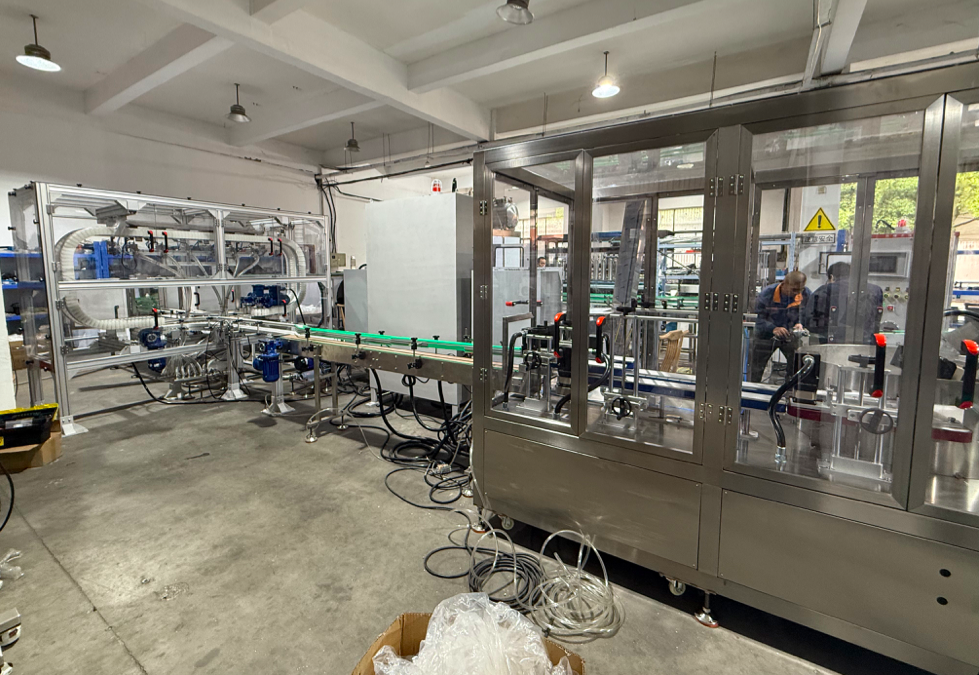
For Thick or Foam-Prone Products
For detergent, lotion, paste-like cleaner and similar products, piston-type filling can be considered when the formula needs stronger product movement. The final configuration should still be confirmed by viscosity, bottle opening, foam level, filling range, cleaning method and target output.
Bottle Type, Filling Head and Cap Matching
Bottle shape affects filling accuracy more than it may appear. Round bottles usually move smoothly on a conveyor. Flat bottles can wobble if guide rails are not set correctly. Handled detergent bottles may need more spacing and stronger positioning during filling.
Bottle mouth size changes nozzle selection. A narrow opening can increase splash risk. A wide opening gives more space, but the filling head still needs accurate centering. Bottle samples should be checked before the filling method is confirmed.
Capping should also be reviewed early. Pump caps, trigger caps, flip-top caps and screw caps create different handling needs. Filling level, headspace, cap feeding and tightening method should be planned as one packaging flow.
| Packaging Factor | Why It Matters | Selection Note |
| Bottle mouth | It affects nozzle entry, splash level and product residue. | Confirm nozzle diameter and filling height. |
| Bottle shape | It affects stability on the conveyor and under the filling head. | Review guide rails, spacing and positioning parts. |
| Bottle material | Soft bottles may deform during handling or capping. | Check side pressure and bottle support. |
| Cap type | Pump tubes, trigger caps and screw caps need different headspace. | Plan filling and capping together. |
| Changeover range | Different bottles may require different rails, nozzles and capping parts. | Confirm expected bottle and cap range before equipment layout is fixed. |
Pump Cap and Trigger Cap Handling
For daily chemical bottles with pump caps, foam pumps, trigger sprayers or gun caps, closure handling often decides whether the filled bottle becomes a finished pack smoothly. Bottle neck cleanliness, cap structure, dip-tube length, headspace and tightening method should be reviewed together.

When to Use a Bottle Filler and Automation Line
A bottle filler becomes useful when manual filling creates unstable levels, messy bottle necks, slow output or frequent product loss. The decision should not focus only on speed. Cleaning time, cap sealing quality, product consistency, labor arrangement and changeover needs also matter.
For trial production, semi-automatic filling may be enough. It can improve consistency while keeping operation simple. Manual bottle loading and cap placement still affect total line output, so semi-automatic equipment is often more suitable for short runs, product testing and flexible SKU development.
For regular production, automatic filling can connect with conveyors and capping equipment. It can reduce repeated manual handling, support more stable fill levels and create a clearer production rhythm. At the same time, automation should follow real packaging needs.
No line should be expected to handle every future bottle and cap format without testing, adjustment or change parts. A practical project should define the main production formats first, then leave room for realistic changeover where needed.
Useful Signals for Upgrading Filling Operation
- Fill levels vary too much between bottles.
- Bottle necks need frequent wiping before capping.
- Foam or dripping slows the packaging line.
- Product giveaway becomes difficult to control.
- Manual filling requires too many operators to reach the target output.
- More bottle sizes or cap types require repeatable changeover.
Suitable Daily Chemical Packaging Scenarios
This type of filling and capping solution suits daily chemical production lines that need cleaner bottles, more stable filling levels and smoother closure handling. It is especially useful when product viscosity, foam or cap structure makes manual operation difficult to control.
For shampoo and body wash, the focus is usually viscosity, foam and neck cleanliness. For lotion and cream-like products, product feeding and cleaning access become more important. For liquid detergent and fabric softener, the line may need stronger bottle guidance, foam control and a stable capping section.
The best match depends on bottle type, cap type, output target and automation level. Production samples and packaging samples should be reviewed before the line layout is finalized.
Suitable Product Types
- Shampoo and body wash
- Lotion and hand cream
- Hand soap and liquid soap
- Liquid detergent and fabric softener
- Household cleaner and gel cleaner
- Disinfectant, sanitizer and trigger spray products
Suitable Packaging Needs
- Pump caps, screw caps and flip-top caps
- Trigger spray caps and gun caps
- Round, flat, oval and handled bottles
- Medium or frequent bottle changeover
- Bottle filling connected with capping and labeling
- Integrated filling, capping and packaging flow
Practical Line Planning Checklist
Before a daily chemical filling line is confirmed, the technical discussion should include product, bottle, cap and layout information. Otherwise, the line may look suitable on paper but require too much adjustment during real production.
Actual samples are valuable. Product samples reveal foaming, dripping, stringing, settling and cleaning needs. Bottle and cap samples reveal positioning, headspace, capping torque, cap feeding and changeover requirements.
Product Information
- Product type and formula category
- Viscosity range and foam behavior
- Dripping, stringing, residue or settling behavior
- Filling temperature if it affects flow
- Cleaning and changeover requirements
Packaging Information
- Bottle size, shape and material
- Bottle mouth diameter and bottle stability
- Cap type and closure method
- Pump tube length, cap diameter and torque requirement
- Target output and automation requirement
Cleaning should not be treated as a later detail. Thick lotion, pearl shampoo and scented detergent may remain in hoses, valves or filling heads. Product-contact areas, drainage points and changeover steps should be reviewed before equipment selection.
Line layout should support safe operation and practical maintenance. Conveyor direction, bottle feeding, cap supply, filling access, capping access and packing space all affect daily operation. A good layout reduces hidden work after installation.
The technical review should also consider future products. A line designed for one bottle and one cap is easier to optimize than a line expected to handle many formats. If several bottle sizes are required, changeover parts, adjustment points and operator access should be discussed in advance.
Common Mistakes to Avoid
One common mistake is selecting equipment only by product category. “Lotion” may describe a light emulsion or a thick cream-like formula. Viscosity and flow behavior should be reviewed before the filling method is chosen.
Another mistake is ignoring the cap until late in the project. Cap type affects filling level, bottle cleanliness and line balance. Pump caps, trigger caps and screw caps can require different feeding and tightening methods.
Speed should not be the only target. Fast filling without stable capping may create more rework. A realistic output target should include filling time, cap placement, bottle stability, cleaning access, changeover time and operator workflow.
One sample test should not be treated as proof for every future bottle. Different formulas, bottle shapes and cap structures may need new settings or change parts. Main production formats should be reviewed before final confirmation.
A final mistake is treating cleaning and maintenance as secondary details. If the product path is difficult to clean, a line can lose more time during changeover than it gains during filling. Cleaning access, removable product-contact parts and drainage should be part of the purchase discussion.
Extended Reading
Frequently Asked Questions
What affects filling accuracy for shampoo, lotion and detergent?
Viscosity affects flow speed and nozzle behavior. Foam, air bubbles, bottle shape, bottle mouth size and product settling can also change final appearance. Measured volume and visual fill height should both be checked.
Can the same filling method handle shampoo, lotion and detergent?
Not always. Shampoo may need string control, lotion may need stronger product movement, and detergent may need foam reduction. The filling method should be confirmed by formula behavior, bottle design, cap type and output target.
Why should filling and capping be planned together?
Filling affects capping directly. Product residue on the thread can disturb cap tightening. High fill levels can interfere with pump tubes or inner plugs. Filling level, headspace and cap handling should be reviewed as one process.
What information helps confirm a daily chemical filling line?
Useful information includes product type, viscosity, foam level, bottle size, bottle shape, bottle material, cap type, target output and automation requirement. Product and packaging samples make the review more accurate.
Can one line support several bottle sizes?
Often, yes, if the line is designed for changeover. Guide rails, nozzle height, filling volume, cap feeding and capping settings may need adjustment. The expected bottle range should be discussed before configuration.
Conclusion and Inquiry Guidance
In daily chemical packaging, the best result comes from matching the liquid, bottle and cap together. Shampoo, lotion and detergent each bring different challenges, including viscosity, foam, stringing, dripping, bottle stability, headspace and cleaning access. The line should be planned around real production conditions.
For a practical Runtech Capping review, prepare product type, liquid viscosity, bottle shape, bottle size, bottle mouth diameter, cap type, target output and automation requirement. With this information, the technical team can help confirm a suitable bottle filling machine, capping process and packaging solution.
- Prepare product samples and bottle samples when possible.
- Confirm cap type, closure method, headspace and cleaning needs.
- Define target output, product-change frequency and floor-space conditions.
- Review filling, capping, conveyor flow and packaging layout together.