
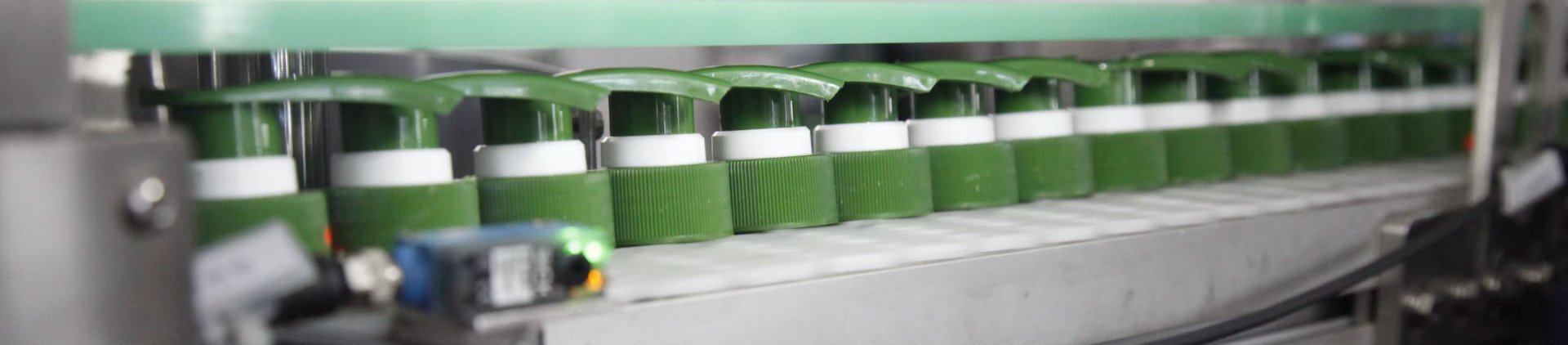
Selecting bottle filling equipment is not simply a matter of choosing the fastest machine. A reliable decision starts with the liquid, bottle, closure, target output, cleaning requirements, and the way filling connects with capping, labeling, inspection, and final packing.
For personal care and household chemical products such as shampoo, lotion, hand soap, liquid detergent, household cleaner, disinfectant, and trigger spray products, the equipment must solve practical production problems without adding unnecessary complexity. A suitable automatic filling machine should therefore be selected around the complete bottle workflow rather than the filling station alone.
The first question should not be, “Which machine has the highest rated speed?” A more useful starting point is whether the current process can maintain consistent fill levels, clean bottle necks, stable cap application, predictable changeovers, and enough capacity for downstream packaging.
Full automation is not always the correct first step. Semi-automatic equipment can still suit pilot products, seasonal batches, frequent formula changes, or packaging that has not yet been standardized. When repeated production requires cleaner filling, more consistent output, and less manual handling, however, a linear filling and capping line becomes easier to justify.
Jump to: Overview / Products / Viscosity / Bottle & Cap / Accuracy / Automation / Line Plan / Inquiry / FAQ
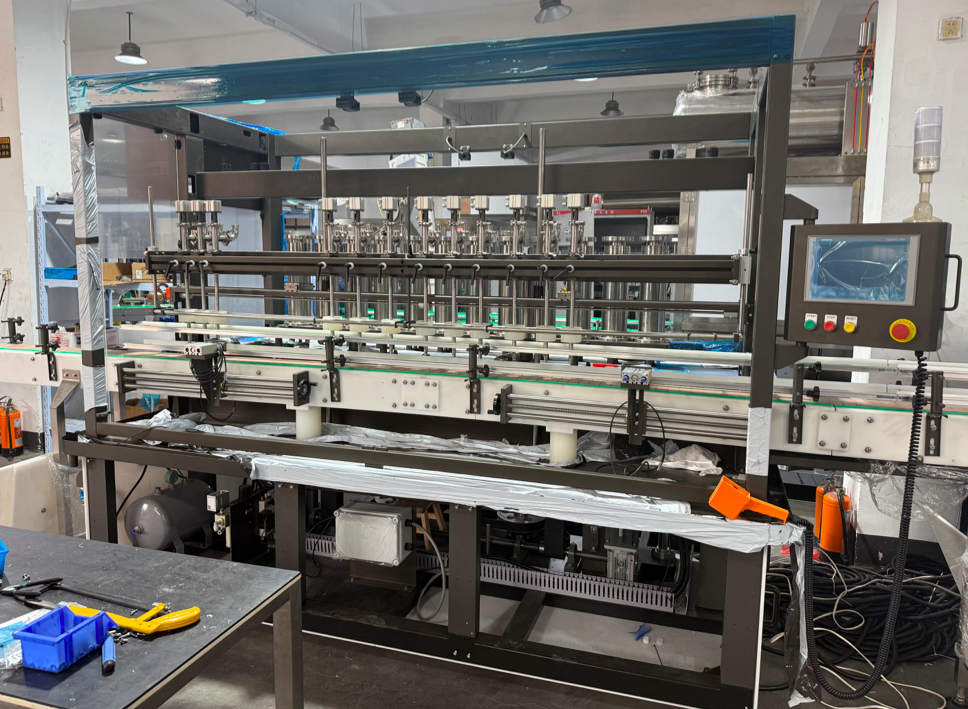
An inline daily chemical filling line can support shampoo, lotion, hand soap, detergent, and cleaner production when manual filling becomes slow, inconsistent, or difficult to connect with capping and labeling.
When Does a Bottle Filling Process Need More Automation?
Automation becomes useful when manual work is creating measurable production problems. Uneven fill levels, liquid on bottle threads, frequent nozzle adjustment, slow cap tightening, and repeated rework are common signs that the existing process needs stronger control.
Production bottlenecks can also develop before the team formally identifies them. Filled bottles may wait too long before capping. Labels may be applied poorly because the bottle surface is wet. Packing may slow down because finished bottles arrive in irregular groups rather than at a predictable rate.
These problems are particularly noticeable in household and personal care packaging. Shampoo may leave a string of product between the nozzle and bottle. Lotion may require a slower cut-off. Detergent may foam when filled too quickly. Trigger spray bottles may become unstable as they move toward the capping station.
Practical signs that an upgrade may be justified
- Operators spend a large part of each shift correcting fill volume, wiping overflow, or cleaning liquid from bottle necks.
- Capping, labeling, coding, or packing cannot follow the filling process at a consistent rate.
- Product loss is increasing because of dripping, splashing, foaming, or repeated manual adjustment.
- Finished output depends too heavily on operator experience, fatigue, or differences between production shifts.
- Demand is becoming more predictable, but the current process cannot increase output without adding more manual labor.
Automation should still solve a clearly defined bottleneck. If cap feeding is the main problem, installing a faster filler will not correct it. If foaming causes unstable fill levels, nozzle movement and filling-speed control may matter more than simply increasing the number of filling heads.
The upgrade process should begin with production diagnosis. Filling, capping, conveying, labeling, inspection, and packing need to be reviewed as one connected workflow. This makes the final equipment choice easier to justify and reduces the risk of moving a bottleneck from one station to another.
Product Types That Need Careful Filling Selection
Different products create different filling challenges. A water-like cleaner may splash. A shampoo may string at the nozzle. A detergent may generate foam during fast filling. Lotion may require stronger product feeding and a more controlled cut-off.
Equipment selection should begin with actual product behavior rather than the product name alone. A formula that pours easily from a sample bottle may behave differently after it is pumped through hoses, divided between several filling heads, and dispensed repeatedly during a production shift.
Common applications include hand soap, body wash, shampoo, conditioner, lotion, sanitizer, liquid detergent, fabric softener, household cleaner, car care liquid, and spray cleaner. In each case, the line must balance filling accuracy, bottle-neck cleanliness, product compatibility, cleaning access, and capping reliability.
| Product Type | Common Filling Concern | Selection Focus |
| Shampoo / Body Wash | Viscosity, stringing, foam, and residue around the bottle neck. | Nozzle cut-off, controlled filling speed, bottom-up filling where required, and cleaning access. |
| Lotion / Conditioner | Thicker flow, slower product movement, and possible air pockets. | Pump capacity, filling principle, nozzle diameter, and stable volume control. |
| Liquid Detergent | Foam, dripping, product residue, and fragrance carryover. | Anti-drip nozzles, staged speed, suitable product transfer, and easy cleaning. |
| Sanitizer / Disinfectant | Fast flow, splash, evaporation, and possible material-compatibility concerns. | Controlled flow, stable bottle positioning, and suitable product-contact parts. |
| Trigger Spray Cleaner | Bottle stability, trigger orientation, dip tube handling, and cap tightening. | Bottle guides, closure handling, torque control, and downstream packing layout. |
Viscosity, Foam, Dripping, and Liquid Behavior
The liquid and container should be reviewed together before comparing machine models. A thin disinfectant, a foaming detergent, a sticky shampoo, and a thick lotion will not respond to the same filling settings. A stable round bottle will also move differently from a narrow or flat trigger-spray bottle.
A suitable liquid filling machine must account for viscosity, foam behavior, filling volume, bottle-mouth size, container stability, chemical compatibility, and cleaning frequency. Category pages are useful for initial comparison, but the final configuration should be confirmed with actual product and packaging samples.
How viscosity affects filling control
Viscosity describes a liquid’s resistance to flow. Alcohol-based products and many household cleaners move quickly, while lotion, conditioner, gel, and concentrated detergent require more force and more controlled nozzle operation.
The filling principle should match the actual product texture. Piston fillers are frequently evaluated for medium- and high-viscosity materials because a controlled piston stroke can dispense a repeatable volume. Pump fillers can provide flexible product transfer when the pump type is correctly matched to viscosity and chemical properties. Gravity or flowmeter-based systems may be considered for suitable lower-viscosity products.
Product names alone are not enough for selection. Two shampoos can have very different flow characteristics. One may fill smoothly, while another continues to stretch from the nozzle after the filling cycle. A sample test, viscosity data, or a short pouring video can reduce incorrect assumptions during quotation and design.
Why foam changes real production speed
Foam can make a line appear unstable even when the measured liquid volume is correct. Some formulas foam only when filling speed is too high. Others begin foaming during tank agitation, pumping, or product transfer before the liquid reaches the nozzle.
Bottom-up filling, staged speed control, an appropriate nozzle diameter, and gentler product transfer can reduce foam in many applications. The correct combination depends on the formula, bottle opening, filling volume, liquid supply system, and required output.
Foam also affects downstream capping. If bubbles or liquid reach the bottle thread, the closure may not seat cleanly and the outside of the finished bottle may require additional cleaning. Foam control should therefore be treated as part of the complete filling and capping process.
Product safety and compatibility review
Alcohol-based sanitizers, solvent-containing cleaners, and chemically aggressive liquids may require additional review before tanks, pumps, seals, hoses, motors, sensors, and electrical components are selected. Confirm the product data sheet, flash point where relevant, contact-material compatibility, ventilation requirements, and applicable local factory safety standards.
Bottle and Closure Factors That Shape the Machine Choice
Bottle design has a direct effect on line stability. Round containers usually travel smoothly, while flat, tall, lightweight, or irregular bottles may need stronger guide rails, wider contact surfaces, side belts, or slower conveyor settings.
The position and size of the bottle opening also matter. A narrow or slightly offset mouth requires more precise nozzle alignment. Without stable positioning, liquid can splash onto the shoulder, drip onto the thread, or miss the opening during production.
| Factor | What to Confirm | Why It Matters |
| Bottle Shape | Round, square, oval, flat, tall, soft, or irregular design. | Shape affects guide rails, bottle spacing, conveyor movement, and tipping risk. |
| Bottle Mouth | Neck diameter, shoulder shape, mouth position, and thread quality. | These details influence nozzle alignment, splash risk, and closure reliability. |
| Bottle Material | PET, HDPE, glass, flexible plastic, or lightweight container. | Material affects gripping pressure, torque, bottle deformation, and breakage risk. |
| Closure Type | Screw cap, pump head, trigger sprayer, flip-top cap, or press-on closure. | The closure determines feeding, placement, orientation, torque, and line timing. |
| Dip Tube | Length, flexibility, straightness, and relationship to bottle depth. | Long or flexible tubes can bend, catch the shoulder, or miss the bottle opening. |
Physical bottle samples are more useful than drawings alone. Samples allow the machine supplier to check bottle holding, nozzle height, guide-rail contact, conveyor spacing, capping support, and expected changeover requirements.
Closure samples are equally important. Pump heads can include long dip tubes and tall actuator structures. Trigger sprayers are bulky and unbalanced. Standard screw caps may still require a defined torque range. Filling and capping should therefore be planned together from the beginning.
Filling Method, Accuracy, and Real Output
Different filling principles suit different product and container conditions. The correct method should balance accuracy, product behavior, cleaning, changeover, contact-material compatibility, and line speed. Machine appearance or filling-head count should not be the first selection criterion.
Common options include piston filling, pump filling, flowmeter filling, gravity filling, and weighing-based systems. The most suitable option depends on viscosity, filling range, product value, required tolerance, container size, and the way the product is supplied to the machine.
Piston filling for viscous products
A piston filler dispenses a controlled volume by drawing product into a cylinder and pushing it through the filling nozzle. This method is commonly evaluated for lotion, gel, shampoo, conditioner, paste-like cleaner, and other medium- or high-viscosity products.
Piston size should match the required filling range. A machine designed for large containers may not provide the best control for very small doses without suitable cylinder and control selection. Cleaning access also becomes important when colors, fragrances, or formulas change regularly.
Pump filling for flexible product transfer
Pump filling uses a controlled pump to transfer product into the bottle. Different pump types can support different viscosities and chemical properties, but pump selection must consider product compatibility, accuracy, shear sensitivity, cleaning, and the required flow range.
The entire liquid path should be evaluated as one system. Tank design, hose diameter, valve structure, product temperature, nozzle design, and pump control all influence filling stability. Installing a larger pump does not automatically produce a cleaner or more accurate fill.
Accuracy should be defined practically
Overfilling increases product giveaway and production cost. Underfilling can create quality, labeling, and regulatory concerns. The required tolerance should reflect container volume, product value, measurement method, and applicable market requirements.
Accuracy should be tested under realistic conditions. Product temperature, tank level, trapped air, foam, bottle variation, and production duration can influence results. A short demonstration at one speed does not always represent performance throughout a complete production shift.
Rated speed is not the same as finished output
Machine speed is often the first number discussed, but daily output depends on the entire line. Filling volume, liquid viscosity, bottle feeding, cap supply, label application, inspection, product changeovers, cleaning, and operator response all affect the number of saleable bottles produced.
A filler that runs quickly but repeatedly waits for caps or labels will not deliver its theoretical capacity. The line should be balanced so that the filler, capper, labeler, coder, inspection station, and packing area can work at compatible rates.
Output planning tip
A moderate-speed line that runs consistently can produce more saleable bottles than a faster line that stops frequently. Evaluate stable filling, cap availability, changeover time, cleaning time, reject rate, and downstream capacity together with the rated bottles-per-minute figure.
Manufacturers reviewing packaging investment and automation trends can also consult the PMMI Business Intelligence Library. Industry research is useful for broader planning, while the final machine configuration must still be based on actual liquid, bottle, closure, output, and factory conditions.
Semi-Automatic, Linear, or Integrated Filling Line?
The appropriate automation level depends on production stability rather than company size alone. A small factory with one standardized product may benefit from automation, while a larger factory with frequent experimental batches may still need flexible semi-automatic equipment.
When semi-automatic filling still makes sense
Semi-automatic equipment can suit pilot production, product launches, seasonal formulas, and short runs. It allows direct operator control and can be easier to adjust when packaging specifications are still changing.
A simpler setup may also be practical when several formulas are produced in small quantities each day. If cleaning and changeover take longer than filling, a highly integrated line may not provide the expected return.
Semi-automatic operation still requires a realistic labor review. Bottles need to be loaded, positioned, removed, capped, checked, and transferred. As demand grows, these manual movements can become the main limitation even when the filling unit itself is accurate.
When a linear automatic line is a stronger choice
A linear line becomes practical when the same bottle family runs repeatedly and the production team needs more consistent filling, cleaner bottle handling, and a reliable connection with capping.
Bottles move through the machine on a conveyor, filling heads operate in a controlled sequence, and the capper can be connected directly after filling. This arrangement can reduce manual transfer and make the production rhythm easier to supervise.
A linear design also supports staged expansion. A project may begin with filling and capping, then add labeling, coding, inspection, collection, or secondary packaging after the main process becomes stable.
When an integrated line needs additional caution
A fully connected line can reduce handling, but it depends on stable packaging materials and trained operation. Bottles, caps, labels, cartons, and liquid supply must arrive consistently. If any one component varies too much, an advanced line may stop frequently.
Integrated automation also requires clear fault handling. Operators need to know how to respond to a missing bottle, crooked cap, blocked nozzle, empty cap feeder, label fault, or downstream accumulation without creating additional rejects.
For many projects, staged automation is the lower-risk path. The factory can stabilize filling and capping first, then connect additional packaging stations after real production data confirms the next bottleneck.
A linear line may fit when:
- The same bottle family is produced regularly.
- Manual filling creates variable fill levels or overflow.
- Capping and labeling need a more stable production rhythm.
- The factory needs to reduce repeated bottle handling.
- Future connection with coding, inspection, or packing is planned.
A simpler setup may fit when:
- Formulas and package designs are still being tested.
- Batch sizes are small and change several times each day.
- Bottle and closure specifications are not yet finalized.
- Cleaning frequency is more important than maximum speed.
- Available floor space cannot support a complete line.
Capping, Changeover, Cleaning, and Layout Planning
Filling and capping should be reviewed together. A clean fill supports reliable cap tightening. Stable bottle positioning supports consistent torque. A balanced conveyor rhythm helps labeling and packing operate smoothly after capping.
Different closures require different handling methods. Screw caps, pump heads, trigger sprayers, flip-top caps, and press-on closures may need different feeding, placement, orientation, and tightening systems. The closure can therefore change the design of the entire line.
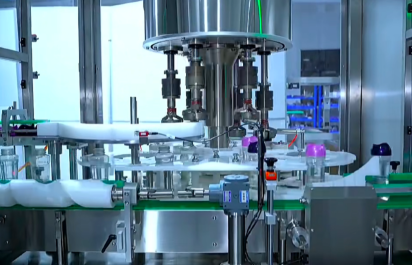
Pump heads and trigger sprayers should be evaluated early because closure shape, dip tube length, orientation, torque, and bottle stability can influence the complete filling line.
Screw caps, pump heads, and trigger sprayers
Screw caps may appear simple, but torque control remains important. Insufficient torque can lead to leakage or loose caps, while excessive torque can damage threads, deform lightweight bottle necks, or make the package difficult to open.
Pump heads normally include a long dip tube and a tall actuator. They can be harder to feed and place than standard caps. A flexible tube may bend, touch the bottle shoulder, or miss the opening if the closure is not correctly guided.
Trigger sprayers are larger and less balanced than conventional caps. Some products also require the trigger to face a specific direction after tightening. Feeding, placement, orientation, and torque should all be included in the capping review.
Changeover should be measured, not assumed
A line designed for one liquid and one bottle is easier to automate than a line expected to handle many formulas, filling volumes, bottles, and closures. Changeover time should therefore be included in the equipment comparison.
A typical changeover may involve nozzle-height adjustment, guide-rail adjustment, filling-volume settings, recipe selection, cap-feeder changes, capping-head adjustment, label setup, and product-path cleaning.
A high-speed machine with a long and complicated changeover may produce fewer finished bottles than a moderate-speed system designed for faster adjustment. Ask which parts require tools, which settings are recipe-controlled, and which components must be replaced for each bottle or cap.
Cleaning protects both quality and output
Cleaning is not only a hygiene requirement. Residue can cause dripping, blocked nozzles, inaccurate filling, color carryover, fragrance transfer, or unwanted interaction between formulas.
The cleaning plan should identify which hoses, tanks, cylinders, pumps, valves, and nozzles contact the product. It should also confirm whether parts are cleaned in place, removed for cleaning, flushed with water, or cleaned with another approved method.
When formulas change frequently, easy access and reduced product retention may be more valuable than maximum filling speed. Cleaning water, drainage, waste collection, and operator access should be considered during layout planning.
Factory layout and safe access
A filling line must fit the real workshop. Floor space, bottle loading, cap supply, liquid feeding, electrical cabinets, compressed air, drainage, operator access, finished-product packing, and maintenance areas all influence the final layout.
A compact machine footprint can be useful, but service access must not be overlooked. Operators need room to inspect nozzles, guides, sensors, closure feeders, and finished bottles. Maintenance personnel need safe access to pumps, motors, valves, guarding, and electrical components.
The final design should also include appropriate guards, emergency stops, interlocks, and safe access around moving conveyors, capping heads, rotating parts, and other potential pinch points. Exact requirements depend on the installation country, machine design, and factory safety standards.
Information to Confirm Before Requesting a Proposal
A detailed inquiry produces a more useful equipment proposal. Instead of requesting a general machine price, provide information about the product, bottle, closure, output, current process, and required automation level.
The most useful details include product name, viscosity, filling volume, bottle dimensions, bottle photos, closure photos, target output, available floor space, product-change frequency, and the main problem with the existing process.
Short videos can also help. A pouring video shows liquid behavior, while a video of the current filling and capping process can reveal foam, dripping, unstable bottles, slow manual work, or closure-handling problems that are difficult to describe in writing.
Inquiry checklist for filling and capping projects
- Product: Name, viscosity, density where relevant, foam behavior, dripping risk, temperature, and cleaning needs.
- Filling range: Minimum and maximum volume, number of bottle sizes, and required tolerance.
- Bottle: Height, width, diameter, mouth size, material, shape, stability, and photographs or drawings.
- Closure: Cap type, dimensions, thread, pump or trigger structure, orientation needs, and dip tube length.
- Output: Required bottles per minute or bottles per hour for each important filling volume.
- Changeover: Number of formulas, bottles, and closures produced during a normal day or week.
- Line scope: Filling only, filling and capping, or connection with labeling, coding, inspection, and packing.
- Factory conditions: Available floor space, power supply, compressed air, liquid supply, drainage, and local safety requirements.
Describe the product precisely
Specify the exact product and its flow characteristics rather than using a broad description such as “cleaner” or “lotion.” Shampoo, conditioner, shower gel, detergent, sanitizer, household cleaner, car care liquid, and gel can require very different filling conditions.
Words such as “thin” and “thick” can mean different things to different people. A sample, viscosity value, product data sheet, or pouring video makes the technical discussion more reliable.
Provide bottle and cap samples where possible
Bottle photographs should show the front, side, bottom, neck, and overall height. Technical drawings are useful, but physical samples are preferable when container stability, wall strength, or mouth position is uncertain.
Closure photographs should show the top, side, inside thread, sealing surface, and any special structure. For pump heads and trigger sprayers, include dip tube length and indicate whether the closure needs a fixed final orientation.
Define the required automation scope
Some projects require filling only. Others need bottle feeding, filling, cap placement, tightening, labeling, coding, inspection, collection, or carton packing. State which steps are currently manual and which steps should be included in the new line.
A reliable price cannot be based on bottle capacity alone. Filling principle, number of heads, product-contact materials, closure complexity, conveyor layout, guarding, changeover parts, control requirements, and customization all affect the final proposal.
Related Equipment and Technical Reading
These pages provide useful next steps for comparing filling equipment, reviewing a daily chemical application, and discussing a suitable filling and capping configuration.
Equipment Category
Linear Type Filling Machines
Compare linear filling options for liquid, detergent, paste, household chemical, and personal care packaging applications.
Application Page
Inline Daily Chemical Filling Line
Review an inline filling direction for shampoo, lotion, hand soap, liquid detergent, and related bottle applications.
Company Support
Request a Filling Line Review
Share your liquid, bottle, closure, output, and factory-layout details for a more suitable filling and capping proposal.
Frequently Asked Questions
Conclusion and Inquiry Guidance
The most suitable filling equipment plan starts with the actual product and package. Liquid viscosity, foam, dripping, bottle stability, closure type, filling tolerance, changeover, cleaning, safety, and factory layout should guide the equipment decision.
For household and personal care products, filling and capping should be planned as one connected process. Labeling, coding, inspection, and packing can then be added according to available floor space, production demand, and future growth.
- Prepare liquid samples, bottle information, closure samples, filling volumes, and expected output before requesting a proposal.
- Compare semi-automatic, linear, and integrated systems by real production workflow rather than rated speed alone.
- Confirm cleaning, changeover, cap handling, safety requirements, and downstream capacity before approving the line design.
- Use physical testing whenever product behavior, bottle stability, or closure handling cannot be confirmed from drawings.
To review a suitable filling, capping, and packaging solution, send Runtech Capping the product type, viscosity, filling range, bottle shape, closure style, target output, line scope, and available factory space. These details allow the technical team to recommend an appropriate automatic filling machine and related line configuration.