
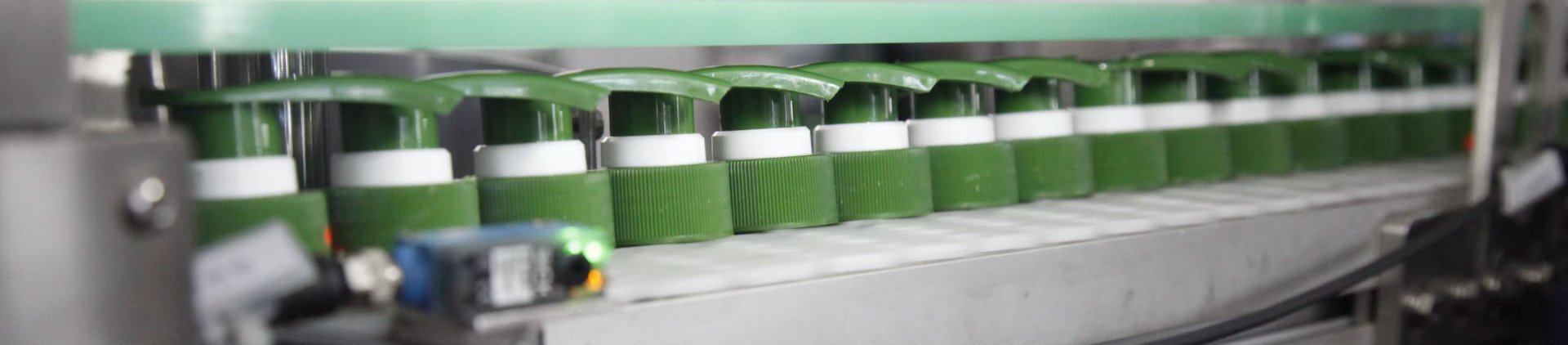
In industrial liquid packaging, bottle filler and bottle filling machine usually refer to the same broad equipment family. The main difference is how the terms are used. “Bottle filler” is shorter and more casual, while “bottle filling machine” is more precise for technical specifications, equipment comparisons, and requests for quotation.
The name alone does not determine the equipment. Liquid behavior, bottle shape, closure type, output, cleaning, and downstream packaging all influence the final configuration.
This guide explains the terminology, compares automation levels, and shows what to prepare before selecting equipment for personal care, household chemical, and other bottled liquids.
Jump to: Term Meaning / Machine Definition / Automation / Selection / Capping / Applications / Search & RFQ / Inquiry / Related Reading / FAQ
What Does Bottle Filler Mean?
Bottle filler is a broad, informal term for equipment that places liquid into bottles. It may describe a compact filling station for small batches, a semi-automatic machine operated one or two bottles at a time, or a conveyor-based automatic filling system.
The phrase does not explain how the liquid is measured, how bottles are positioned, how many nozzles are used, or whether the machine connects with capping and labeling equipment. It works well for early research, but it does not provide enough information for detailed equipment planning.
In daily chemical, personal care, and household product packaging, the term can appear around shampoo, lotion, detergent, sanitizer, toner, hand soap, fabric softener, car care liquid, and cleaning products. These applications may belong to the same broad equipment family, yet they can require very different pumps, nozzles, product paths, controls, and cleaning methods.
A Practical Product Direction: Linear Liquid Filling
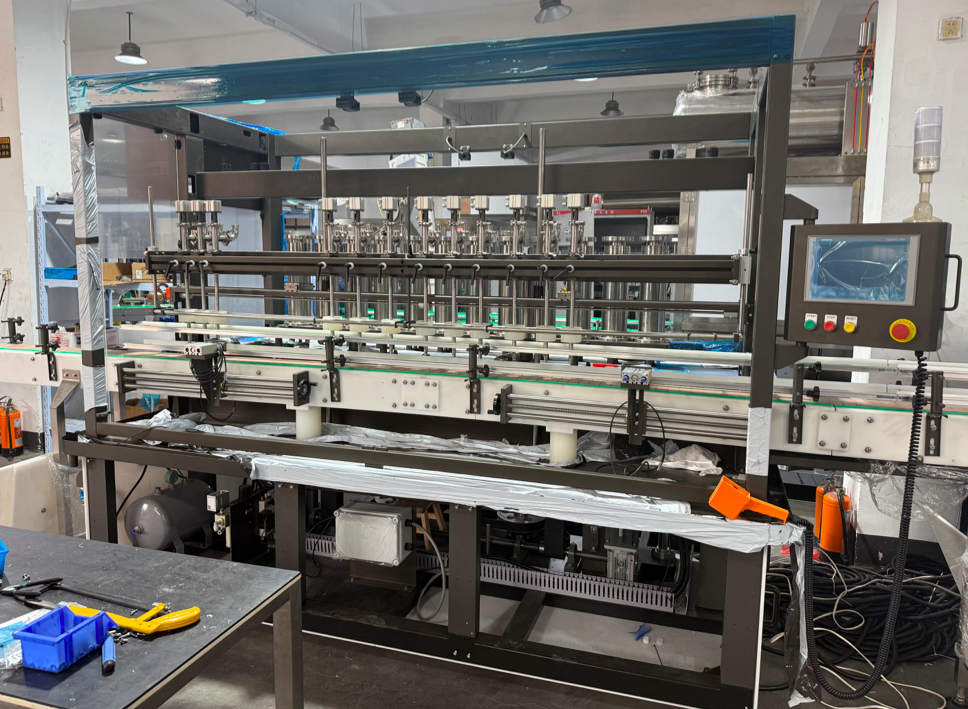
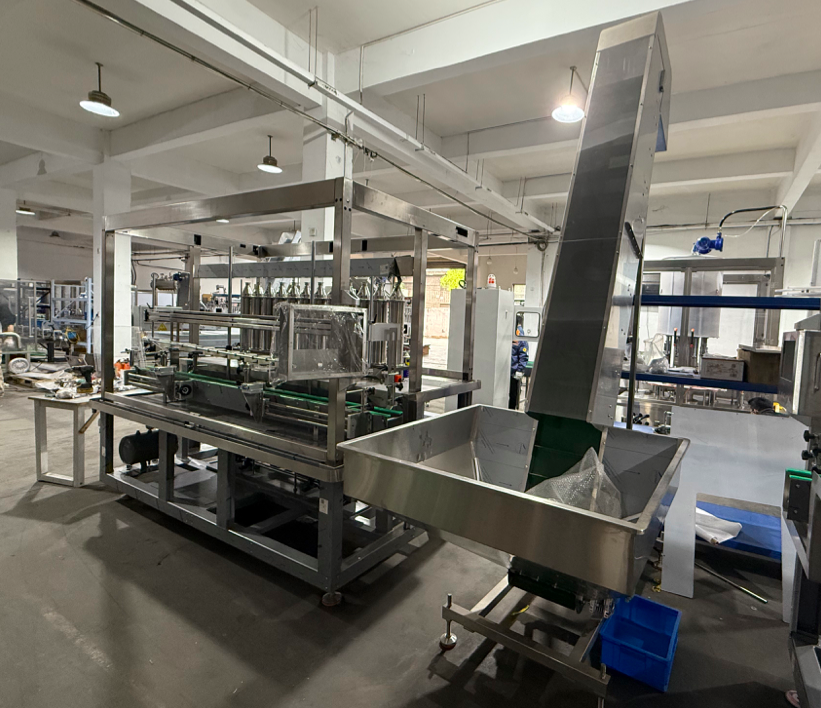
A linear filling layout is a common option for bottled liquids. Containers travel along a straight conveyor, stop or index beneath the filling nozzles, receive the required volume, and continue toward capping or the next packaging station.
This structure can offer useful flexibility when a factory runs several bottle sizes within a defined range. Guide rails, nozzle height, filling recipes, bottle spacing, and closure handling still need to be adjusted for each package. Final suitability should be confirmed with real liquid, bottle, and cap samples.
What Is a Bottle Filling Machine?
A bottle filling machine is equipment designed to dispense a controlled quantity of liquid into bottles. The term is more useful in technical discussions because it can be connected with filling volume, nozzle design, product-contact materials, control method, conveyor layout, cleaning access, and downstream integration.
The formal term still covers many machine structures. A bottle filling machine may be manual, semi-automatic, or automatic. It may use piston filling, pump filling, flowmeter filling, gravity filling, weighing, or another method selected for the product and required tolerance.
Low-viscosity liquids often need stable flow, splash control, and a clean cut-off. Thick lotion, gel, conditioner, and concentrated detergent may require greater pump capacity, wider product paths, or piston-based filling. Foaming products may need slower filling stages, bottom-up nozzle movement, or gentler product transfer.
The broader term “filling machine” can include containers other than bottles. When the package is a bottle, using “bottle filling machine” in technical specifications and RFQs helps keep purchasing, engineering, production, and maintenance teams aligned around the same equipment format.
Manual, Semi-Automatic, and Automatic Differences
Automation level should match the production stage, batch size, product-change frequency, package stability, labor requirements, and future line plan. The most automated machine is not automatically the best choice for every project.
Manual filling is the simplest level. It is usually suitable for laboratory work, sampling, testing, and very small batches. Equipment complexity is low, but output and repeatability depend heavily on operator technique.
Semi-automatic equipment adds more machine control. Operators may place bottles, start the filling cycle, and remove the filled bottles. The machine controls the filling action more consistently than hand filling, while the production team keeps flexibility for frequent product or bottle changes.
Automatic filling uses conveyors, bottle positioning, sensors, and programmed cycles. It becomes more practical when the package is stable, production repeats regularly, and the filler needs to connect with capping, labeling, coding, inspection, collection, or packing.
| Automation Level | Typical Use | Main Selection Point |
| Manual | Testing, sampling, laboratory work, and very small trial batches | Simple setup, but output and repeatability depend on direct operation |
| Semi-Automatic | Flexible batches, product launches, and frequent changeovers | Machine-controlled filling with manual bottle loading and removal |
| Automatic | Repeated production with connected filling, capping, and packaging stations | Stable bottle flow, lower manual handling, and line integration |
Filling Method Matters More Than the Equipment Name
Two products sold in similar bottles may still require different filling systems. Selection should begin with actual liquid behavior rather than machine appearance, frame size, or the number of nozzles shown in a product image.
Viscosity and product movement
Low-viscosity liquids generally flow quickly and may splash or drip. Lotion, conditioner, gel, and thick detergent move more slowly and may require greater pump capacity, larger valves, wider hoses, or a piston-based filling method.
Piston filling is commonly considered for viscous products because a controlled piston stroke can dispense a repeatable volume. Pump filling may suit a wider range of liquids when the pump type, filling range, chemical compatibility, and cleaning method are properly matched.
Foam and nozzle movement
Shampoo, detergent, hand soap, body wash, and some household cleaners can foam during filling. Excess foam can reduce usable speed, create overflow, leave liquid around the bottle neck, and interfere with cap placement.
Bottom-up filling, staged speed control, an appropriate nozzle diameter, and gentler product transfer can help reduce foam. The correct approach depends on the formula, bottle opening, filling volume, liquid supply system, and target output.
Drip control and bottle appearance
Liquid on the bottle surface can interfere with labeling, coding, carton packing, and finished-product appearance. Anti-drip nozzles, suitable valve cut-off, stable bottle positioning, and the correct filling speed should be considered before the final configuration is approved.
Why Filling and Capping Should Be Planned Together
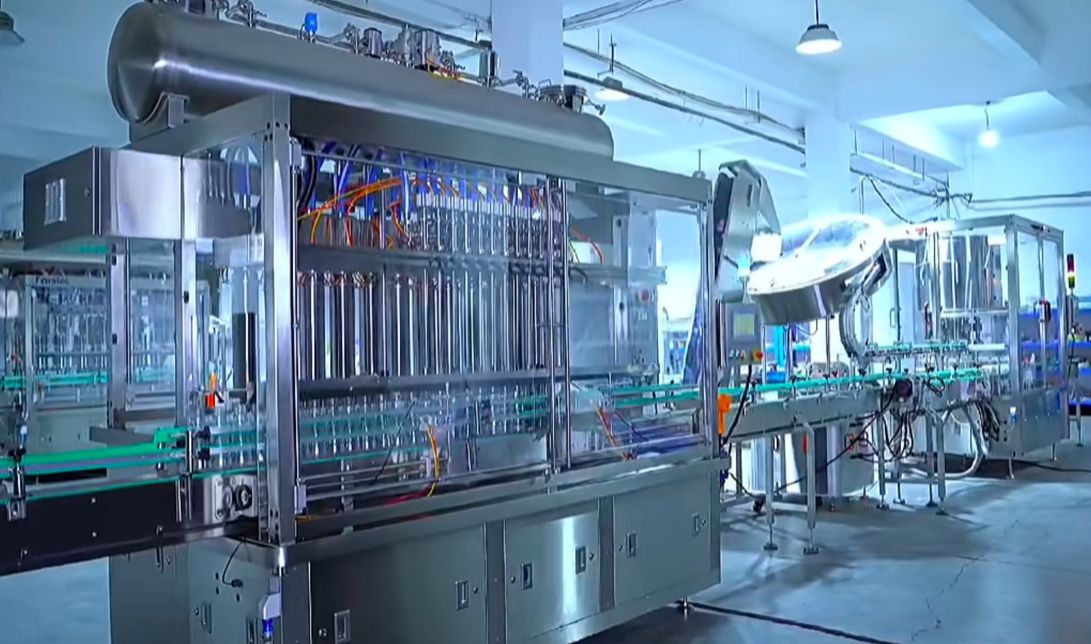
A stable filling process does not guarantee a stable packaging line. Screw caps, pump heads, trigger sprayers, dispenser caps, flip-top caps, disc-top caps, and press-on closures require different feeding, placement, orientation, pressing, and tightening methods.
Liquid or foam on the bottle thread can interfere with closure placement. An unstable bottle can tilt during tightening. A lightweight container may deform if gripping pressure or torque is too high. These details make bottle and cap samples essential during technical review.
Pump Heads and Trigger Sprayers Need Extra Attention
A pump head or trigger sprayer is not only a cap. It is a shaped component with a dip tube, orientation, balance, and handling requirement. Dip-tube length, closure direction, bottle stability, placement, and tightening torque can all affect line performance.
A long or flexible tube may bend, touch the bottle shoulder, or miss the opening. Some closures also need a controlled final orientation. When the cap is difficult to handle, the capping station can limit the complete line even when the filler itself runs smoothly.
Best-Fit Applications for Different Packaging Needs
For hand soap, body wash, and shampoo, viscosity and foam often shape the setup. The line may need controlled nozzle movement, staged speed, anti-drip cut-off, and cleaning access. Closures may include pump heads, flip-top caps, disc-top caps, or screw caps.
For detergent and household cleaner, bottles may be larger or less stable. Foaming liquid and wide or measuring caps require reliable conveyor support, bottle guidance, placement, and torque.
For sanitizer, toner, and spray products, the liquid may be thin while the closure is complex. Trigger sprayers need controlled feeding and placement, and product-contact materials must match the formula.
| Packaging Need | Suitable Direction | Why It Fits |
| Small batch or frequent changeover | Semi-automatic or flexible linear filling | Easier adjustment, cleaning, and manual control across different products |
| Shampoo, lotion, and hand soap | Viscous-liquid filling with matching capping | Viscosity, foam, nozzle cut-off, pump-head handling, and cleaning are connected |
| Detergent and household cleaner | Linear filling with stable bottle guidance | Foam control, larger containers, conveyor support, and cap torque matter |
| Pump head or trigger sprayer packaging | Filling line with dedicated closure handling | Dip-tube length, orientation, feeding, placement, and tightening affect stability |
| Connected packaging line | Automatic filling, capping, labeling, coding, and collection | Balanced output across every station matters more than filler speed alone |
Alcohol-based sanitizers and solvent-containing cleaners require additional safety review. Before selecting tanks, pumps, seals, hoses, motors, sensors, and electrical components, confirm the product safety data sheet, flash point where relevant, ventilation, grounding, bonding, and local factory requirements.
The OSHA flammable-liquids standard is a useful general reference for projects involving flammable products. The final installation must still follow the laws, electrical classifications, fire codes, and safety requirements that apply in the destination country and production facility.
Which Term Should Be Used in Search and Inquiry?
Bottle filler is a useful broad search phrase, but it can return tabletop tools, laboratory devices, or machines that do not match industrial production.
Adding the product and packaging format improves relevance. Searches such as “shampoo bottle filling machine,” “lotion filling equipment,” “detergent filling line,” “sanitizer bottle filler,” and “automatic bottle filling and capping line” give suppliers more context about the intended application.
For an RFQ, the formal term works better. RFQ means request for quotation, and the document should state the liquid properties, filling volume, bottle size range, closure type, expected output, automation level, and complete line scope.
In purchasing records and technical specifications, both phrases may appear, but “bottle filling machine” should normally be the primary name so departments work from the same definition.
How to Ask for the Right Filling and Capping Solution
A useful inquiry should describe the product and package rather than request a machine by name alone. This information helps determine the filling principle, nozzles, cap handling, conveyor layout, and change parts.
Start with the product type and include viscosity, density where relevant, foam, particles, temperature, chemical compatibility, and cleaning needs.
Provide bottle shape, height, width, material, neck diameter, mouth position, size range, and wall strength. Flat or soft containers may need different guidance from rigid round bottles.
Closure information should include the cap style, diameter, height, thread, dip-tube length, orientation, and torque requirement because each detail can change the capping method.
| Information to Prepare | What to Include |
| Product | Liquid type, viscosity, density, foam, particles, temperature, compatibility, and cleaning needs |
| Filling Range | Minimum and maximum volume, required tolerance, and main production sizes |
| Bottle | Shape, height, width, material, neck diameter, stability, drawings, photos, and samples |
| Closure | Cap style, dimensions, thread, orientation, dip-tube length, and tightening requirement |
| Output | Required bottles per minute or bottles per hour for each important bottle size |
| Line Scope | Filling only, filling and capping, or connection with labeling, coding, inspection, and packing |
| Factory Conditions | Available floor space, power supply, compressed air, product supply, drainage, and local safety requirements |
Photos and videos are valuable when the liquid, bottle, or cap is unusual. A pouring video can show viscosity, stringing, and foam. A bottle video can show flexibility and stability. Closure samples can reveal dip-tube and orientation issues that are difficult to understand from measurements alone.
Common Mistakes When Comparing the Two Terms
One common mistake is treating bottle filler and bottle filling machine as completely separate product groups. In most liquid-packaging projects, the terms overlap. The formal term simply provides more technical clarity.
Another mistake is selecting equipment from a picture alone. A stainless-steel frame or a row of filling nozzles cannot confirm viscosity range, filling method, product compatibility, cleaning design, bottle guidance, or closure handling.
Ignoring the cap is also risky. Filling may appear to be the main challenge, yet closure feeding and tightening often determine whether the complete line runs steadily. Pump heads and trigger sprayers can be more difficult to automate than the liquid itself.
A fourth mistake is focusing only on rated speed. Higher output sounds attractive, but real performance also depends on bottle feeding, cap supply, labeling, product changeover, cleaning, reject handling, operator response, and final packing.
Summary and Practical Selection Advice
Bottle filler and bottle filling machine mainly differ in usage, not in basic equipment purpose. “Bottle filler” is shorter and useful during early research, while “bottle filling machine” is clearer for industrial selection, technical documentation, and RFQ communication.
The correct machine still depends on product behavior and package structure. Viscosity, foam, filling volume, bottle shape, closure type, cleaning, changeover, output target, and line scope all matter. Filling and capping should be reviewed together, especially when pump heads, trigger sprayers, large containers, or unstable bottles are involved.
- Define the liquid clearly, including viscosity, foam, filling volume, product-contact requirements, and cleaning needs.
- Prepare bottle and closure drawings, photographs, dimensions, and physical samples where possible.
- Compare manual, semi-automatic, and automatic options by actual production conditions rather than machine appearance.
- Confirm filling, capping, labeling, coding, changeover, and downstream capacity before approving the layout.
- Use a formal equipment description in the RFQ, but support it with real product and packaging data.
Related Equipment and Product Pages
These pages provide next steps for reviewing filling and capping equipment.
Frequently Asked Questions
Need a Filling, Capping, or Packaging Solution?
Share Your Product, Bottle, Closure, and Line Requirements
Runtech Capping can review liquid filling, screw capping, pump-head capping, trigger-sprayer capping, labeling, coding, and integrated packaging-line requirements. Provide the product type, viscosity, filling range, bottle shape, closure type, target output, current production issue, and preferred automation level for a more suitable recommendation.