
Rotary capping machine maintenance works best as a condition-based inspection system backed by the exact machine manual. Operators should record changes during production; technicians should inspect wear parts during planned stops; and lubrication, tightening, adjustment and replacement limits should always come from the documentation for the specific machine.
The practical goal is simple: identify what changed, where it changed, what action was taken and which part was installed. That gives maintenance, production and procurement teams a usable history instead of a checklist filled only with “OK.”
|
Observe
Change from normal
|
Inspect
Wear and movement
|
Record
Condition and action
|
1. Quick Answer: Confirm Every Maintenance Check Against the Actual Machine Manual
A useful rotary capping machine maintenance checklist separates routine observation from machine-specific service work. Operators can monitor visible changes in movement, noise, bottle control and accessible component condition. Planned maintenance can then inspect capping heads, contact parts, bottle guides, clamps, bearings, transmission components, fasteners and safety-related hardware in the correct stopped and isolated condition.
Do not assign a universal inspection interval, lubricant, tightening torque or replacement threshold. Those values depend on the exact machine, component and operating conditions. Where the manual specifies a limit, put that source directly into the maintenance record. Where documentation is missing, mark the item for confirmation rather than filling the gap with an assumed value.
For teams already operating rotary capping machines, the most useful maintenance document is one that links inspection findings to the exact station, part reference and service history.
Buyer guidance: all service intervals, lubricants, torque values and replacement criteria must be verified against the manual for the specific machine. If current machine documentation and maintenance photographs are not available, keep the checklist as a planning framework until those references are confirmed.
2. Every-Shift Observations and Abnormal-Condition Records
Every-shift capper maintenance should focus on changes from the machine’s established normal condition. Operators often notice developing wear before a planned teardown because they see the same bottle path, station sequence and machine sounds repeatedly.
From a safe operating position with guards and protective devices in place, record observations such as:
- New vibration, scraping, impact or repetitive mechanical noise.
- One capping head moving differently from neighboring heads.
- Bottles beginning to rotate, lean, hesitate or contact guides differently.
- Visible looseness, contamination or damage around accessible components.
- A repeated abnormal condition tied to the same head, station or transfer point.
The log entry should identify where the change occurred, what changed, when it was observed and what happened next. “Capper noisy” is weak evidence; “station 6 developed a repeating impact sound after restart” gives the next technician a location and event to investigate.
Keep planned maintenance separate from fault-finding. If the main issue is unstable cap sorting, transfer or presentation, use the dedicated cap feeding reliability troubleshooting guide rather than expanding this record into another troubleshooting procedure.
3. Capping Head and Holding-Contact Wear Signs
Capping head wear should be judged by condition, movement and comparison with equivalent stations. The exact assembly may use a chuck, gripper or another closure-contact element, so the inspection sheet should use the names shown in the machine drawing, parts list or manual.
| Contact surface | Look for uneven wear, cuts, glazing, deformation, cracking, missing material or residue that hides the working surface. |
| Movement | Compare free play, return movement and visible alignment with an equivalent station that is known to be in normal condition. |
| Wear pattern | Record one-sided or localized wear rather than replacing the part without noting the pattern; repeated asymmetry may justify checking another mechanical condition. |
A generic judgement such as “still looks usable” should not replace a documented wear criterion. If the manufacturer provides a dimension, visual limit or replacement standard, include that reference in the capping head preventive maintenance record.
Inspect bottle-contact pieces at the same time. Clamp pads, holding surfaces and related contact parts can change how consistently the container is supported while the closure is applied. Record hardened, damaged, loose or unevenly worn surfaces and connect any replacement to the machine position and date.
4. Bottle Guides, Clamps, Starwheels and Conveyor Interfaces
Inspect the bottle path as one handling system. A container can enter correctly and still lose control later because a guide rail, bottle clamp, starwheel or conveyor interface has changed condition.
During the appropriate planned stop, examine the accessible handling parts identified for the machine:
- Guide rails, mounting points and visible contact marks.
- Bottle clamps, pads and holding components.
- Starwheels or other transfer parts where fitted.
- Conveyor wear surfaces and interfaces around the capping zone.
- Format parts used for specific bottle shapes or sizes.
Look for new polished areas, chipped edges, looseness, distortion or altered clearance. A new rub mark can be valuable evidence before it develops into a production interruption. After a collision, jam or unusual stoppage, record the event in downtime history and inspect the affected bottle-handling area according to the machine procedure.
Keep setup errors separate from wear. If a component is intact but positioned incorrectly after a changeover, restoring the documented setup may be the correct action. The related setup article can help teams review the relevant capping machine configuration without turning a wear-parts checklist into a setup guide.
5. Transmission, Fasteners and Lubrication Points
Transmission checks should follow the service instructions for the actual machine. Depending on its construction, the documented inspection scope may include drive components, shafts, couplings, gears, chains, belts, bearings and related mounting hardware.
Evidence of leakage, contamination or a changed bearing condition should be recorded by location. Avoid copying a lubrication schedule from another capper simply because the equipment performs the same general process. Similar machines can use different components, lubricants and service requirements.
A good preventive maintenance system therefore records the source of the requirement as well as the work performed. That makes later audits and service reviews more reliable than an interval that has become “standard” without a traceable basis.
6. Electrical, Sensor and Safety-Interlock Visual Checks
Preventive maintenance should also include visual checks of electrical and safety-related components that authorized personnel are permitted to inspect. The objective is to capture visible deterioration, not to encourage unauthorized electrical work.
- Loose, damaged or poorly supported visible cables and connectors.
- Sensor brackets that appear displaced, loose or physically damaged.
- Dirty or obstructed accessible sensor faces where the approved procedure permits cleaning.
- Damaged switches, operator controls, enclosures or guarding.
- Evidence that a protective device or interlock has been bypassed, defeated or altered.
Safety interlocks should not be bypassed to maintain production. Functional tests, measurements and adjustments belong in the site’s authorized procedure and the machine-specific documentation. If a sensor or interlock event repeats, record its frequency and location instead of repeatedly resetting the machine without history.
7. Wear-Part Inventory and Replacement History
A spare-parts cabinet becomes much more useful when it is connected to replacement history. Start with confirmed machine documentation instead of assuming that every chuck, gripper, bottle-contact piece, bearing or transmission item is interchangeable with another capper.
A practical capper spare parts record should identify the machine, component, station or position, confirmed part number or drawing reference, stock quantity, issue date, installation date, removed-part condition and any associated downtime event. Procurement can then review what is actually being consumed instead of stocking every component equally.
Decision rule: if the same position repeatedly consumes the same wear part, do not solve the pattern only by increasing inventory. Use the replacement and downtime history to decide whether another mechanical condition needs investigation.
For teams comparing or supporting high-speed capping equipment, confirm that every spare-part reference matches the exact supplied configuration before ordering. A product family or machine name alone is not a reliable interchangeability check.
8. Maintenance Record Template, Product Reference and Next Step
The maintenance record should make today’s condition comparable with the previous inspection. A compact format is usually more useful than a long narrative because technicians can complete it consistently and maintenance planners can filter recurring events.
| Machine / date | Asset ID, shift and service date. |
| Inspection point | Capping head, chuck, gripper, clamp, guide rail, bearing, transmission, sensor or other confirmed point. |
| Condition / evidence | Factual observation plus measurement, photograph or comparison reference where available. |
| Action / spare | Cleaned, adjusted, replaced, escalated or no action; include confirmed spare-part reference when used. |
| Next requirement | Manual-defined interval, approved follow-up or further machine-specific inspection. |
Photographs are valuable for conditions that change gradually. A dated image of a contact surface, guide position or removed wear part gives the next inspection a stronger reference than memory. The inspection interval field should also show where the interval came from: machine manual, manufacturer service instruction or an approved site maintenance plan.
Relevant Runtech product reference
After the maintenance method is defined, the following inline screw-capping product page provides a related equipment reference rather than an example of a rotary-head assembly. Its page describes servo torque control, safety functions and replaceable capping wheels; the exact maintenance list, wear parts and service intervals for a supplied machine still require confirmation against that configuration.
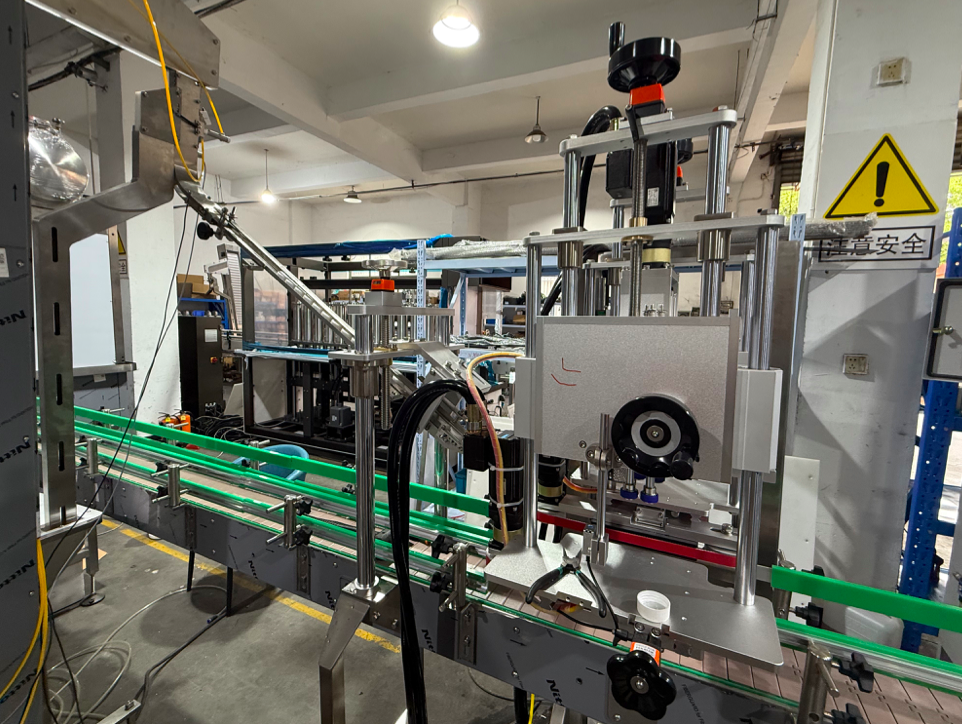
High Speed Automatic Screw Capping Machine
Relevant when: reviewing an automatic screw-capping equipment reference after maintenance requirements have been defined.
Why it relates: the product page identifies replaceable capping wheels and machine maintenance as part of its equipment description.
Confirm before selection: actual bottle and cap compatibility, supplied configuration, wear-part list and machine-specific service requirements.
Related reading
Automatic Capping Machine Setup →
Use this when the condition is a setup or changeover question rather than confirmed component wear.
Cap Feeding Reliability Troubleshooting →
Use this when the installed feeding path has repeated jams, misfeeds or unstable transfer.
Connect wear history, downtime and spare parts to one maintenance plan
A useful rotary capping machine maintenance program turns inspection findings into decisions: which station needs attention, which part was changed, what the removed part looked like and whether the same event is recurring. For machine-specific planning, confirm the maintenance material against the exact equipment documentation before release.
| Explore Rotary Capping Machines | Request Machine-Specific Service Information |
Frequently Asked Questions
How should a maintenance team choose which rotary capper spare parts to keep in stock?
Start with the confirmed machine parts list, then compare it with actual replacement history, downtime consequences and part availability. Confirm the exact part reference for the installed configuration before procurement.
Should capping-head parts be replaced on a fixed schedule?
Only when the machine documentation defines that schedule or replacement criterion. Otherwise, use the approved inspection method and documented condition rather than inventing a universal service-life number.
How should replacement parts be validated before routine production resumes?
Confirm that the installed part matches the correct reference, restore the documented machine configuration and complete the required post-maintenance checks. Where bottle holding or closure contact is affected, verify the result with representative bottles and caps using the established production acceptance method.
When should bottle and cap samples be included in a maintenance review?
Use representative samples when wear or replacement affects package-contact components, when a new format is introduced or when the team needs to separate a mechanical condition from package variation.
Can one preventive-maintenance checklist be used for several capping machines?
The record format can be standardized, but machine-specific inspection points, lubricants, intervals, parts and replacement criteria should not be copied between assets without verification.
What information should be sent when requesting machine-specific maintenance or spare-parts support?
Provide the machine identification, photographs of the relevant assembly, component or station involved, available part references, maintenance history and a clear description of the observed condition. Include representative bottle and closure information when package-contact parts are involved.