
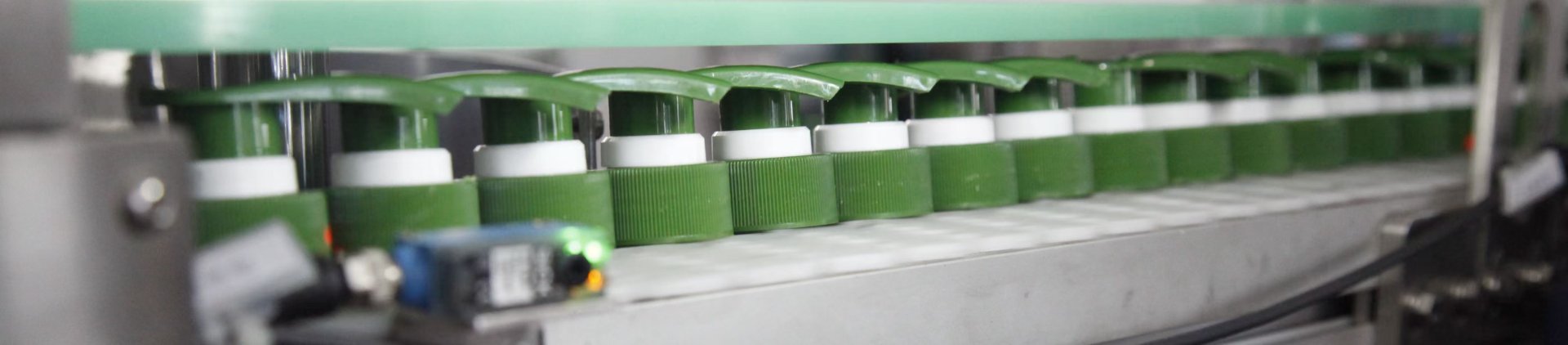
A cosmetic filling and screw capping machine with a published 10–2000 ml filling range can serve a broad range of personal-care packaging projects, but that range alone does not establish compatibility with every bottle or formulation.
RUNTECH lists an integrated filling and screw-capping configuration for cosmetic liquids, lotions, creams, shampoos, essences and daily chemical pastes. The practical question is how the product behaves during filling, how the bottle moves through the machine and whether its threaded closure can be positioned and tightened reliably.
Start with the Product and the Closure, Not the Volume Alone
Two cosmetic products can use bottles of similar capacity and still require different filling conditions. A lightweight essence, a flowing lotion and a thicker cream do not necessarily move through a filling system in the same way. Their flow characteristics, filling behavior and tendency to leave residue around the bottle opening can all affect the finished package.
RUNTECH lists cosmetic liquids, lotions, creams, shampoos, essences and daily chemical pastes among the applicable materials for its cosmetic filling and capping equipment. This provides a useful starting point when assessing the machine, but a broad product category cannot replace a review of the actual formulation. A representative product sample is more useful when the filling behavior needs to be established.
The closure is equally important. This configuration is designed around automatic screw capping, where the cap engages with a compatible threaded bottle neck. A snap-on closure, pump dispenser or dropper assembly uses a different closing arrangement and should not automatically be treated as compatible with the same screw-capping setup.
The key distinction: A bottle may fall within the published filling-volume range without being suitable for the complete filling-and-capping process. Product behavior, bottle geometry and closure design need to be considered together.
For projects using compatible threaded cosmetic bottles, RUNTECH’s automatic cosmetic filling and capping machine is the relevant equipment reference. The final configuration should be assessed against the actual packaging application rather than capacity alone.
What the Inline Filling and Screw-Capping Configuration Actually Connects
The defining feature of an inline filling and screw-capping machine is that filling and closure operations are arranged as connected stages within one automated packaging process. Bottles move through the equipment in sequence instead of being transferred manually between two independent production operations.
RUNTECH’s published configuration describes automatic bottle feeding, quantitative filling, cap sorting and positioning, automatic screw capping and finished-bottle discharging. These stages form the core packaging sequence.
| 01 |
Automatic bottle feeding Bottles enter the packaging process and move toward the filling position. |
| 02 |
Quantitative filling The filling section dispenses the specified product quantity into each container. |
| 03 |
Cap sorting and positioning Closures are prepared and positioned for the subsequent screw-capping operation. |
| 04 |
Automatic screw capping The positioned closure engages with the bottle’s threaded neck. |
| 05 |
Finished-bottle discharge Capped containers leave the integrated equipment for subsequent packaging operations. |
The integrated arrangement matters when planning a production line. A filling machine alone does not complete the packaging process if the finished container also requires automatic cap placement and tightening. An integrated configuration brings those operations together, reducing the need for separate handling between filling and capping.
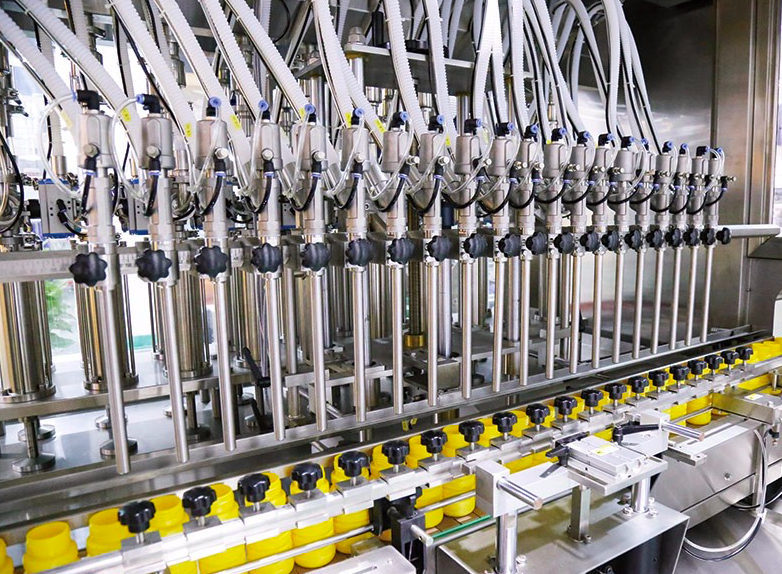
The official RUNTECH equipment gallery shows the multi-head filling arrangement used to dispense product into containers.
After filling, bottles move toward cap presentation and tightening. Correct positioning is important because a cap that reaches the bottle at an angle may not engage with the thread properly. The bottle should remain stable as the closure is applied.
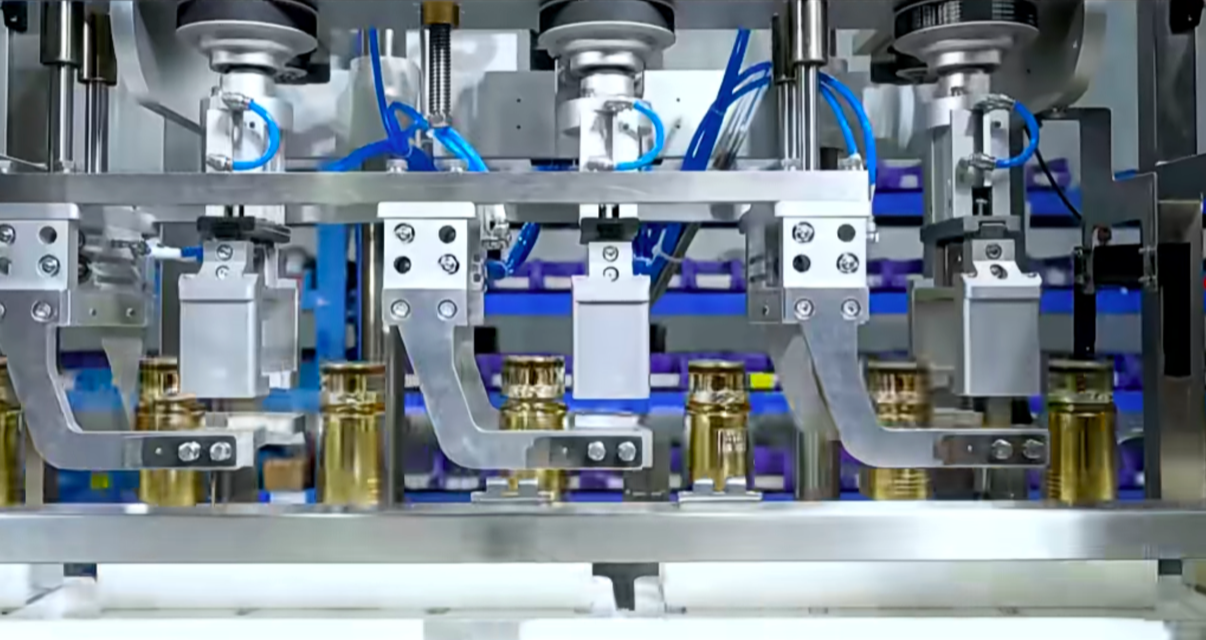
The official product image shows the capping heads and bottle positioning during closure application.
Finished bottles then leave the integrated unit for subsequent packaging operations. Depending on factory requirements, the wider line may also connect to bottle unscramblers, labeling machines, inkjet coding equipment and cartoning machines.
These additional machines should be distinguished from the core filling-and-capping equipment. Their availability as connected line equipment does not mean they are automatically included in every machine quotation. The proposed supply scope should identify which operations are covered by the main unit and which require separate equipment.
For a more detailed look at how bottle geometry, neck dimensions and closure design affect equipment compatibility, see RUNTECH’s guide to filling machine and capper compatibility for new bottle designs.
How to Interpret the Customizable 10–2000 ml Filling Range
RUNTECH publishes a filling range of 10–2000 ml, with customization available according to the intended application. This is a broad range covering small cosmetic containers as well as larger personal-care and daily-chemical bottles.
However, a 10 ml essence bottle and a 2000 ml personal-care container are not simply two versions of the same package. Their physical dimensions, bottle stability, opening geometry and closure requirements may differ considerably. The filling quantity is only one part of the equipment specification.
PUBLISHED FILLING RANGE
CUSTOMIZABLE FILLING VOLUME
10–2000 ml
Subject to the intended application and confirmed configuration.
For a project involving several container sizes, ask the supplier to identify the smallest and largest required filling quantities separately. The proposed setup should then be reviewed against the actual bottle dimensions, opening position and cap format. Some formats may share the same adjustable arrangement, while others may require different settings or dedicated change parts.
Production planning should also account for the frequency of format changes. A line running one bottle specification continuously has different setup priorities from a line switching between several cosmetic products throughout the day.
A useful compatibility review should include the actual bottle and cap samples, not just their nominal dimensions. This is particularly important when a project involves several container formats or a new bottle design.
Read Filling Accuracy and Production Speed as Reference Specifications
The published filling range is not the only information buyers need to review. RUNTECH also lists filling accuracy and production speed for this equipment. These figures help establish an initial technical reference, but they should be interpreted in the context of the intended product and packaging format.
| Published parameter | Specification |
|---|---|
| Filling volume | 10–2000 ml (customizable) |
| Filling accuracy | ±0.6% (published figure) |
| Production speed | 1200–4500 bottles/hour (published figure) |
| Capping mode | Servo constant-torque automatic screw capping |
The accuracy figure is useful when establishing the initial filling requirement, but it should not be treated as a guaranteed result for every product and filling quantity without confirming the operating conditions. Product behavior, the selected filling setup and the target dose all matter when evaluating actual performance.
The same distinction applies to production speed. A published range of 1200–4500 bottles per hour does not establish that the highest output will be achieved with every bottle size, formulation or closure arrangement. A smaller container may involve different filling and handling conditions from a larger bottle, while the product itself can influence the filling cycle.
For procurement purposes, request confirmation of the expected output for the specific bottle and product combinations that will run regularly. If the project includes several filling volumes, the relevant output should be reviewed by production format rather than relying solely on the maximum published figure.
What to Verify Before Approving the Machine Configuration
The published specifications provide a starting point, but they do not establish how the equipment will perform with a particular production format. Before approving the configuration, review the actual filling quantity, product behavior, bottle dimensions and closure requirements together.
A useful technical review should establish whether the machine can handle the intended packaging sequence consistently, not simply whether the nominal volume falls within its published range.
Test with the Actual Cosmetic Formulation
Product categories such as lotion, shampoo and cream are useful for identifying the general application, but they do not describe every filling characteristic. Two lotions can have different flow behavior, while a cream may require closer attention to product movement, residue and nozzle shutoff.
Where possible, provide the actual formulation or an agreed representative sample for evaluation. Pay attention to whether the product flows consistently, creates foam, leaves material around the nozzle or continues dripping after the filling cycle. These observations help establish whether the proposed filling arrangement is suitable for the production material.
Check Bottle Dimensions and Movement Through the Line
Nominal bottle capacity does not describe the container’s full physical shape. Overall height, body diameter, base stability, neck opening and shoulder geometry can influence how the bottle is positioned during filling and capping.
Physical bottle samples are particularly useful when the project involves lightweight, tall or unusually shaped containers. They allow the proposed setup to be assessed for bottle stability, positioning and clearance around the filling area. The bottle should also remain properly positioned when it reaches the capping station.
Confirm Thread Engagement and Finished Cap Quality
For screw-capped cosmetic packaging, the bottle and cap should be reviewed as a matched combination. The neck finish and cap thread need to correspond, while the cap must be presented and positioned correctly before tightening.
RUNTECH lists servo constant-torque automatic screw capping for this equipment. During application confirmation, discuss the intended cap format, required tightening conditions and acceptable finished closure appearance. The objective is to establish consistent cap engagement without assuming that every threaded bottle and cap combination will behave identically.
Agree on the Production Conditions Before Final Approval
Machine acceptance should be based on the actual production requirements. Confirm the target filling quantity, expected output, product condition and packaging format before evaluating the finished result.
Repeated fills can be assessed using net fill-weight measurements rather than visual fill height alone. The resulting data should be compared with the agreed filling tolerance. At the same time, inspect the bottle neck and surrounding surfaces for residue, then check whether the finished screw cap is correctly seated.
For projects with multiple bottle formats, the supplier should also clarify which adjustments are required between products and whether any dedicated components are needed. This makes the final configuration easier to evaluate before the equipment is ordered.
These checks provide a more reliable basis for confirming the proposed machine configuration than using filling capacity as the only selection criterion.
RUNTECH EQUIPMENT REFERENCE
Automatic Cosmetic Filling and Capping Machine
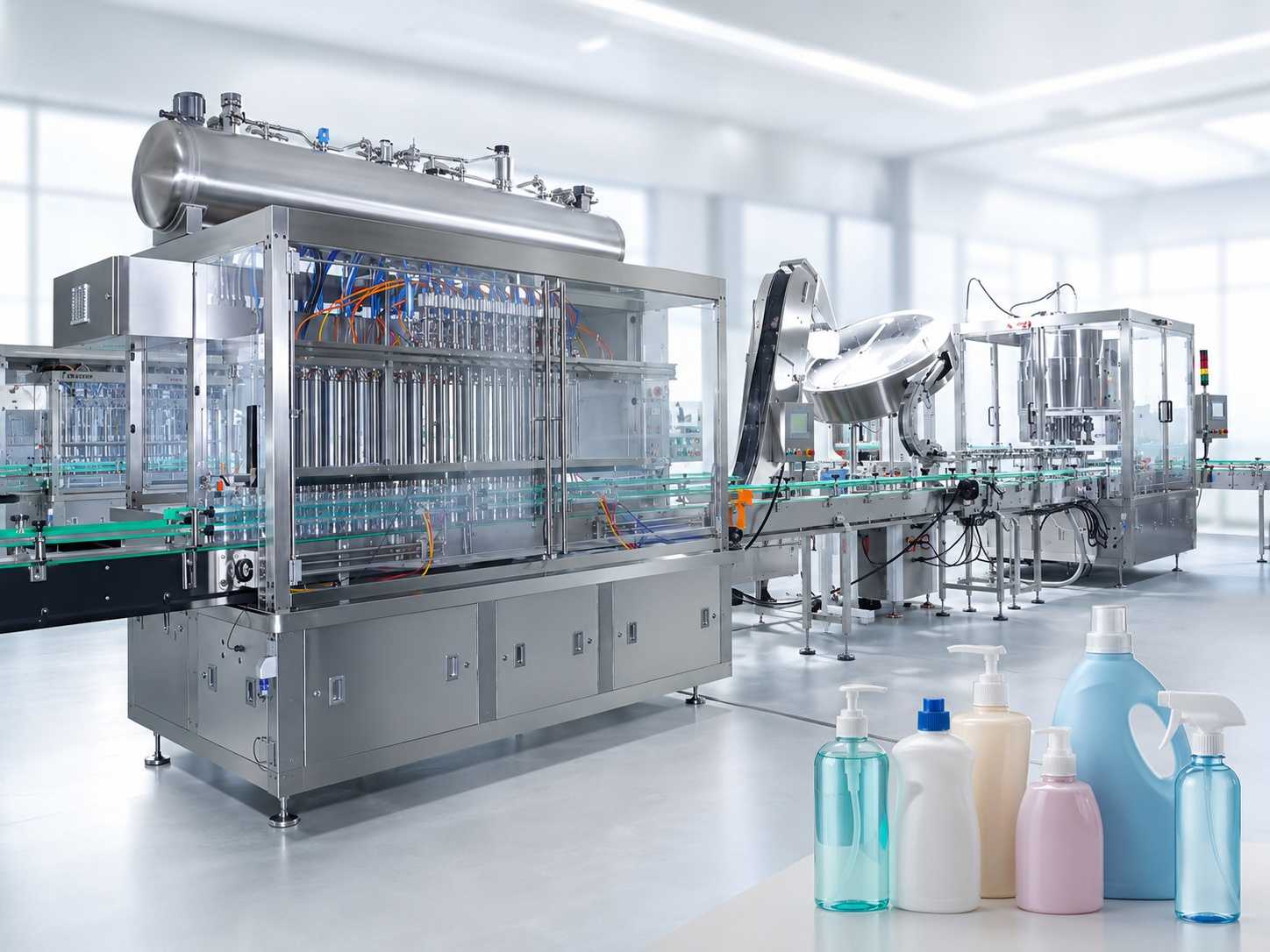
RUNTECH’s integrated equipment combines quantitative cosmetic filling with automatic screw capping in one packaging unit. Its published specifications include a customizable 10–2000 ml filling range, ±0.6% filling accuracy and a production speed of 1200–4500 bottles per hour.
It is relevant to cosmetic and personal-care projects involving liquids, lotions, creams, shampoos, essences and compatible threaded closures. Actual formulation, bottle dimensions, cap requirements and operating conditions should be confirmed before finalizing the equipment configuration.
Related RUNTECH Guides
For projects that require a closer review of filling behavior and packaging compatibility, these guides cover two related decisions:
Filling Machine and Capper Compatibility for New Bottle Designs — bottle openings, neck finishes, closure engagement and physical sample evaluation.
How to Choose a Liquid Filling Machine for Viscous Products — viscosity, product feeding, metering methods and real-product trials.
Questions Buyers Usually Ask
Does the 10–2000 ml range mean every bottle can use the same machine setup?
No. The published range describes the customizable filling-volume scope, not universal compatibility with every container. Bottle dimensions, neck geometry, product behavior and closure requirements should be checked against the intended production formats.
Can the machine fill cosmetic creams, lotions and shampoos?
RUNTECH lists creams, lotions, shampoos, cosmetic liquids, essences and daily chemical pastes among the applicable materials. However, the actual formulation should be reviewed because products with different flow characteristics may require different filling conditions.
Does the published 1200–4500 bottles/hour speed apply to every cosmetic product?
Not automatically. The published speed is a reference specification. Actual output should be confirmed for the intended filling quantity, formulation, bottle format and screw-capping requirements.
Can the filling and capping machine connect to other packaging equipment?
RUNTECH describes connections with bottle unscramblers, labeling machines, inkjet coding machines and cartoning machines. The specific equipment included in a proposed line should be confirmed separately.
What should buyers provide before requesting a machine configuration?
Provide the intended filling volume, product information, bottle drawings or physical samples, cap specifications and target production output. These details help establish whether the proposed filling and screw-capping arrangement is suitable for the application.
NEXT STEP
Match the Equipment to Your Cosmetic Packaging Requirements
If your project involves cosmetic filling and automatic screw capping, the next step is to review the actual product, bottle and cap combination against the proposed machine configuration. Providing the target filling quantity, representative product and packaging samples gives RUNTECH a clearer basis for assessing the application and discussing the appropriate equipment arrangement.