
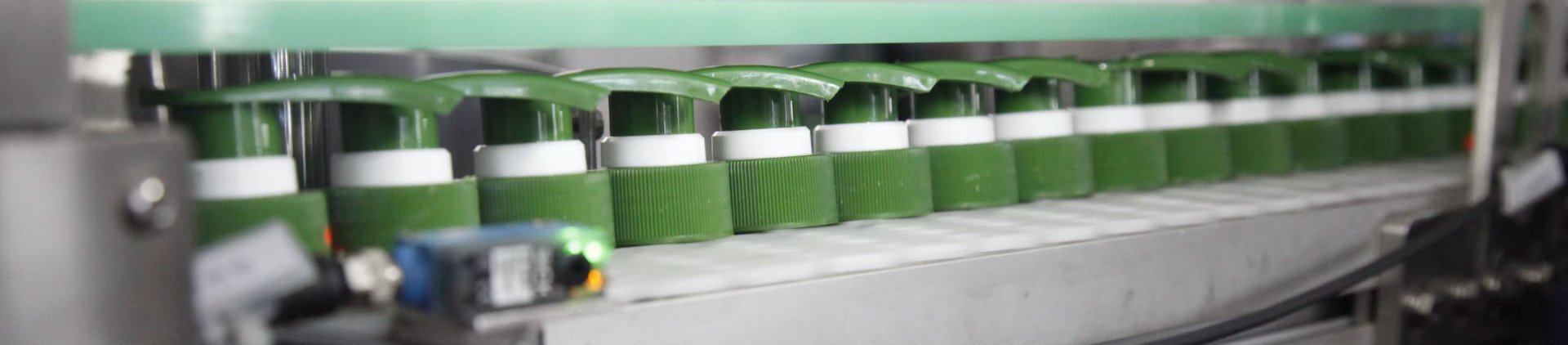
A servo vs piston filling machine comparison is not a contest between a newer system and an older one. When reviewing an automatic filling machine, the useful question is whether the control method and metering path match the liquid, fill range, recipe pattern, and cleaning routine. Servo control can improve motion programming and repeat setup, while piston metering can move difficult products with clear displacement logic. Neither name alone confirms filling accuracy, clean changeover, or stable production across every SKU.
Quick selection signals
Start with production work, not the machine label
1Many recipes or frequent dose changes
Review servo-controlled adjustment early, then confirm which settings and parts actually recover.
2Thick, sticky, or stringy liquid
Test piston displacement early, while checking refill, cutoff, seals, tailing, and neck cleanliness.
3Wide behavior range or difficult cleaning
Compare complete liquid paths. In this case, a real-product changeover test should settle the route.
Liquid behavior → Fill range → SKU pattern → Cleaning work → Sample result
Servo vs Piston Filling Machine: What the Terms Actually Describe
The two labels do not describe the same engineering layer. In most filling discussions, “servo” identifies how a motor controls movement, while “piston” identifies a positive-displacement metering principle that draws and discharges a measured chamber volume.
That distinction matters because a servo motor can drive a piston. “Servo” and “piston” are therefore not always opposite equipment choices. A machine may combine servo-driven motion with piston metering, depending on its actual configuration.
Runtech separates its servo filling machine and piston categories for product navigation. Those category names should begin the technical discussion rather than finish it. The final layout still depends on the liquid path, metering element, valve arrangement, nozzle behavior, and controls.
Control layer and metering layer are different
|
SERVO Control layer |
| ↓ can drive ↓ |
|
PISTON Metering layer |
One filling machine can use servo-controlled motion and piston metering at the same time. Compare the function of each layer before comparing machine labels.
What servo control can change
Servo control can program position, speed, acceleration, deceleration, and motion timing. A controlled stroke may repeat through stored settings rather than repeated manual adjustment. That feature can help when several recipes need different discharge profiles or fill volumes.
A motor profile cannot correct every product problem. Air in the feed path, unstable head pressure, leaking valves, worn seals, or a dripping nozzle can disturb results. Likewise, poor bottle handling can create apparent filling faults even when metering remains stable.
The phrase “servo filling” also needs a precise boundary. For example, a servo may drive a piston, pump, nozzle lift, or several coordinated axes. A proposal should identify which movement uses servo control and which component actually measures each dose.
In practice, recipe storage matters only when stored values control the relevant hardware. A saved fill volume offers limited value if the change still needs a different cylinder, hose, nozzle, or valve. The recipe screen and product-contact assembly must be reviewed together.
SERVO ROUTE | Control, repeat setup, and recipe recovery
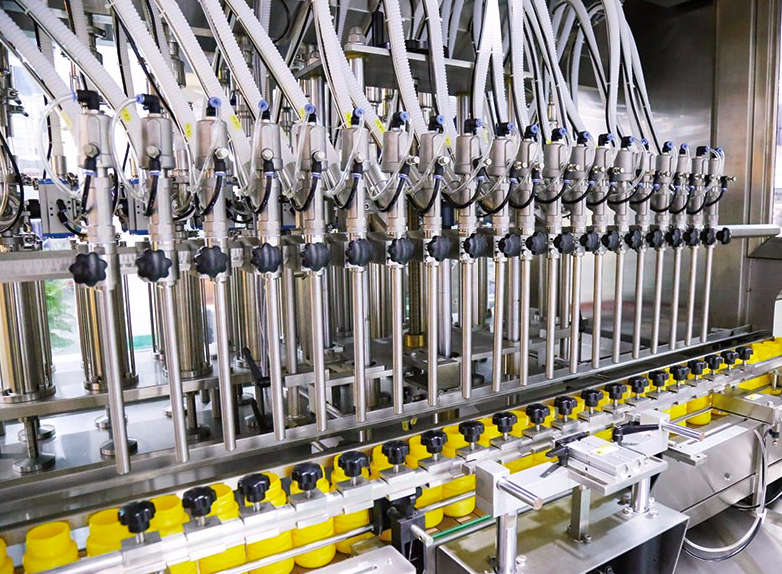
Servo-controlled movement should be reviewed together with the actual metering chamber, valves, nozzles, and recipe-controlled settings.
What piston metering can change
A piston filling machine draws product into a metering chamber and then discharges it. This displacement principle can handle many products that need a positive, controlled push. It often receives attention for creams, lotions, detergents, gels, pastes, and other products with noticeable flow resistance.
However, piston metering is not automatically limited to thick liquids. Valve design, nozzle size, stroke setting, seal choice, and product supply all influence suitability. Thin products may run well in a suitable configuration, although dripping, splashing, and valve response still need evaluation.
Piston equipment can use different adjustment methods. Some designs rely more heavily on mechanical settings, while other designs add servo-controlled piston movement. The word “piston” does not reveal the level of recipe automation or changeover support.
Five questions every filling quotation should answer
- Which component measures the dose?
- Which movement uses servo control, if any?
- Which valve or nozzle action stops the product cleanly?
- Which recipe settings return automatically?
- Which contact parts need cleaning, adjustment, or replacement?
Those answers remove much of the naming confusion. More importantly, they show whether two quotations describe truly different systems or similar hardware with different labels. A clear functional diagram can reveal that difference faster than a long feature list.
PISTON ROUTE | Positive displacement, product push, and cutoff behavior
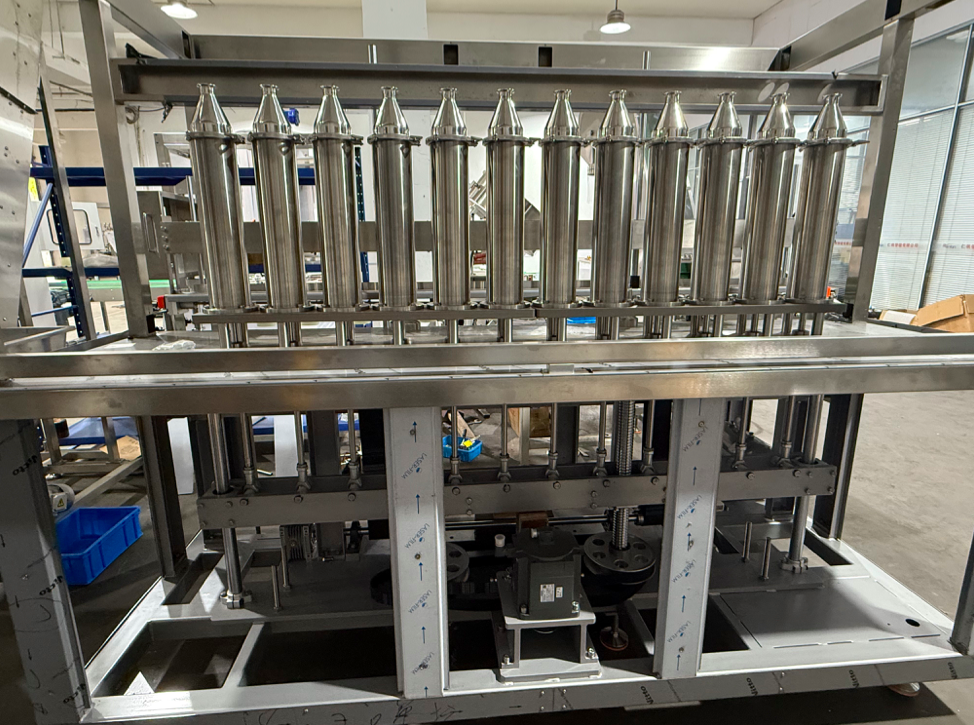
Piston metering can provide a controlled positive-displacement dose, but liquid refill, cutoff, cleaning, and seal behavior still require sample testing.
Compare Liquid Behavior, Fill Range and Recipe Changes
Liquid behavior, usable fill range, and recipe pattern matter here because they change what the servo-versus-piston comparison is really testing. The goal is not to repeat a general filling-method guide. It is to identify whether production risk comes mainly from motion adjustment, positive-displacement metering, the product-contact path, or a physical change that software cannot recover.
Liquid behavior changes the test priority
Viscosity is a useful starting point, but it does not decide the route by itself. A thick product may make piston displacement worth testing early, yet the practical result can still be limited by chamber refill, valve restriction, nozzle cutoff, temperature, or retained residue. A thin liquid may meter easily but expose splash, drip, or foam when discharge speed is poorly shaped.
Stringy products create a useful comparison point. Positive displacement may move the product reliably, while servo-controlled motion can help shape the discharge profile. Neither benefit matters if tailing still bridges to the bottle neck, so nozzle closure, suck-back, final speed, and neck cleanliness belong in the same trial.
Particles, abrasives, or aggressive chemistry can move the decision away from the drive label completely. Particle passage, valve clearance, seal material, hose compatibility, and cleaning chemistry may become the primary constraints. In that situation, the full wetted path should be approved before recipe automation receives much weight.
Temperature and stop conditions should also be part of sample testing. Warm detergent, cream, oil, or paste may behave differently after cooling, standing, agitation, or restart. Test the realistic production window rather than one convenient room-temperature sample.
Fill range is more than minimum and maximum volume
A broad listed fill range is not enough to show that one configuration covers every planned SKU. Near the low end, dead volume and cutoff behavior may represent a larger share of the dose. Near the high end, stroke proportion, refill time, or multiple metering actions can change cycle performance.
This is where servo-controlled adjustment can be useful: stored positions and motion values may reduce repeated manual setup when one metering geometry covers several doses. The benefit disappears if each volume change also requires a different chamber, hose, nozzle, or valve.
Container geometry remains part of the test. A narrow neck can limit nozzle diameter, a shallow jar can splash during a fast discharge, and several filling heads must remain balanced across the working range. Test the lowest, most common, and highest target volumes with the real package rather than relying on one nominal range.
When many volumes share one line, mark which sizes dominate the production schedule. A rare extreme SKU should not quietly force a more complex configuration if daily production can be handled more reliably another way.
Recipe changes depend on what physically changes
A recipe can store motor positions, speeds, delays, and timing values. Software cannot change a hose bore, nozzle opening, chamber size, seal material, or cleaning requirement. A fair servo-versus-piston comparison separates parameter recovery from physical change.
A volume change inside one similar liquid family may need only a stored setting and verification. A move from free-flowing soap to dense cream may need different nozzles or discharge timing. A color or fragrance change can require a full cleaning procedure even when viscosity is similar.
SKU count alone can mislead. Twenty labels on one base liquid may create less filling work than three formulas with different flow and cleaning behavior. Group the schedule by same liquid with new packaging, same base with minor variation, different rheology, and incompatible cleaning family.
Batch size changes the value of automation as well. Frequent short runs make recipe recovery, priming loss, cleaning time, and first-good-fill recovery more important. Long campaigns place more weight on stable output, wear monitoring, and consistent feed conditions.
Instead of asking which technology handles more recipes, count the work behind each recipe: parameter entries, manual adjustments, contact-part changes, cleaning steps, trial fills, and release checks. That workload shows whether servo-controlled recovery actually removes production work or simply moves it to another part of the setup.
Control, Repeat Setup and Changeover Differences
Control quality should support a stable process, not simply add more screen settings. In practice, the best interface makes critical adjustments clear and protects proven values. A crowded screen with many editable fields can increase setup risk rather than reduce it.
Servo-driven motion can support repeatable positioning and tailored discharge profiles. For instance, a recipe may slow the final portion of a dose to improve cutoff. Yet the resulting fill still depends on product supply, mechanical condition, and correct priming.
Separate dose control from flow shaping
The system needs one method to establish the dose and another method to shape its delivery. Sometimes one component influences both functions. Even so, separating the two ideas makes technical proposals easier to compare.
Dose control answers how the machine decides that enough product has moved. Flow shaping covers start speed, main discharge speed, final slowdown, cutoff, and any nozzle retraction. A stable dose can still create foam, splash, or neck contamination if the profile is unsuitable.
In a servo-controlled piston arrangement, the programmed stroke may establish volume while motion speed shapes discharge. A mechanically adjusted piston may achieve similar displacement through a different setup process. The key difference then becomes adjustment method and recipe recovery, not the piston principle itself.
Other configurations may meter through a pump, mass measurement, or flow signal. So, the control discussion should identify the actual feedback or displacement basis. Terms such as “digital,” “PLC controlled,” or “high precision” do not provide that answer.
Nozzle functions deserve equal attention. A shutoff nozzle can help control drips, while diving motion may reduce splash or foam for some products. However, every extra movement adds timing, cleaning surfaces, and mechanical items that need evaluation.
Repeat setup should be tested after interruption
Repeatability during one steady run is only one part of production behavior. After a break, the product may settle, cool, warm, separate, or lose feed pressure. Restart samples can show problems that a continuous trial misses.
A useful test includes cold start, normal running, short stop, long stop, refill, and recipe recall. Each condition should use the same acceptance method. That sequence shows whether stored settings recover the process or merely recover motor positions.
Power interruption can reveal another weakness. The line should return to a known state without creating accidental double fills or empty cycles. For that reason, recovery logic and operator prompts should form part of the review.
Alarm handling matters as well. Low product level, missing bottle, nozzle blockage, sensor disagreement, and drive faults can affect dose integrity. A practical interface should show the cause, preserve safe conditions, and support a controlled restart.
Parameter access also needs structure. Production staff may need recipe selection and minor approved adjustment, while deeper settings require protection. This control reduces untracked changes between shifts and makes troubleshooting more reliable.
Changeover time must include proof of readiness
Many changeover estimates stop when the last part reaches the machine. Production cannot resume until the new setup produces acceptable containers. For this comparison, true changeover time includes cleaning, required part changes, recipe recall, priming, trial filling, and the first approved result.
Material recovery belongs in the same calculation. Product left inside a hopper, chamber, manifold, hose, or nozzle may become waste or rework. Short campaigns can make retained volume and first-good-fill recovery more important than a small difference in nominal cycle speed.
Tool requirements and reference positions also influence repeatability. If a routine change needs several tools and several unrecorded adjustments, stored servo values solve only part of the work. Clear locating features and documented settings make the recovery comparison more meaningful.
Detailed bottle-format work such as guide rails, sensor windows, nozzle spacing, bottle geometry, dry runs, and sign-off belongs in the separate bottle filling machine changeover checklist. Here, the key question is narrower: which configuration returns to a verified first-good-fill condition with fewer uncertain adjustments?
Verification should use the approved measurement method rather than visual level alone. Container geometry can make equal doses appear different, especially with shoulders, panels, and thick walls. Net mass checks can support comparison when density and target definitions are handled correctly.
Control value appears in recovery performance. Recipe features earn their place when the machine returns to an approved condition with less manual uncertainty. That result should be demonstrated during sample trials and acceptance work.
Cleaning, Wear Parts and Maintenance Questions
Cleaning needs often decide between otherwise workable configurations. In daily chemical and cosmetic production, fragrance, color, active ingredients, and base chemistry can create strict separation needs. As a result, the shortest liquid path is not always the easiest path to clean.
The design should show every product-contact area. That includes the source vessel connection, hopper, chamber, seals, valve cavities, manifold, hoses, and nozzles. Hidden pockets can retain product even when visible surfaces look clean.
Map the cleaning path before comparing machine names
A cleaning review should begin with the current written procedure. If no fixed procedure exists, the production team should define acceptable residue removal and verification. The machine can then be evaluated against a real sanitation target.
Some processes use manual disassembly and wash stations. Others circulate cleaning liquid through the product path, while certain formulas need both methods. The proposed configuration should state which parts remain installed and which parts require removal.
Access can change the labor burden significantly. A component may be technically removable but difficult to reach when adjacent guards, conveyors, or frames block movement. In that situation, maintenance drawings and a physical demonstration can be more useful than a parts list.
Drainability matters for both cleaning and product recovery. Low points, long horizontal hoses, and closed cavities can hold residual liquid. In addition, a thick formula may not drain under gravity within a practical time.
Cross-contact risk depends on the product family. A fragrance change may need a different standard from a simple package-size change. Likewise, color, allergen, active ingredient, or incompatible chemistry can require dedicated parts or separate cleaning validation.
Water-sensitive products add another concern. Residual rinse liquid can disturb a later batch, even when visible product has disappeared. Thus, drying steps and final rinse removal should form part of the changeover study.
Piston wear points need product-specific review
Piston systems commonly include dynamic sealing surfaces and valve elements. Product chemistry, abrasiveness, particles, temperature, and cleaning agents can influence their service condition. Still, the exact wear pattern depends on the proposed assembly and operating method.
Seal material should match both production liquid and cleaning chemistry. A material that tolerates the formula may react poorly to the wash process. Compatibility review must cover every liquid that enters the contact path.
Particles can lodge near sealing or valve surfaces. Abrasive ingredients may also accelerate wear, while sticky residues can affect movement after shutdown. For these products, inspection access and spare-part replacement time deserve early attention.
Cylinder and chamber condition can influence dose consistency over time. Routine inspection should rely on documented signs rather than guesswork. Leakage, scoring, seal damage, unusual motion, and fill drift can each guide maintenance checks.
Valve selection also matters. Product must enter and leave the metering chamber without creating restriction, damage, or uncontrolled return. Sample testing should observe valve response throughout the realistic viscosity and temperature range.
Servo components do not remove liquid-path maintenance
Servo control can reduce certain manual motion adjustments. It does not eliminate seals, valves, hoses, nozzles, bearings, guides, or product-contact cleaning. The maintenance comparison must separate drive maintenance from fluid-path maintenance.
Electrical diagnostics may improve fault visibility. For example, drive alarms and position feedback can help locate certain motion problems. Yet those signals cannot directly identify every blocked nozzle, worn seal, or air pocket in the product line.
Technical support also depends on documentation quality. Wiring information, parts identification, recipe backup, alarm descriptions, and maintenance intervals can shorten recovery work. Documentation should be reviewed before final acceptance rather than after a fault occurs.
Spare-parts planning should focus on critical and routine items. The list may include seals, valve components, nozzle parts, sensors, and drive-related items, depending on the design. A machine-specific list is more useful than a generic box of consumables.
Maintenance access should allow safe inspection without disturbing unrelated settings. If replacing one seal requires dismantling several calibrated parts, recovery becomes harder. Conversely, clear reference positions can make reassembly and verification more predictable.
Finally, cleaning and maintenance should be tested under time pressure. A showroom demonstration rarely reflects a full formula change. A realistic trial uses actual residue, normal tools, standard protective steps, and the intended verification method.
Decision Matrix by SKU Pattern
No single equipment route wins every SKU pattern. Instead, the strongest signal comes from repeated production work. The following matrix turns that pattern into an initial engineering direction, not a final machine specification.
| SKU pattern | Initial selection bias | Evidence still required |
|---|---|---|
| One stable formula, narrow dose range, long campaigns | A well-configured piston route may offer direct displacement and a clear product path | Product trial, valve behavior, cutoff, seal compatibility, restart checks |
| Many dose sizes within one similar liquid family | Servo-controlled adjustment may reduce repeated manual setup | Confirm usable range, physical part changes, recipe recovery, low-volume behavior |
| Several formulas with major viscosity differences | Compare complete metering and nozzle configurations, not drive labels | Temperature range, flow curves, fill profiles, cleaning time, retained product |
| Frequent short batches and daily changeovers | Favor the configuration with lower cleaning work and faster verified release | Timed changeover, material loss, priming volume, first-good-fill recovery |
| Thick, sticky, or stringy products | Positive displacement may deserve early testing, with strong cutoff control | Tailing, suck-back, nozzle closure, neck cleanliness, stop-and-restart behavior |
| Thin, foaming, or splash-prone liquids | Flow shaping and nozzle movement may outweigh the basic metering label | Foam collapse, diving profile, discharge speed, bottle geometry, drip control |
| Products containing soft or suspended pieces | Path geometry and valve clearance become primary | Particle passage, settling, separation, damage, cleaning access |
| Chemically aggressive or abrasive formulas | Compatibility and wear strategy come before servo-versus-piston preference | Wetted materials, cleaning agents, inspection plan, replacement access |
Where These Filling Routes Fit in Runtech’s Core Markets
Runtech’s strongest application fit sits in packaged daily-use liquids with repeatable bottle handling. The route still depends on formula behavior and the production schedule.
Daily Chemical and Household Care
Shampoo, hand soap, body wash, dishwashing liquid, laundry detergent, and household cleaner form a core application group. Foaming, fragrance changes, viscosity shifts, and bottle-neck cleanliness often decide the final configuration.
Personal Care and Cosmetics
Lotions, creams, gels, conditioners, and hair-care formulas often need controlled product push and clean cutoff. Here, stringing, product recovery, seal compatibility, and cleaning access deserve more weight than the drive name.
Contract Packaging and Multi-SKU Production
Short campaigns make recipe recovery, part changes, cleaning time, and first-good-fill release especially important. Servo-controlled adjustment can reduce repeat setup, while a piston route may remain stronger for difficult formulas after testing.
Other liquids require confirmation. Sauces, oils, and selected industrial liquids may fit after checking product-contact materials, cleaning needs, particles, temperature, and package samples. No market label should replace that review.
How to Read the Matrix in Production Terms
Stable formula, narrow range, long campaigns
A line running one formula for long campaigns has fewer recipe-recovery demands. Mechanical simplicity and steady product supply can carry more weight, and a piston arrangement may become attractive when displacement behavior suits the product and cleaning plan. The trial should still include startup, tank refill, long stop, and end-of-batch conditions rather than only the easiest middle of a run. In this pattern, seal life, valve access, inspection effort, and spare-part availability may matter more than fast changeover.
Wide dose range inside one similar liquid family
Several bottle sizes using a similar base product can benefit from stored settings. Servo-controlled displacement may support faster volume changes when one metering geometry covers the required range, but the smallest and largest targets must both run acceptably. Package changes can still dominate setup through guide rails, bottle stops, sensors, nozzles, and conveyor timing, so the benefit should be measured as total recovery time rather than fill-setting time alone.
Many formulas or frequent short runs
When containers remain similar but formulas change, cleaning and flow behavior move to the center. A saved motor setting cannot remove fragrance, color, active residue, or incompatible chemistry. Group formulas by cleaning family and test difficult transitions in both directions. For short campaigns, priming volume, trial containers, leftover product, washing, drying, and release checks can outweigh a small speed advantage; a slightly slower stable cycle may deliver more useful output if it returns to first-good-fill faster.
Time the changeover from the last accepted container of one SKU to the first accepted container of the next. This boundary prevents an attractive but incomplete mechanical-change figure from deciding the purchase.
Difficult liquids: viscous, foaming, particulate, or chemically demanding
High flow resistance can make positive displacement worth testing early, but chamber refill, stringing, cutoff, temperature sensitivity, and retained residue still decide whether the result is usable. Stringing should have its own acceptance criterion because a dose can pass weight checks while leaving product across the neck. Suck-back may help, but excessive reverse movement can draw air or disturb the next cycle.
Thin or foaming liquids shift attention toward discharge profile, nozzle sizing, diving movement, and the timing of inspection after foam collapse. Suspended pieces, abrasive ingredients, or aggressive chemistry can override both servo and piston preference by making valve clearance, seal compatibility, product distribution, and maintenance access the primary constraints.
Use the matrix to narrow the test plan, not to authorize purchase. Every promising route still needs representative product, the real container, documented conditions, and an acceptance method that can expose the likely failure mode.
When Neither Option Should Be Chosen by Name Alone
Some projects move beyond a simple servo-versus-piston comparison. The decision should remain open when the required measurement basis, feed condition, package handling, or sanitation rule becomes more important than the original machine label.
Mass-based target or another metering reference
If the production requirement is defined by net mass, or density shifts with temperature, aeration, or formulation, a displacement-based comparison may not answer the full question. State whether acceptance uses volume, mass, visual level, or another method before comparing architectures.
Feed, bottle handling, or line balance dominates the defect
Changing tank level, unstable pressure, air leaks, separation, long transfer lines, poor agitation, off-center bottles, or unstable downstream stations can make a good metering unit look inconsistent. Trials should reproduce the intended feed method and real package handling so the filler is not blamed for a supply or line-control problem.
Sanitation, segregation, or material compatibility sets the boundary
Strong color carryover, fragrance persistence, active ingredients, incompatible chemistry, particles, or abrasion may require dedicated contact sets, different wetted materials, or separate equipment. In these cases, cleaning validation and compatibility come before control convenience.
If the project reaches one of these boundaries, use the broader filling-method comparison to review piston, gear-pump, flow-meter, weighing, and other routes before forcing a servo-versus-piston choice. The purpose is not to add options for their own sake; it is to keep the test aligned with the actual process requirement.
Information to Send for Final Selection
A useful technical review begins with evidence, not a preferred machine label. Product behavior, package geometry, operating pattern, and acceptance rules should arrive in one data package. This information allows the metering and control method to follow the actual process.
Missing details do not need invented estimates. Instead, unknown values should be marked for measurement or sample testing. That approach keeps the proposal honest and prevents assumptions from becoming hidden design requirements.
Product and flow information
Provide the product name and a plain description of its behavior. Include viscosity data at relevant temperatures when available, but do not stop there. Notes about foaming, stringing, stickiness, separation, particles, and air sensitivity add essential context.
The process temperature range should cover startup and normal production. If heating, cooling, or agitation affects flow, include that information too. A room-temperature sample may not represent product arriving from a mixing or storage step.
List all product-contact concerns. These may include chemical compatibility, abrasion, fragrance carryover, color carryover, active ingredients, or special cleaning agents. Safety data and formulation guidance can support the wetted-material review where appropriate.
For products with pieces or suspended solids, record size, shape, softness, concentration, and settling behavior. Photos can help, but a physical sample remains more reliable. The feed method should also show how distribution stays reasonably uniform.
Dose range and SKU pattern
State every planned fill quantity, then identify the most frequent sizes. Also mark the lowest and highest targets that must share one configuration. This prevents an extreme, rare SKU from quietly shaping the whole machine.
Group formulas by similar flow and cleaning behavior. In addition, separate package-only changes from true product changes. This map reveals whether recipe storage, part replacement, or sanitation drives changeover work.
Record average campaign length and typical change frequency. Daily, weekly, and seasonal patterns can produce different priorities. A line with frequent small batches needs a different recovery strategy from one running long campaigns.
The required acceptance rule should be explicit. State whether checks use net mass, volume, visual level, or another approved method. Also define when samples are taken and how the result is calculated.
Container and closure information
Send representative containers for every important geometry. Drawings should include overall dimensions, opening size, neck details, and any flexible or unstable areas. Actual samples reveal handling behavior that drawings may miss.
Mark the intended fill level and available headspace. For foaming products, headspace can affect the workable discharge profile. Likewise, a narrow opening may limit nozzle diameter and increase fill time.
Include closure samples when product can reach the neck or threads. Pump, trigger, screw, or other closures may react differently to residue. A combined filling and capping trial can expose package interactions earlier.
Container material and wall stiffness matter as well. Lightweight bottles may deform under guides or move during nozzle entry. Bottle support should be tested with empty and filled packages.
Production and changeover information
Provide the required line output as a process target, not an isolated filler claim. Include bottle spacing, upstream supply, downstream capping, and normal stop patterns. The engineering review can then identify whether another station sets the practical limit.
List every changeover task currently expected. That list can cover guide adjustment, nozzle change, contact-part replacement, recipe recall, cleaning, priming, and release checks. Estimated frequency matters more than a single best-case time.
Describe available utilities and site constraints. Product feed height, tank location, floor space, access, and cleaning area can influence the configuration. Any controlled environment or washdown expectations should also be stated for confirmation.
Training and documentation needs belong in the package. Recipe authorization, maintenance responsibility, language needs, and spare-parts planning can affect daily stability. These details support a workable production system rather than a feature comparison alone.
Cleaning and maintenance information
Share the intended cleaning sequence, agents, temperatures, contact times, rinse method, and drying requirement. If the process is still under development, identify that gap clearly. Machine design and cleaning validation should not rely on separate assumptions.
Define which parts may leave the machine for washing. Also note lifting limits, tool restrictions, wash-station capacity, and acceptable disassembly time. A removable assembly offers little benefit if routine handling remains impractical.
List materials that cannot mix across formulas. Color, fragrance, active content, allergen risk, and chemical incompatibility can each change the approach. In some cases, dedicated contact sets may deserve evaluation.
Maintenance planning should identify available technical skills and expected spare coverage. Access to seals, valves, sensors, and nozzles should match the site routine. Clear inspection points can support early detection before fill drift becomes a larger loss.
A practical sample-testing protocol
Sample testing should reproduce the difficult conditions, not only the easiest condition. Start with the minimum, normal, and maximum realistic product temperatures. Then test the smallest, common, and largest required fill quantities.
A test should follow the production sequence
01 Stabilize — Set the realistic product temperature, feed condition, and primed state.
02 Challenge — Run the smallest, common, and largest dose with the real container.
03 Interrupt — Stop, restart, change a recipe, and return to the original setup.
04 Record — Measure dose and observe foam, drip, stringing, residue, and neck cleanliness.
Before measurement, define how the system reaches a stable primed state. Record any product used during priming and any air removed from the path. This step helps separate startup loss from normal running behavior.
Collect samples at startup, after stable running, after a short stop, and after a longer stop. Also test after a tank refill or feed interruption when relevant. Each group should use the same measurement method.
Observe more than dose results. Record foam, splash, dripping, stringing, nozzle residue, bottle-neck cleanliness, particle condition, and visible separation. These observations often determine whether a technically accurate dose becomes a usable package.
Next, recall a different recipe and return to the original recipe. That sequence tests setup recovery rather than one-direction adjustment. If physical parts change, include removal, installation, positioning, priming, and release checks in the timed record.
Cleaning trials should use real product residue when practical. After cleaning, inspect the full path and apply the planned verification method. A water-only demonstration cannot prove removal of a sticky, fragrant, colored, or water-sensitive formula.
Document every trial condition. Product batch, temperature, feed setup, container, nozzle, settings, sample sequence, and measurement method should appear in the report. Without that context, later results cannot support a fair comparison.
Once this package is ready, send the liquid data and representative samples to Runtech Capping. Include the fill range, SKU map, changeover schedule, and cleaning requirements. The technical discussion can then compare the control architecture and metering path against the same evidence. That process turns a broad equipment name into a configuration that can be tested.
Frequently Asked Questions
Is a servo system always more accurate?
No. Servo control can repeat motion settings precisely, but final filling results depend on the complete process. Product supply, air, valve condition, seal wear, nozzle cutoff, temperature, and measurement method can all affect variation.
The correct comparison uses the same product, container, dose, and test method. In addition, trials should include startup and restart conditions rather than one stable sequence. Accuracy claims without those conditions provide little purchasing value.
Is piston filling only suitable for high-viscosity products?
No. Piston metering can suit a wider range when valves, seals, nozzles, and stroke settings match the liquid. Thin products may expose dripping, splashing, or fast valve-response issues that require testing.
Likewise, a thick product is not automatically suitable. Slow chamber refill, stringing, particles, temperature change, and difficult cleaning may still create problems. The complete contact path decides more than the viscosity label.
How should frequent formula changes affect the decision?
Count the work behind each formula change. Recipe recall may reduce parameter entry, while cleaning, parts, priming, and release checks can still dominate downtime. Total verified changeover time matters more than the number of stored recipes.
Group formulas by flow behavior and cleaning compatibility. Then test a difficult transition in both directions, including return to the original formula. This method reveals residue, setup drift, and recovery effort that a single change can hide.
What does “servo piston” mean in a quotation?
The phrase usually indicates that servo-controlled movement works with piston metering. The quotation should identify the servo-driven axis, dose-setting method, valve design, nozzle function, and recipe-controlled settings. That detail prevents two different architectures from sharing one vague label.
Ask for a functional description of the liquid path and motion sequence. Then compare which adjustments remain mechanical and which settings return through a stored recipe. This clarification often explains the real difference between proposals.
Final Selection Summary
A servo vs piston filling machine comparison should not treat servo and piston as opposite quality levels. They describe different parts of the filling architecture and can appear in one system. The right route matches actual liquid behavior, usable fill range, recipe recovery, cleaning needs, and restart performance.
Before final selection, take three practical actions:
- Group SKUs by flow behavior, dose range, and cleaning compatibility rather than product name.
- Measure complete changeover time, including cleaning, priming, trial fills, and release approval.
- Test real samples at difficult temperatures, dose limits, stop conditions, and recipe transitions.
With those results, the automatic filling machine discussion can move from labels to evidence. Runtech Capping can then review the liquid data, samples, package set, SKU schedule, and cleaning method before confirming control and metering details.
Prepare a test-ready filling brief
Use the Runtech contact page to submit six items in one package: liquid flow and viscosity notes, realistic product temperatures, minimum and maximum fill quantity, the SKU and changeover schedule, the cleaning method, and representative product plus container samples. Ask the technical review to compare metering, nozzle cutoff, recipe recovery, and cleaning work under the same trial conditions.
| Review Servo Options → | Review Piston Options → |