
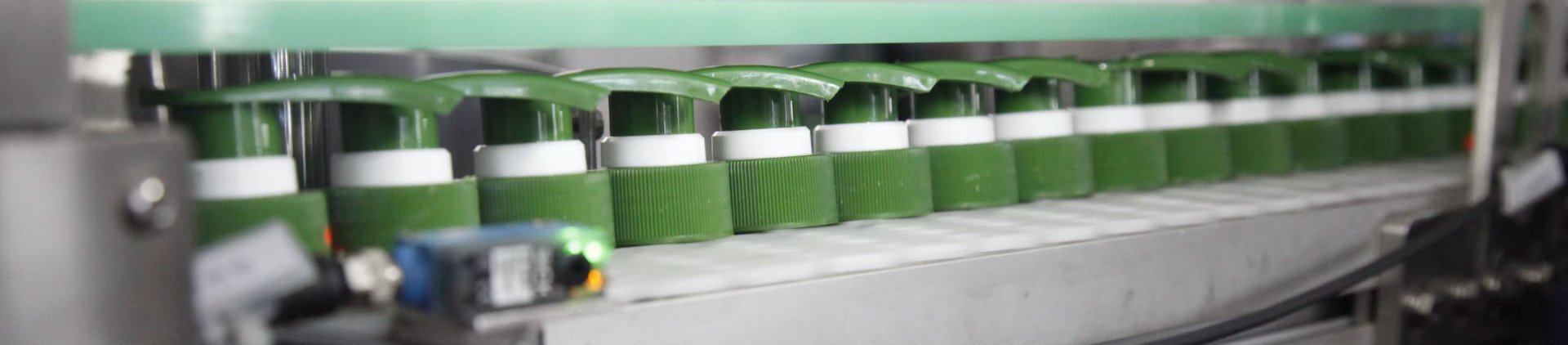
A dish soap line rarely struggles because detergent is simply “too thick.” The real problems usually appear when viscosity, foam, bottle shape, filling speed and downstream capping begin interacting. A machine can look fast during an empty run and then become much slower once real dish soap starts foaming at the neck or dripping onto the conveyor.
That is why choosing a dish soap filling machine should begin with the way the product actually behaves, then move to filling accuracy, required output and the complete packaging line. For higher-volume production, a rotary filling machine can be a strong fit, but only when the production pattern justifies it.
The buying question is not “rotary or linear?” It is: which configuration can fill your real detergent, in your real bottle, at the output your whole line can sustain without creating foam, dripping or a downstream bottleneck?
Dish Soap Changes the Filling Decision Before the Machine Does
Dishwashing liquids can look very similar in a bottle while behaving quite differently inside a filling system. One formula may flow quickly and settle almost immediately. Another may be more concentrated, slower through the product path and much more sensitive to turbulence.
Foam makes the difference particularly visible. If detergent drops too far into the bottle or enters too aggressively, the liquid can build a foam head faster than it settles. The operator then has three bad choices: slow the line, accept messy bottle necks, or keep chasing settings that were too aggressive in the first place.
Viscosity affects flow time
A thicker formulation can require more time to move through valves, pipes and nozzles. That influences the practical filling cycle and may change the best nozzle size, metering method and filling profile.
Surfactants affect usable speed
High mechanical speed means little if the formula foams over the bottle before the dose is finished. Controlled liquid entry can matter more than simply increasing pump or piston speed.
Residual liquid affects cleanliness
Stringing or dripping after cut-off can wet the neck, shoulder or conveyor. That becomes more than a cosmetic problem once the contaminated bottle reaches capping and labeling.
Bottom-up filling is valuable when foam is the limiting factor
For foaming products, a nozzle that starts lower in the bottle and rises with the liquid level can reduce the distance the detergent falls. Less impact usually means less unnecessary turbulence. The fill can also be divided into stages, using a controlled start, a faster main fill and a slower finish near the target volume.
The useful lesson is not that every dish soap needs exactly the same nozzle movement. It is that foam control should be proven with the actual formula. Water trials confirm basic machine operation; they do not prove how a surfactant-rich detergent will behave at production speed.
A useful sample test should answer four practical questions:
- Can the product reach the target dose without excessive foam?
- Does the nozzle stop cleanly without strings or drops?
- Does the bottle neck remain clean enough for reliable capping?
- Can the same result be repeated across consecutive bottles rather than demonstrated once?
Rotary or Linear: Choose by Production Pattern, Not by Machine Size
A rotary machine makes the most sense when the factory needs sustained output and runs reasonably stable product-and-bottle combinations for long periods. Multiple filling stations share the work around a rotary platform, allowing more bottles to be processed in the same production window.
A linear system approaches the same problem differently. Bottles travel along a straight path and are filled by a row of heads. That layout can be attractive when production runs are shorter, formats change often or easy access to the filling section matters more than maximum sustained throughput.
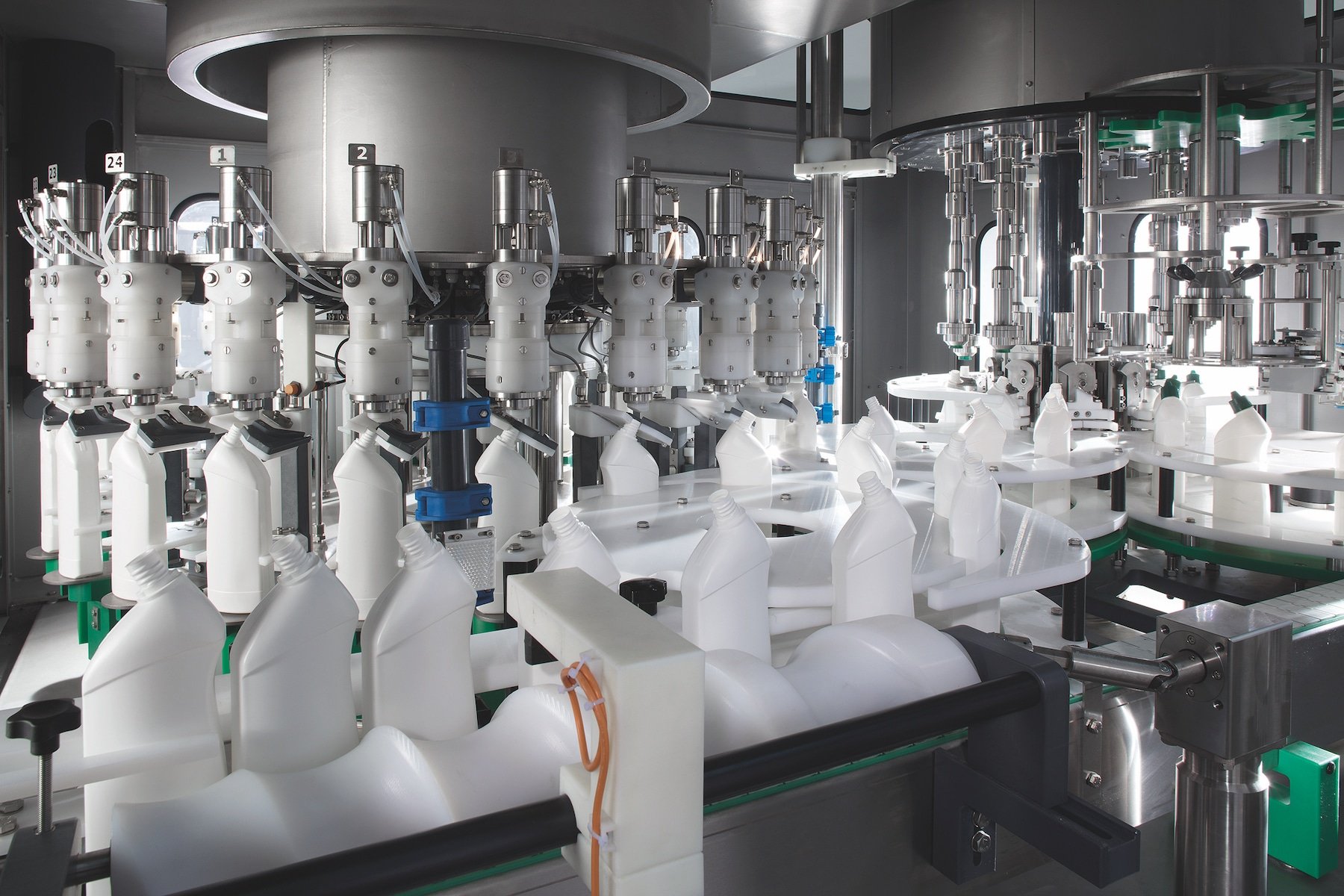
Rotary filling
A better direction when production runs are long, output requirements are high and the line can benefit from several filling stations working through one repeating cycle.
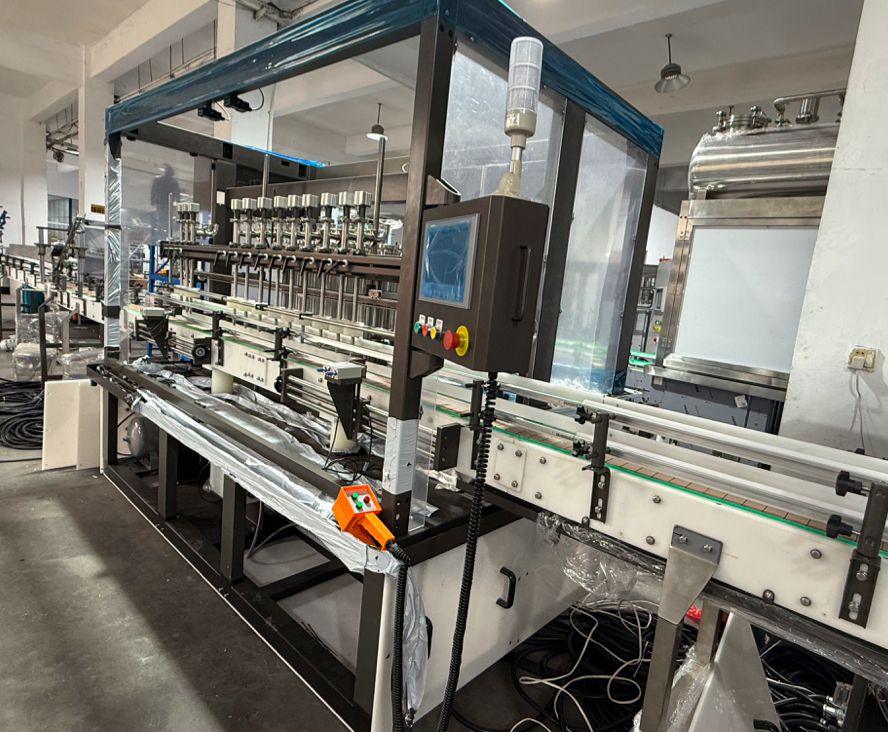
Linear filling
Worth comparing when the factory changes formats frequently, runs moderate batches or values straightforward access and adjustment more than maximum line speed.
This is where many purchasing decisions go wrong. A manufacturer sees a higher nameplate speed and assumes the larger machine will automatically produce more sellable bottles per shift. That only happens when the liquid, bottle, closure and downstream equipment can support the same pace.
A practical shortcut: if your line runs one or a few established dish soap formats for long campaigns and demand is pushing the current filler toward its limit, rotary equipment deserves serious comparison. If your production schedule is dominated by short batches and constant format changes, flexibility may deliver more value than raw speed.
Filling Accuracy Is a Production Result, Not a Brochure Number
Buyers naturally ask for filling accuracy, but one percentage printed on a quotation does not explain how that result was obtained. The more useful question is whether the machine can repeat the required fill across all active heads, over a representative run and with the actual detergent.
Product temperature, trapped air, supply conditions, viscosity changes and nozzle cut-off can all influence the final result. Foam creates another complication because a bottle can appear visually full before the liquid has settled.
For companies selling packaged goods in the United States, NIST Handbook 133: Checking the Net Contents of Packaged Goods is a useful authoritative reference when building or reviewing net-content inspection procedures. Local legal and quality requirements should still be confirmed for the markets where the finished product will be sold.
Do not separate accuracy from anti-drip performance
A machine can meter the intended dose and still create trouble if product continues to drip after the measured fill has ended. Detergent on the bottle neck can later affect cap placement, label cleanliness and general line housekeeping.
For that reason, accuracy trials should look at the finished bottle, not only the number on a measuring device. Dose consistency, foam level, nozzle cut-off and neck cleanliness belong in the same evaluation.
Production Capacity: Calculate the Line You Need, Not the Speed You Want to Hear
Capacity becomes meaningful only after the bottle size and product are defined. A machine filling a small container with an easy-flowing liquid will not necessarily produce the same bottles-per-hour figure when filling a larger dose of foaming detergent.
A better RFQ starts with a production case such as: 500 ml dish soap, specific bottle and closure, required acceptable finished bottles per hour, planned operating hours and future demand. That gives engineering something real to size.
The number that matters:
Sustainable finished output is limited by the slowest required process under real production conditions.
Suppose the target is 6,000 acceptable bottles per hour. That equals 100 bottles per minute. If filling can sustain that rate but cap feeding or capping becomes unstable above 85 bottles per minute, the complete line is still effectively an 85-bottle-per-minute line until the downstream constraint is addressed.
This is why the filler should not be specified in isolation. A useful capacity review includes bottle supply, filling, transfer, accumulation, cap feeding, capping, labeling and any downstream packing process that can stop the flow.
For a deeper look at this part of line design, the related guide on filling, capping and conveyor bottleneck analysis explains why individual machine speed and finished-line output can differ.
How many filling heads should you buy?
Head count should come after the required output and real filling time are known. More filling stations create more parallel capacity, but adding heads to an already unbalanced line can simply move the bottleneck somewhere else.
1. Establish demand
Use normal output, peak output and realistic future growth.
2. Validate fill time
Test the difficult dish soap SKU, not only the easiest liquid.
3. Balance downstream
Make sure the capper and transfer system can consume the planned output.
Who Is a Rotary Dish Soap Filling Machine Actually For?
A rotary system becomes commercially interesting when the production problem is sustained throughput rather than occasional batch filling. That usually means the factory already has established packaging formats, repeat orders and enough line utilization for the extra capacity to matter.
A strong fit
- Medium or large daily chemical manufacturers
- Long production campaigns
- Repeated bottle and closure formats
- High sustained demand rather than occasional peaks
- Factories planning an integrated automatic filling and capping line
Consider a simpler option first
- Output demand is still modest
- SKU changes dominate the production day
- Bottle formats vary widely
- The downstream line cannot use additional filler capacity
- The main priority is low-complexity flexible production
A practical equipment direction for higher-output dish soap lines
Runtech’s automatic rotary daily chemical filling machine is a relevant product to evaluate when detergent filling requires multi-station operation and higher sustained throughput. Its suitability should still be confirmed against the real formula, bottle, closure and required line speed rather than assumed from machine type alone.
For buyers comparing configurations, the useful next step is to provide representative product and packaging samples and ask for a test around the hardest SKU. That exposes the real foam, flow, dripping and handling limits before the machine specification is finalized.
The Filler Is Only One Part of a Good Dish Soap Line
Dish soap bottles often leave the filler heavier, more top-loaded and more sensitive to sudden guide or conveyor changes than they were when empty. That makes bottle handling part of the filling decision even though it happens outside the filling valve.
01Bottle Supply
Stable spacing and orientation give the filler a repeatable container position.
02Filling
Dose, foam control and clean cut-off determine the bottle condition leaving the filler.
03Transfer
Guides and conveyors must move filled bottles without tipping, rotating or bunching.
04Capping
Cap supply, bottle control and tightening must keep pace with the incoming flow.
A dirty bottle neck can become a capping problem
If detergent drips onto the neck after filling, the visible symptom may not appear until the next machine. A cap may sit badly, bottles may require cleaning, or sticky product may build up around handling components. This is one reason anti-drip performance belongs in a complete line review.
When the project includes automatic closure application, compare the filler with the intended bottle capping machine configuration at the same time. Closure type, bottle stability and target output can change the useful line balance.
Lightweight or irregular detergent bottles deserve extra attention because filling changes the package mass and can alter the way it behaves during transfer and tightening. The guide on capping stability for lightweight and irregular bottles covers that downstream issue in more detail.
Before You Request a Quote, Prepare the Information That Changes the Machine
A supplier cannot size a meaningful detergent line from “500 ml dish soap, automatic, high speed.” That description leaves out the details that usually determine whether the project runs smoothly or spends its first months being adjusted.
A stronger inquiry connects the liquid, bottle, closure and production requirement into one real case.
Product
- Dish soap sample if possible
- Approximate viscosity
- Foaming behaviour
- Operating temperature
- All required fill volumes
Package
- Bottle samples and dimensions
- Neck opening and bottle shape
- Bottle material and stability
- Cap or closure samples
- Number of packaging formats
Production
- Required acceptable bottles per hour
- Normal daily operating hours
- Expected future capacity
- Existing downstream equipment
- Available installation space
Send the difficult SKU, not just the convenient one
If the line will run several detergents, identify the highest-foaming formula, the most viscous formula, the largest fill volume and any bottle that is unusually narrow, tall or unstable. Those cases often define the machine more clearly than the easiest package.
The same rule applies to future growth. If a larger bottle or higher output is already planned, include it before the machine is finalized. Designing around today’s easiest requirement and discovering tomorrow’s limitation after installation is a particularly expensive way to learn about production planning.
Ask these questions during technical evaluation
- What product will be used for the filling test? The real detergent is preferable to water-only performance.
- What output is being guaranteed? Make sure bottle size and liquid are defined.
- How will foam and dripping be judged? Finished bottle condition matters.
- How many filling stations are actually needed? Head count should follow the capacity case.
- What format changes are expected? Bottle and SKU flexibility affect the preferred layout.
- Can the capper and conveyor sustain the same rate? A faster filler alone does not create a faster line.
Turn Your Dish Soap Requirement Into a Testable Machine Configuration
The right filling machine is the one that handles the real detergent cleanly, reaches the required output without creating a new bottleneck and still makes sense for the factory’s SKU pattern. For some plants, that leads naturally to rotary filling. For others, a flexible linear system remains the better investment.
For a project review, provide the dish soap information, bottle and cap samples, required fill volumes, target hourly output, SKU range, expected future capacity and details of the existing production line. These inputs make it possible to discuss filling trials, station count, bottle handling and capping capacity around an actual production case rather than a generic machine.
Frequently Asked Questions
Is a rotary filling machine better than a linear machine for dish soap?
It depends on the production pattern. Rotary filling generally deserves consideration when sustained output is high and production runs are relatively long. Linear equipment can be more practical when output is moderate and frequent product or bottle changes make flexibility more important.
How can a filling machine reduce foam in dish soap?
Foam can often be reduced by controlling the way liquid enters the bottle. Bottom-up or diving filling, suitable nozzle sizing and staged filling speeds can reduce unnecessary turbulence. The final settings should be established with the actual detergent because different formulas can respond differently.
What should I use to compare filling accuracy?
Define the nominal fill quantity, accepted tolerance and measurement method first. Then check consecutive bottles across the active filling stations using representative product conditions. Repeatability over a production-style run provides more useful evidence than one successful bottle.
How many filling heads does a dish soap machine need?
The head count should be calculated from the required sustained output and the validated filling cycle of the relevant product. Bottle size, foam-control requirements and downstream line capacity also matter. More heads are useful only when the rest of the line can use the additional output.
What samples should I send before requesting a quotation?
Representative dish soap, several bottles and the intended closures are the most useful starting point. Also provide fill volumes, viscosity information where available, required output, bottle drawings or dimensions, SKU range and information about existing capping or downstream equipment.
When is upgrading to rotary filling unnecessary?
A rotary upgrade may add little value when current demand is comfortably met, format changes consume much of the production day or downstream equipment is already the limiting process. In those cases, improving line balance or using a flexible linear filler may produce a better return than adding unused filling capacity.
Related Reading and Equipment
Rotary Filling Machine Range
Compare rotary filling equipment when high sustained production is the main project requirement.
Production Line Bottleneck Analysis
Understand how filling, capping, transfer and accumulation affect the output of the complete line.
Capping Stability for Difficult Bottles
Review bottle support and handling when detergent packaging is lightweight, flexible or irregular.