When buyers search for a packing machine, they may not actually need a general packing system. For liquid bottles such as shampoo, detergent, lotion, sanitizer, oil, sauce, or chemical products, the real starting point is often filling first, capping second, and then the wider line connection.
This is why “packing machine” and “filling machine” should not be chosen only by keyword. A bagging machine, pouch sealer, carton sealer, or wrapping machine may be correct for some products, but liquid bottle production needs a different review path.
This guide explains how to decide whether your project should begin with a filling machine, a capping machine, or a complete liquid bottle packaging line. It also covers product viscosity, bottle shape, cap type, output target, changeover needs, and the information you should prepare before requesting a solution.
Jump to: Search Meaning / Filling Machine / Capping / Applications / Selection Advice / Inquiry Checklist / Related Reading / FAQ
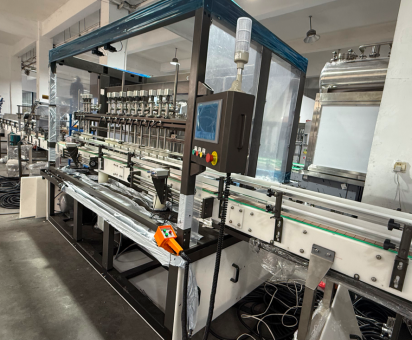
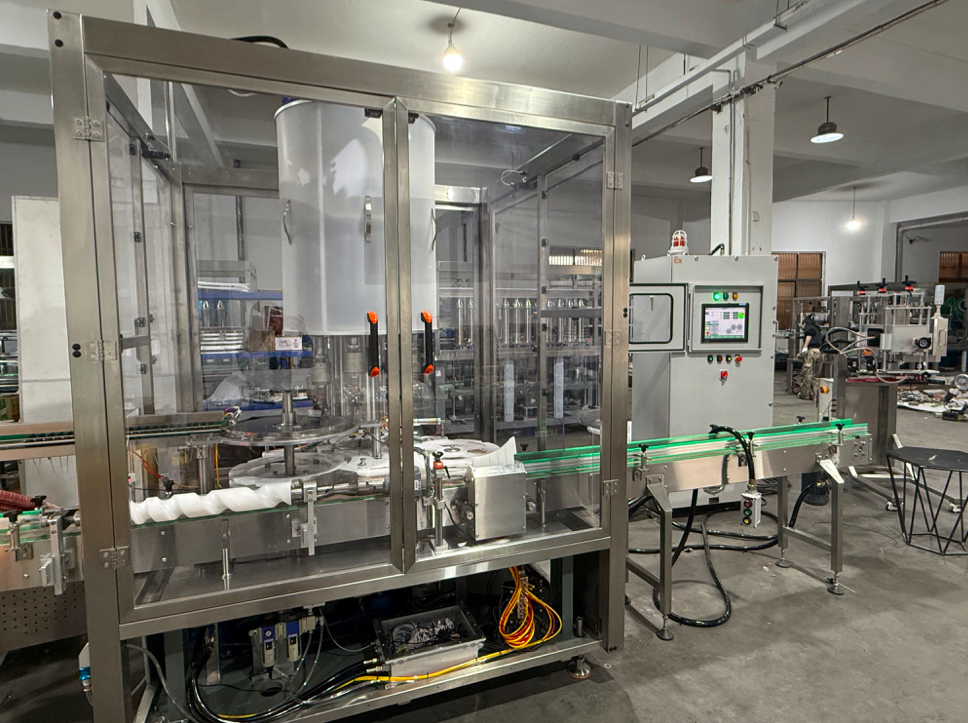
Inline daily chemical filling equipment for liquid bottle production.
What Buyers Often Mean by Packing Machine
The term packing machine is broad. It can describe bag forming, pouch sealing, carton sealing, shrink wrapping, film wrapping, case packing, or outer packaging. For powders, granules, snacks, small parts, or finished cartons, those directions may be correct.
For bottled liquids, the production route is different. The product must first enter the bottle with controlled volume and clean bottle-neck handling. After filling, the bottle needs a suitable closure process, such as screw capping, pump cap tightening, trigger sprayer handling, spray cap closing, or press-cap closing.
That is why the machine name should follow the real production step. If the product is shampoo, hand soap, detergent, lotion, sanitizer, edible oil, sauce, or chemical liquid, the first technical question is usually filling. The second question is usually capping. Outer packing comes after the filled and closed bottle is stable.
A broad packing machine search is still useful when the buyer wants to understand the whole line. But for a liquid bottle project, it should not replace the filling and capping discussion. The line should be planned around product behavior, bottle shape, cap type, output target, and available factory space.
When a Filling Machine Is the Better Starting Point
For bottled liquids, filling machine is usually the more accurate term. It points directly to dosing, filling volume, product-contact parts, nozzle movement, drip control, bottle presentation, and cleaning access.
Low-viscosity liquids can move quickly and may create splashing, dripping, or foam if the filling action is too aggressive. Medium-viscosity products such as shampoo and hand soap may need better cut-off control. Thick lotion, paste material, and gel products often need stronger feeding and wider product paths.
Foam tendency also matters. Cleaners, hand soaps, and detergents may create foam during filling. In that case, nozzle position, filling speed, bottle support, and filling sequence should be reviewed together instead of only increasing machine speed.
Chemical liquids need extra review because formula behavior can affect product-contact materials, sealing parts, and cleaning requirements. These details should come from the actual product and production environment, not from the product name alone.
Bottle shape changes the equipment choice as well. Round bottles usually move more easily than flat bottles. Tall narrow bottles may need more support. Soft plastic bottles may deform during handling. Bottle samples, cap samples, and filling-volume details make the technical review more reliable.
Product First, Machine Second
A useful filling machine discussion starts with product behavior. Thin liquid, foamy detergent, thick lotion, and paste material all need different filling attention. The equipment direction should be selected after checking viscosity, bottle size, filling volume, and production rhythm.
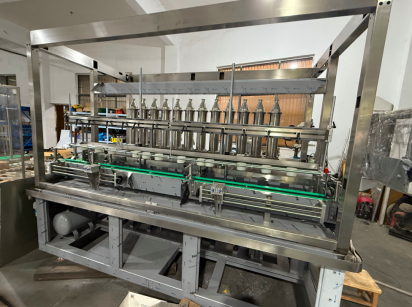
For chemicals, detergent, tomato paste, and other liquid or paste products, a servo piston filling machine can be reviewed when the project needs controlled dosing and stable filling performance.
When Capping Equipment Becomes the Key Part
A liquid bottle project does not end at filling. Most products need a closure, and the cap type can change the line design. Screw caps, pump heads, trigger sprayers, spray caps, flip caps, and press caps all require different handling methods.
Pump caps and trigger sprayers are often more difficult than normal screw caps. They may have long dip tubes, uneven head shapes, and orientation requirements. If the tube bends, misses the bottle opening, or touches the product surface incorrectly, the line can stop or create poor finished bottles.
Capping should be reviewed together with filling level and headspace. A bottle filled too high may push product upward when a pump tube enters. A bottle neck with product residue may affect torque or cap seating. A bottle that is not held firmly can rotate, lean, or move during tightening.
Cap Type Can Decide the Line Design
For sprayer caps or pump heads, cap shape and tube length can affect feeding stability. A dedicated cap feeding and capping solution helps connect the filling section with the final bottle closure.
For projects with several cap types, changeover time should be discussed before the machine layout is confirmed. Different caps may require different feeding tracks, capping heads, bottle holding parts, or torque settings.
Product and Bottle Examples
Daily chemical packaging is one of the most common areas where filling and capping equipment should be discussed together. Hand soap, shampoo, shower gel, lotion, laundry detergent, dishwashing liquid, sanitizer, and cleaner all depend on stable filling performance and a suitable closure method.
For shampoo and shower gel, medium viscosity and stringing may make anti-drip filling important. For lotion and cream-like products, product feeding and cleaning access become more important. For detergent and cleaning liquid, foam control and bottle stability may decide whether the line runs smoothly.
For sanitizer, disinfectant, and chemical liquid, the formula should guide product-contact parts, filling speed, and cleaning method. Some materials flow easily, while others may require more careful handling. Product information should be shared before confirming the machine configuration.
For sauce, edible oil, syrup, jam, and paste materials, the filling method also needs careful review. Product thickness, filling volume, bottle opening, and cleaning method can all affect the final solution. The inquiry should focus on real production details rather than only a machine name.
Daily Chemical Bottles
Review viscosity, foam, anti-drip filling, pump caps, trigger caps, and bottle-neck cleanliness.
Food Liquid and Paste
Review product thickness, filling volume, bottle opening, cleaning access, and filling accuracy.
Chemical Liquid
Review product-contact parts, material handling, bottle stability, cap type, and cleaning requirements.
How to Choose the Right Direction
Avoid selecting by machine picture alone. Two machines may look similar, but they may use different filling principles, control methods, nozzles, and cap handling structures. Selection should be based on the actual product and package.
Do not treat all liquids the same. Thin liquid, foamy detergent, high-viscosity lotion, paste material, oil, sauce, and chemical liquid can require different filling methods. The product formula and flow behavior should guide the machine discussion.
Do not leave cap details until the last step. A screw cap, pump head, trigger sprayer, spray cap, press cap, and flip cap can require different feeding and tightening methods. Pump caps and trigger caps should be checked with real samples.
Do not ask for a fixed output before the configuration is clear. Production speed depends on filling volume, liquid flow, nozzle number, cap type, bottle stability, labeling speed, and final packing flow. Output should be reviewed as a complete line target.
Do not accept fixed claims about price, delivery time, certification, or output before the bottle, cap, product, and line scope are confirmed. Those details should follow confirmed specifications, samples, and technical review.
| If the Buyer Says | Clarify This First | Better Equipment Direction |
| I need a packing machine for liquid bottles. | Is the main need filling, capping, labeling, or full-line connection? | Start with filling and capping review. |
| I need to pack shampoo or detergent. | What are viscosity, foam level, bottle size, and cap type? | Review liquid filling and capping line. |
| I need automatic production. | What is the target output and how often do formats change? | Review automation level and changeover design. |
| I need pump or trigger cap handling. | What is cap shape, tube length, and bottle opening? | Review dedicated cap feeding and capping equipment. |
What to Confirm Before Requesting a Solution
A clear inquiry makes equipment selection easier. It does not need complicated engineering language, but it should include enough production details so the filling, capping, and packaging solution can match the real project.
Bottle and cap samples can improve the review. Photos help at the first stage, but physical samples show real bottle stability, cap fit, tube length, thread quality, and closure behavior.
| Information to Confirm | Why It Matters |
| Product type, viscosity, and foam tendency | Helps choose the filling principle, nozzle style, and product contact design. |
| Bottle shape, volume, and neck size | Affects bottle positioning, guide rails, filling accuracy, and capping stability. |
| Cap type, tube length, and closure method | Decides cap feeding, cap placing, tightening, pressing, or orientation design. |
| Target output and automation level | Helps balance filling, capping, labeling, and final handling. |
| Factory space and line direction | Helps plan conveyors, operators, maintenance access, and future upgrades. |
For a complete project, the inquiry should also mention downstream needs. Some lines stop after capping. Others continue to labeling, sleeve shrinking, coding, inspection, carton packing, or manual collection. The full workflow should be discussed before the final layout.
Related Reading
Linear Type Filling Machine
Review the main filling machine category for liquid and paste bottle applications.
Inline Daily Chemical Filling Machine
Useful for hand soap, shampoo, lotion, detergent, and daily chemical bottle lines.
Sprayer Cap Feeding Capping Machine
A related solution for sprayer lids, pump heads, trigger caps, and cap feeding needs.
FAQ
Is a broad packing machine search enough for liquid bottles?
Usually, it is not enough. A broad search can include bagging, wrapping, carton sealing, and many other machine types. Liquid bottle production needs a filling and capping discussion based on product behavior, bottle shape, cap style, and output target.
When should filling machine be used as the inquiry term?
Use it when the main task is dosing liquid, paste, gel, oil, detergent, lotion, sanitizer, sauce, or chemical material into bottles. This term keeps the discussion focused on filling volume, viscosity, nozzle design, foam control, and product-contact parts.
Does a liquid bottle line always need capping equipment?
Most closed bottle products need a capping section. The method depends on the closure. Screw caps, pump heads, trigger sprayers, spray caps, flip caps, and press caps may require different feeding, placing, tightening, or pressing structures.
Can one line handle several bottle sizes?
In many cases, one line can support several bottle sizes with suitable adjustment design. The real range depends on bottle shape, bottle volume, neck size, cap type, and conveyor layout. Frequent changeover should be discussed before confirming the line.
Why are pump caps and trigger caps harder to automate?
Pump caps and trigger caps often have long tubes, uneven shapes, and orientation requirements. Automatic feeding and positioning can be more complex than normal screw caps. Bottle and cap samples help confirm a realistic capping design.
Need a filling, capping, or packaging solution?
Share the Product, Bottle, Cap, and Line Scope
Runtech Capping can review product type, liquid viscosity, bottle shape, cap type, target output, and automation requirements. Then, the suitable filling, capping, labeling, or wider packaging solution can be discussed based on actual production needs.
- Product type, viscosity, foam tendency, and special handling needs.
- Bottle photos, cap photos, filling volume, cap type, and target output.
- Automation expectations, workshop space, and downstream packaging steps.
- Line scope: filling only, capping only, filling plus capping, or complete liquid bottle line.