
A filling and capping machine for multiple bottle sizes should be specified from a bottle-cap-product matrix, not from a vague requirement to “handle different sizes.” The purchase specification should show the actual dimensional envelope, closure families, fill conditions, changeover target and the boundary combinations that must be proven with samples.
The key point is to describe complete formats. The smallest bottle, tallest bottle, largest cap and most difficult liquid may belong to different SKUs, so separate minimum and maximum numbers do not show how the line will behave when those variables are combined.
|
Define
Size envelope
Bottle width, height, neck position and stability. |
Map
Bottle + cap
Neck finish, cap family and closing method by SKU. |
Verify
Changeover
Target time, first-piece checks and boundary samples. |
1. Quick Answer: Specify a Filling and Capping Machine for Multiple Bottle Sizes with a Size Matrix
Use one row for each production SKU or packaging format. Record the bottle dimensions, neck finish, cap family, fill condition, expected production frequency and whether the format represents a normal case or a boundary case. That matrix is more useful than a single statement such as “suitable for 100 ml to 1 L bottles,” because capacity alone does not describe the geometry that the conveyor, filler and capper must control.
Record bottle diameter or width and depth, overall height, neck position, closure details, fill volume, product behavior, required output per SKU, annual volume and changeover frequency. State the target bottles per minute or hour for each important format, since a line’s maximum advertised speed may not apply to every bottle, closure and liquid combination. Mark the dimensional extremes, least stable package, each closure family and the combinations expected to be difficult.
Purchasing rule: ask the supplier to confirm the matrix by format, including which settings are adjustable and which formats require dedicated parts. Do not accept a generic compatibility range as the only definition of multi-size capability.
2. Define Minimum and Maximum Bottle Diameter, Height and Center of Gravity
For round bottles, record body diameter where guides or holding components contact the container. For square, oval or irregular bottles, record width, depth and required orientation. Include the base footprint and shoulder shape when they affect support.
Overall bottle height is not enough by itself. Similar-height containers can present their necks at different working levels because of shoulder geometry or offset necks. Record the neck position relative to the body so nozzle alignment, cap placement and vertical adjustment can be checked against the real package.
Center of gravity deserves a separate note. A tall narrow bottle, a wide short bottle and a top-heavy package may all fall inside the same nominal size range yet behave differently when they are accelerated, stopped, filled or tightened. A container that is stable while empty may also behave differently after filling.
When reviewing filling and capping machines, send the complete dimensional matrix rather than only the largest bottle drawing. The supplier should be able to identify which extremes can share the same handling setup and which combinations need separate confirmation.
3. Map Neck Finish, Cap Family and Closing Method as a Combination
Cap compatibility should not be defined by outside diameter alone. Review the bottle neck, closure geometry, cap presentation and closing method together. Keep visually similar closures separate when thread geometry, skirt length, tamper features, dispensing components or orientation requirements differ.
| Bottle neck | Record the neck finish, neck height and any relevant relationship between the neck and bottle shoulder. |
| Cap family | Group closures by actual handling geometry, not only by a broad label such as screw, press, pump or trigger. |
| Closing method | State how the closure is placed and what finished condition the plant will use for acceptance. |
For pumps, triggers, spouts or other projecting closures, specify the complete assembly. A bottle-cap pair that looks compatible in a drawing may still behave differently during orientation, transfer or seating.
For cosmetic and daily-chemical projects, the Automatic Cosmetic Filling and Capping Machine | Daily Chemical Bottle Screw Capper is a relevant product reference because its page describes integrated filling and screw capping for cosmetic and daily-chemical applications. Exact bottle, cap and product compatibility still needs confirmation for the intended SKU set.
4. Build a Fill-Volume and Product-Viscosity Matrix
The filling side needs its own format matrix. For every SKU, record nominal fill volume, the required fill condition and product characteristics that can affect dosing or nozzle behavior. If viscosity changes with temperature, shear or storage condition, describe the condition in which the product will actually be filled rather than using only a broad label such as “liquid,” “lotion” or “cream.”
Useful observations include foaming, dripping, stringing, aeration sensitivity, particulate content and whether product tends to wet the bottle neck. These are not reasons to assume one filling technology; they are inputs for the supplier to select and validate the proposed method.
Look for difficult combinations, not isolated maximums.
The highest-viscosity product may use the smallest neck opening, while the tallest bottle may also carry the highest filled mass. Put those combinations in the same row so the sample test reproduces the actual production challenge.
If product data is uncertain, mark the row for sample testing rather than guessing. The goal of the specification is to show what must be verified, not to turn unknown application details into assumed machine capability.
5. Separate Guide-Rail Adjustments from Formats That Need Change Parts
Classify each format relationship as common, adjustable or dedicated. Common uses the installed component without conversion. Adjustable moves an installed component to a documented position. Dedicated requires a physical change part.
Do not classify formats from travel range alone. A guide rail may open far enough for a wider bottle and still support it poorly. Where the line uses a starwheel, pocket, bottle holder, cap chute, escapement or capping tool, reaching the new position does not prove suitable contact geometry.
|
Common
Same installed control and usable geometry. |
Adjustable
Existing part moves to a recorded setting. |
Dedicated
A change part is installed for the format. |
For each format, ask the supplier to identify guide adjustments, height references, change parts, tools and any settings close to a mechanical limit. If recipes are part of the proposed control system, define what the recipe recalls and what still requires a physical adjustment.
This is where multi-size bottle filling and capping equipment should be compared by the actual change-part map rather than by a general claim of flexible adjustment.
6. Set a Target Changeover Time and Define First-Piece Confirmation
A target changeover time has little value unless its boundaries are defined. State when the clock starts: when the previous SKU stops, when cleaning is complete, or when mechanical conversion begins. Define the finish point as well: machine ready to jog, first acceptable bottle, or an accepted consecutive run.
Also specify the expected number of operators and whether cleaning, product change, cap replenishment and material staging are inside or outside the timing scope. Two suppliers can otherwise quote the same phrase while measuring different work.
First-piece confirmation should be defined before the test. Depending on the plant’s own quality plan, it may include fill condition, cap seating, finished closure condition, bottle damage and stable transfer through discharge. Avoid creating a new acceptance rule at the machine trial; use criteria that procurement, production and quality teams have already agreed.
Risk to avoid: a fast mechanical changeover that still needs extended undocumented tuning before acceptable bottles are produced is not the same as a repeatable production changeover.
7. Use Representative and Boundary Samples for a Multi-Size Bottle Sample Test
A multi-size bottle sample test should prove the operating envelope, not only the easiest SKU. Combine high-volume formats with dimensional extremes and the combinations most likely to challenge handling, filling or capping.
Include these samples where applicable:
- smallest and largest bottle bodies;
- shortest and tallest bottles;
- least stable or most top-heavy container;
- each materially different neck finish and cap family;
- lowest and highest fill-volume formats;
- products representing the range of viscosity or filling behavior;
- the bottle-cap-product combination considered most difficult.
Test empty-bottle transport first, then filling, cap presentation and placement, closing, and filled-bottle discharge. Include a normal stop and restart. For frequently changed SKUs, return to a previously approved format to check whether recorded settings and change parts reproduce the earlier condition.
Do not approve a format from one selected bottle. Agree on the trial duration or sample quantity, target operating rate and acceptance criteria before testing. Observe consecutive bottles under the agreed conditions, then record the results, adjustments, change parts and settings. This provides stronger procurement evidence than a demonstration with a few carefully selected bottles.
For detailed capper changeover work after the equipment format is defined, use the related Bottle Capping Machine Changeover Checklist for Different Bottle and Cap Sizes. That page focuses on execution at the capping station; this guide stays on pre-order specification and acceptance.
8. Build the Multi-Size Project Around Boundary Formats and Change Frequency
A line that changes bottle formats once a week has different priorities from one running several short batches each shift. Frequent changeovers make repeatable adjustments and accessible change parts more valuable, while a rarely used format may justify dedicated tooling if its conversion time is acceptable.
Send dimensioned drawings where available and physical bottles, caps and representative products for difficult formats. Ask the supplier to map common settings, adjustments and dedicated change parts, then define the sample-test and changeover acceptance method.
Buyer recommendation: mark boundary specifications, annual volume and changeover frequency in one controlled matrix, then send the hardest bottle-cap-product combinations for validation. A filling and capping machine for multiple bottle sizes is easier to evaluate when compatibility and changeover acceptance are tied to named formats rather than generic size ranges.
Two relevant Runtech equipment references
Use these product pages after the size matrix is defined. Exact compatibility still needs confirmation with the intended bottles, caps and products.
|
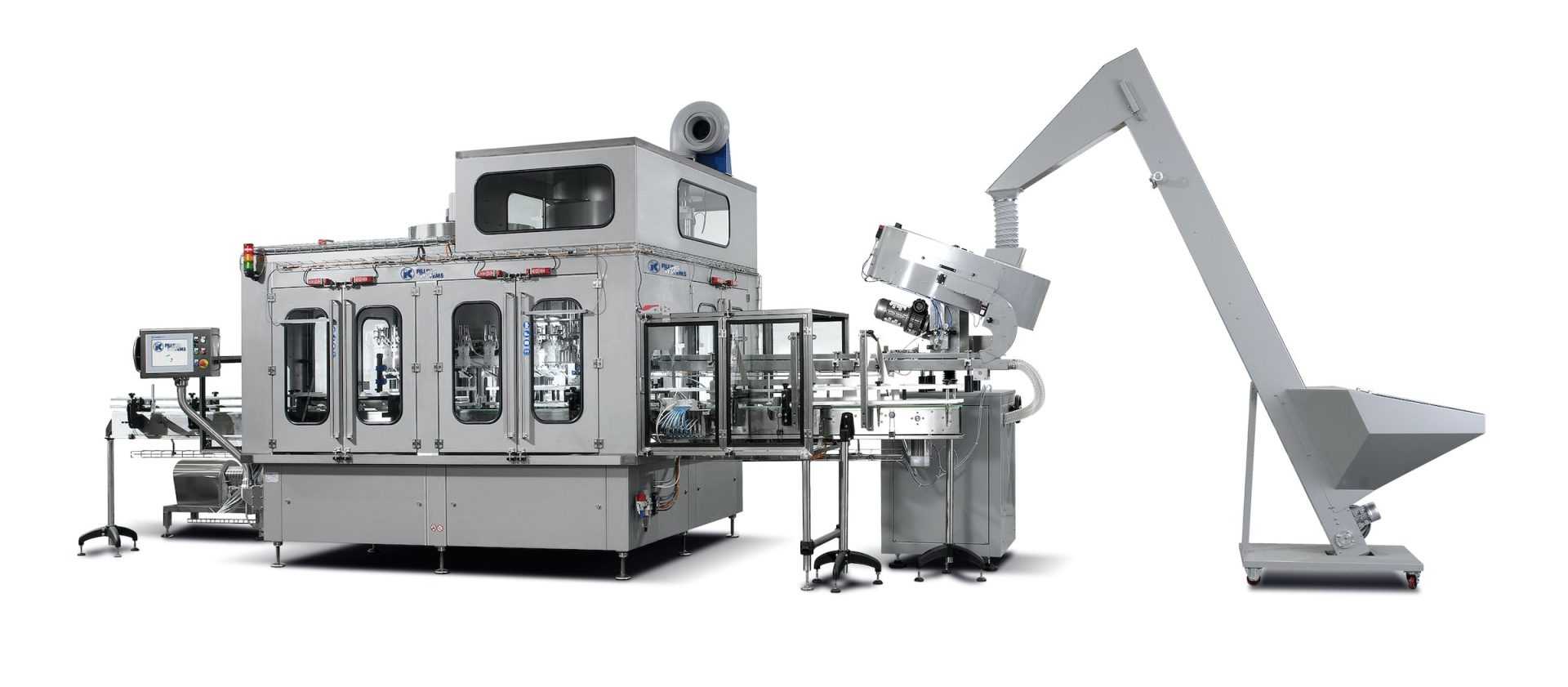
Automatic Filling and Capping All-in-One Machine | Full Auto Liquid Processing Equipment Use when: an integrated filling and capping line is being reviewed. Why relevant: the page describes bottle feeding, filling, cap handling and capping in one line. Confirm first: exact bottle/cap matrix, product condition and change parts. |
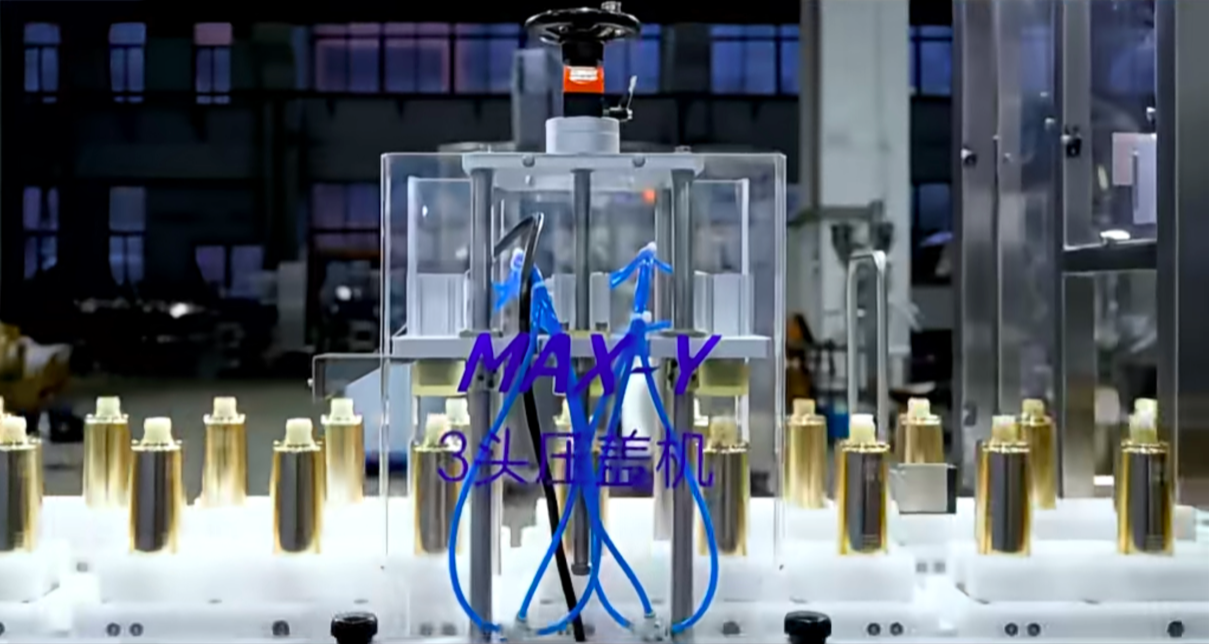
Automatic Cosmetic Filling and Capping Machine | Daily Chemical Bottle Screw Capper Use when: cosmetics or daily chemicals with screw-cap formats are being evaluated. Why relevant: its page describes integrated filling, screw capping and multi-spec adjustment. Confirm first: exact bottle, closure and product compatibility by sample. |
Related reading
Bottle Capping Machine Changeover Checklist for Different Bottle and Cap Sizes →
Use this after the procurement matrix is defined and the task shifts to repeatable capping-station setup and sign-off.
Review the line against the actual bottle-size matrix
Use the matrix to review an integrated line for your bottle-size matrix, then send the boundary bottles, caps and fill conditions for technical confirmation.
| Review a Multi-Size Filling and Capping Line | Send Your Bottle and Cap Size Matrix |
Frequently Asked Questions
Can one filling and capping line handle bottles with very different heights and diameters?
Possibly, but adjustment range alone is not proof. Review bottle stability, neck position, filling alignment, cap presentation and closing geometry, then confirm boundary combinations with samples.
How many bottle samples should be sent for testing?
There is no universal quantity. Send enough units for consecutive operation, prioritizing high-volume SKUs, dimensional extremes, different cap families and the hardest combinations. Agree the quantity before testing.
What information is more important than bottle diameter alone?
Bottle height, width or depth, neck position, neck finish, body shape, base stability and center of gravity can affect handling. For non-round bottles, include the intended orientation.
When should a format use dedicated change parts instead of adjustment?
Review dedicated parts when installed components cannot provide suitable support, clearance, positioning or capping contact with useful adjustment margin. Confirm the need through operation with the actual format.
Should changeover time be included in the purchase specification?
Yes. Define the timing start and finish, operator count, and whether cleaning or product change is included. Also define the acceptance checks required before production is ready.
Can compatibility be approved from drawings without a sample trial?
Drawings support dimensional review, but they do not fully show bottle stability, cap handling or filled-package behavior. For boundary or difficult formats, physical samples provide stronger approval evidence.