
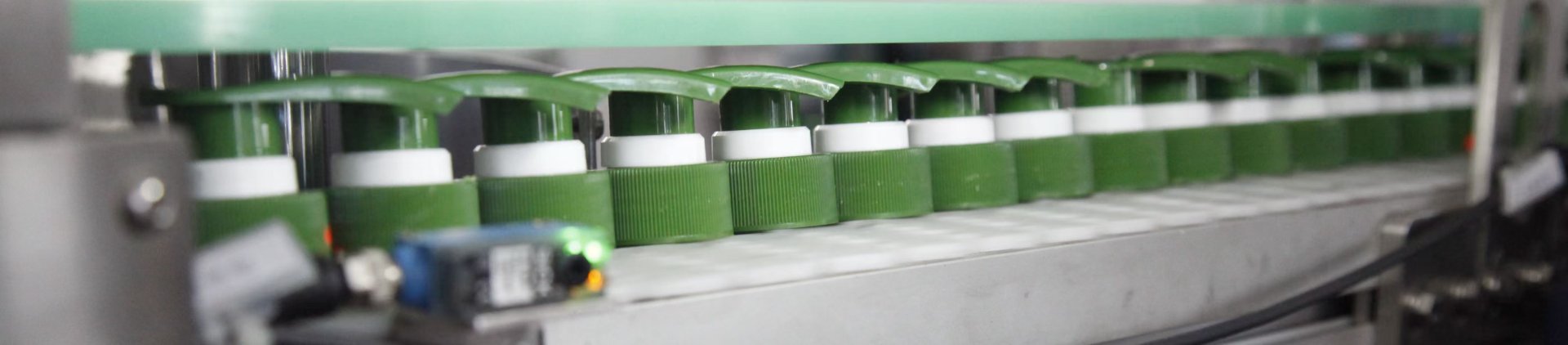
A following type filling machine for tall bottles is worth considering when a tall or unstable container needs to keep moving during filling and the nozzle must remain aligned with its opening. Instead of filling at a stationary position, the nozzle follows the bottle along the conveyor during the dispensing movement.
Height is only part of the picture. Base width, wall stiffness, neck geometry and the way the bottle travels on the conveyor all influence whether a following-type arrangement makes sense.
Start with why the actual tall bottle is difficult to handle
A tall bottle can stand perfectly well on a bench yet become difficult to control once it travels through a filling line. A narrow base, flexible body or relatively high centre of gravity can make small conveyor disturbances more noticeable. Even when the bottle does not tip, slight leaning may shift its opening away from the expected filling position.
Consider a tall container with a slim footprint. As it moves between conveyor sections or encounters side guides, the upper part of the bottle may sway while the base remains in contact with the belt. If the filling nozzle is positioned for an upright bottle, that movement becomes an alignment concern.
The problem also depends on the container’s shape. A broad shoulder, offset neck or flexible side panel may complicate how the bottle is guided. Two bottles of equal height can therefore behave quite differently, especially when their base dimensions and wall construction are not the same.
If a bottle begins to lean before it reaches the nozzle, its conveyor path and side guides may deserve as much attention as the filling head. That distinction becomes important when comparing stationary and following-type filling.
How following filling keeps the filling action with the moving bottle
A fixed-position filler holds the bottle at a filling station while the product is dispensed. In a following-type system, the filling nozzle travels alongside the bottle during dispensing, helping it stay aligned with the opening as the conveyor moves. The distinction is useful when stopping each container is not the preferred way to run the line.
RUNTECH’s following type filling machine category includes equipment developed around this moving-bottle filling principle.
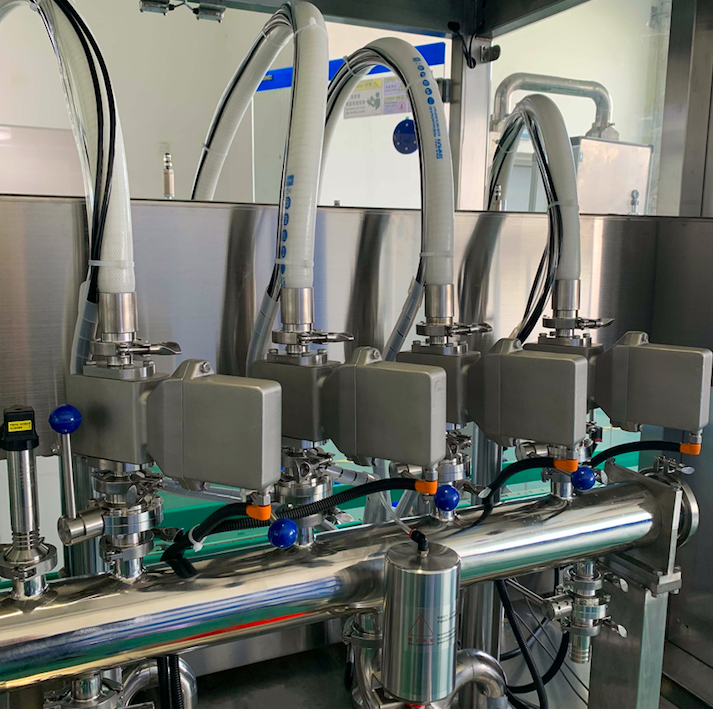
Moving the nozzle with the bottle solves an alignment problem, not a bottle-support problem. A container that rocks at a conveyor transfer or shifts against a side guide may still need changes to its handling path, even when the nozzle follows its movement.
Evaluate the bottle geometry and filling interaction
The bottle drawing is a useful starting point, but dimensions on paper do not show how the container behaves on a moving belt. The base, neck, body and changing weight during filling each affect the result.
Height relative to the base
A narrow footprint can make lateral movement more noticeable, especially at transfers or guide contact points. The shape of the base and how it sits on the belt matter alongside the bottle’s height.
Neck position and opening clearance
A centred neck presents a different alignment problem from an offset opening. The nozzle must maintain suitable clearance from the bottle rim and shoulder throughout the intended filling movement.
Body stiffness and guidance
Flexible panels and tapered surfaces can respond differently to conveyor guides. The bottle needs a usable handling arrangement without relying on excessive contact pressure.
Empty and filled conditions
Adding product changes the bottle’s mass distribution. Its behaviour after filling may differ from its behaviour during entry, particularly for lightweight or flexible containers.
These factors are connected rather than independent. A bottle may have a stable base but still present a difficult nozzle approach because of its shoulder geometry. Another may have a straightforward opening yet move inconsistently along the conveyor.
Use a representative bottle-and-product demonstration to confirm fit
A drawing can show the neck diameter and overall dimensions, but not whether a bottle will sway on the actual conveyor. Running the intended container with the filling product gives a clearer picture of what happens at the nozzle and once the filled bottle moves away.
The most useful observation begins before the nozzle reaches the bottle. Does the container enter the tracking area upright, with its opening in a repeatable position? If it is already leaning or drifting, the issue may originate in conveyor handling rather than in the filling movement itself.
During dispensing, observe whether the nozzle maintains the required relationship with the moving bottle opening. Clearance from the neck and shoulder matters throughout the travel, not just at the moment filling begins.
A useful trial should also reflect the intended conveyor speed and fill volume. Watch for changes in bottle alignment, splashing near the opening and instability as filled containers leave the machine. A bottle that performs well during a slow demonstration may behave differently under normal production conditions.
One clean fill is less informative than consistent performance across repeated cycles. The bottle should approach the nozzle predictably, stay aligned during filling and leave the area without losing stability.
The product sample matters as well. A trial with an empty bottle can reveal mechanical handling problems, but it cannot show the complete interaction between the material, the dispensing movement and the filled container.
When several bottle formats are involved, the demonstration should cover those with meaningful differences in height, base geometry or neck position. A satisfactory result for one container does not establish compatibility with every variation.
A RUNTECH Equipment Option for Moving-Bottle Filling
RUNTECH describes a double-head tracking filling machine for applications involving tall or unstable bottles. Its listed filling arrangement follows moving containers, making it a useful product to examine when the line calls for dispensing without stopping each bottle.
That does not make dynamic tracking necessary for every tall container. If a bottle can be positioned reliably at a stationary filling station, a fixed-position arrangement may be sufficient. Following filling becomes a more meaningful option when continuous bottle movement is part of the process.
The strongest clue is where the alignment problem begins. When a bottle is already drifting before filling, stabilizing its travel may matter as much as choosing a nozzle that can track it. When the bottle runs consistently but needs to remain in motion for dispensing, tracking is more directly relevant.
APPLICATION DECISION
Where a double-head tracking filler fits
For a useful equipment discussion, compare the bottle opening and conveyor path with the intended filling volume and product. A representative run can show whether the listed tracking arrangement suits the process or whether bottle guidance needs more attention.
Questions before the next step
Does a tall bottle always require following filling?
No. Height alone does not determine the filling method. A stationary arrangement may be suitable when the bottle can be positioned and held reliably. Following filling becomes relevant when the nozzle must track a moving bottle during dispensing.
Does tracking eliminate every source of bottle instability?
No. The nozzle can move with the opening, but it cannot stop a bottle from rocking at a belt transfer or shifting against a guide. Watching where the movement starts helps distinguish a tracking issue from a handling issue.
What should an actual-bottle demonstration show?
Use the intended bottle and filling material, ideally at conditions close to the planned conveyor speed and fill volume. Look at entry, alignment throughout dispensing and the bottle’s movement after filling. If several formats will run, include the ones that differ most in base and neck geometry.
The most useful equipment choice starts with what the bottle actually does on the conveyor. A well-run sample trial makes it easier to tell whether the main challenge is nozzle tracking, bottle handling or a combination of the two.
NEXT STEP
Review the equipment against your actual bottle
Share your bottle dimensions, filling product, target fill volume and conveyor conditions with RUNTECH to discuss a suitable arrangement. You can also browse the following-type range to see which equipment is relevant to your line.
| Discuss Your Filling Application | Explore Following-Type Machines |