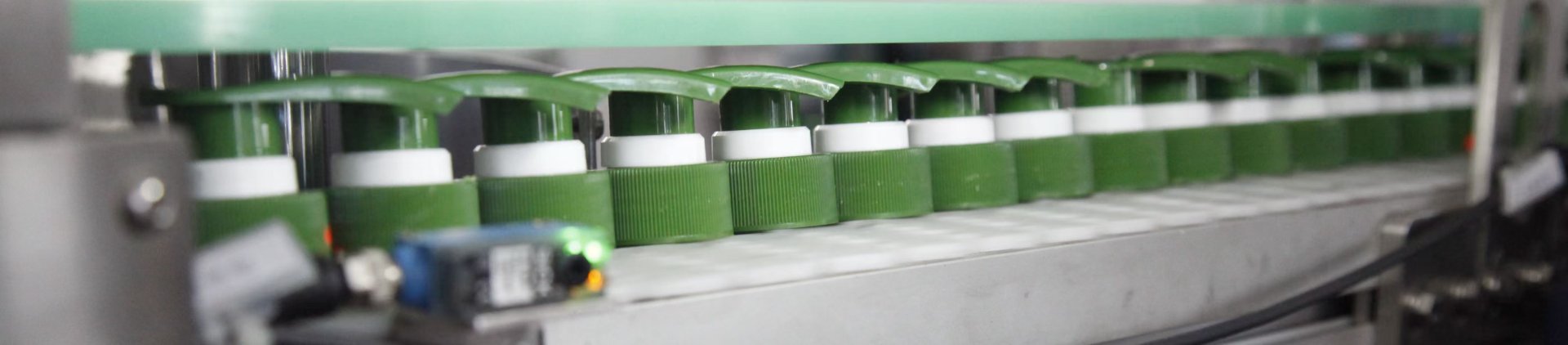
A daily chemical filling and press capping machine is intended for packaging applications in which the closure is seated by pressing rather than threaded rotation. It combines quantitative filling, cap positioning and constant-pressure pressing for daily chemical liquids and pastes that use a compatible press-on closure.
A flat cap top alone does not establish that the closure is designed for press-on capping; the cap’s engagement features and the bottle-neck interface must be checked together. The published filling range is 50–3000 ml (customizable), but this range does not by itself confirm compatibility with every bottle format.
The closure must be designed for pressing, not screwing.
Suitable application: daily chemical liquids or pastes in compatible bottles with flat press-on caps or snap closures. The filling volume, bottle opening and cap seating condition must be considered together.
Confirm that the closure is designed for press-on capping
Start by identifying how the cap engages with the bottle neck. A press-on or snap closure is seated through downward pressure and retained by its engagement with the neck, whereas a screw cap relies on threaded engagement.
A flat top alone does not establish that a cap is designed for pressing. Check the cap’s internal engagement features against the bottle-neck geometry, using the packaging specification or a representative sample pair where necessary.
This distinction matters across daily chemical packaging. Products such as hand sanitizer, detergent, dishwashing liquid, body wash and cosmetic lotion may use different bottle and closure combinations. The product category does not determine the capping method; the actual cap design does.
The important distinction
The decision depends on how the closure engages with the bottle neck, not simply on whether the cap looks flat. Confirm the engagement features from the cap sample or packaging specification before selecting the capping process.
How filling and constant-pressure pressing connect
Filling and press capping perform two different jobs within the same packaging process. The filling section delivers the required quantity of product into the bottle. The capping section positions the flat cap and applies pressing force to bring the closure into its intended seated position.
RUNTECH’s listed daily chemical equipment combines quantitative filling, cap positioning and constant-pressure pressing in an integrated packaging arrangement. This makes it relevant to production applications where liquid or paste filling and press-on closure are required within the same equipment setup.
The distinction between these operations is important. Filling accuracy describes the quantity delivered, whereas pressing pressure relates to the force applied during cap seating. A suitable filling result does not automatically establish that the closure has seated correctly, and the two requirements should be evaluated separately.
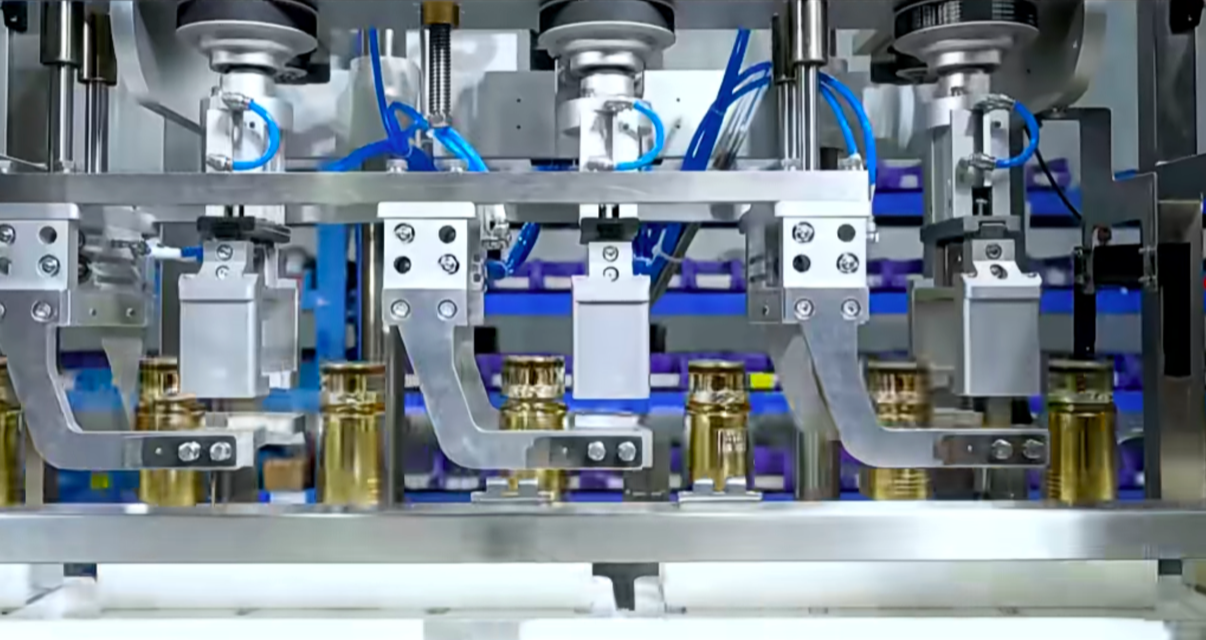
Press-capping equipment
The capping heads illustrate the closure application area. Final equipment suitability depends on the cap geometry, bottle opening and required seating condition.
The constant-pressure press capper arrangement is relevant when the closure needs controlled downward pressing rather than threaded tightening. The published pressure range is a machine operating specification, not a universal cap-seating force or a setting that can be applied to every closure. The appropriate condition must be established with the actual bottle and cap.
For applications using flat press-on caps, the daily chemical filling press capping machine is the relevant equipment page to review.
Read the 50–3000 ml customizable range
The published filling volume range is 50 ml to 3000 ml, with customization available. This gives the equipment a broad stated filling scope for different daily chemical packaging quantities, from smaller personal care containers to larger household cleaning product bottles.
However, nominal filling volume is only one part of the packaging specification. Two bottles with the same filling capacity can have different opening diameters, neck dimensions and cap engagement structures. Those differences matter when the equipment must position and press a closure consistently.
A 500 ml bottle, for example, is not automatically compatible simply because its volume falls within the published range. Its actual opening, cap dimensions and press-on closure design still need to be reviewed.
Customizable. Actual bottle dimensions and closure compatibility require separate confirmation.
Interpret the published pressure, accuracy and output separately
The published technical figures describe three different aspects of the machine. Understanding what each one represents prevents a pressure specification, filling accuracy figure or output range from being mistaken for a complete application guarantee.
| Pressing pressure
0.2–0.7 MPa |
The published stepless-adjustable pneumatic pressing-pressure range. This is a machine operating specification, not a direct measurement of the force applied to each cap; confirm the working condition with the actual bottle-and-cap pair. |
| Filling accuracy
±0.8% |
The published filling accuracy figure. Actual application conditions should be confirmed for the intended material and filling requirements. |
| Production capacity
1500–5000 bottles/hour |
The published output range. It should not be assumed to apply uniformly to every filling volume, product or bottle-and-cap combination. |
Specification note: These are published figures; application conditions are to be confirmed. They should not be interpreted as guaranteed performance for every production setup.
The distinction is straightforward: pressure relates to cap pressing, accuracy relates to filling quantity, and output describes the stated production capacity. None of these figures replaces a physical compatibility assessment.
Confirm cap seating on the actual bottle-and-cap pair
The most useful way to assess press capping suitability is to examine the actual bottle and its matching cap together. Looking at either component independently can miss differences in the opening, closure engagement and final seating condition.
During a sample assessment, the cap should approach the bottle opening in the intended position. After pressing, it should reach its designed seated position without visible tilting, incomplete engagement or damage to the closure or bottle neck.
Check whether the cap is positioned evenly over the bottle opening before pressing.
Confirm that the snap closure reaches its intended position without visible gaps or incomplete engagement.
Check for cap deformation, cracks or visible damage around the bottle opening after pressing.
The product being filled should also be considered during the application review. A liquid hand sanitizer and a medium-viscosity body wash, for example, may have different filling requirements even when their packaging uses the same closure type.
Providing the intended product material together with representative bottle and cap samples gives RUNTECH a more useful basis for reviewing the application. This is particularly important when a customized bottle opening or a specific snap closure is involved.
Questions before the next step
Can the machine handle both liquid and paste products?
The equipment page describes applications for low-viscosity liquids and medium-viscosity pastes. That does not establish suitability for every formulation; the actual material characteristics and filling requirements should be reviewed before confirming the configuration.
Can the same setup handle different bottle and cap sizes?
The product information describes adjustment for different bottle heights, calibers, filling volumes and cap specifications, but it does not publish numeric limits for every dimension. Confirm the exact bottle-and-cap combination before assuming a format is covered.
What information should I provide for an application review?
Provide the product material, target filling volume, expected production output, bottle dimensions and the matching bottle and cap samples. These details give the equipment team a practical basis for reviewing the filling and closure requirements together.
Is This Press Capping Machine Suitable for Your Packaging?
This machine is worth considering when daily chemical products are filled into compatible bottles and closed with flat press-on or snap caps. The published filling range and pressure specifications provide a starting point, but actual bottle and cap compatibility must still be confirmed.
Share your product material, filling volume, bottle dimensions and matching cap samples with RUNTECH to discuss the requirements of your application.
| Contact RUNTECH | View Equipment |