QUICK ANSWER
RUNTECH’s bleach filling, capping and labeling line lists a bottle diameter of 40–100 mm, a bottle height of 80–230 mm, and a published capacity of ≤4,000 bottles per hour at a 1 L fill. These published figures provide the starting point for assessing a proposed bleach or toilet bowl cleaner package, not a guarantee of compatibility or output.
A bottle with a nominal capacity of 1 L does not automatically fit the equipment. External dimensions, shape and the finished closure arrangement need separate attention. The published speed must also stay attached to its stated 1 L filling condition.
|
40–100 mm Bottle diameter |
80–230 mm Bottle height |
≤4,000 Bottles/hour at 1 L |
Start with the bottle envelope rather than a headline speed
Nominal capacity describes how much a bottle is intended to hold, not its external dimensions. Two 1 L containers can differ in body width, shoulder profile, neck position and finished height, so compatibility must be checked against the actual package rather than the stated volume.
RUNTECH lists a 40–100 mm diameter and an 80–230 mm height. These ranges provide an initial screening window, not confirmation that every container within them is suitable. A current bottle drawing or physical sample is the best starting point; for oval or rectangular containers, provide both width and depth rather than treating one measurement as a diameter.
Check 40–100 mm diameter against the actual container
For a round bottle, compare its measured external diameter with both limits rather than relying on the nominal size stated in a catalogue.
The widest point deserves attention. Bleach and toilet cleaner bottles can have broad shoulders, tapered sides, recessed panels or molded grips. A measurement taken only at the lower body may not describe the full container envelope.
The product page does not identify the exact measurement reference used for its diameter specification or define a separate range for non-round containers. For those shapes, provide both width and depth and ask RUNTECH to confirm how the published range applies.
For the published configuration, see the corrosive liquid filling capping labeling line. This is the equipment page relevant to the dimensions discussed here.
Check 80–230 mm height and closure envelope
RUNTECH lists a bottle height of 80–230 mm. Check the actual container’s overall profile, including any neck or shoulder geometry that affects its height. The product page does not specify whether this measurement includes the fitted cap; bottle height and finished-package height can differ, particularly when a closure extends above the neck.
Provide both measurements, together with the neck finish and intended closure sample. This allows the complete package to be assessed without assuming that every bottle within the published height range is suitable with every cap.
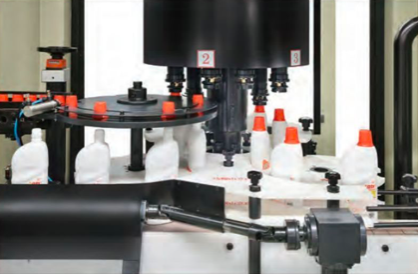
Bottle handling and closure area shown on RUNTECH’s specified equipment page.
The image illustrates why a finished package should be considered, not just the nominal bottle volume. The exact closure and dimensional fit still require confirmation for the proposed cleaner.
Read the ≤4,000 bottles/hour figure with its 1 L condition
RUNTECH publishes a capacity of ≤4,000 bottles per hour when filling 1 L. The 1 L condition is part of the figure and should remain attached to it whenever the line is evaluated.
PUBLISHED CAPACITY
≤4,000 bottles/hour
At 1 L filling; actual application conditions to be confirmed.
For a toilet bowl cleaner filling line, the product page does not publish separate output rates for other fill volumes or individual formulations. A nominal 1 L bottle also does not confirm the target fill quantity for a specific product, so the ≤4,000 bottles/hour figure should not be extrapolated to 500 ml, 750 ml or another filling target without confirmation.
Confirm the actual cleaner and bottle before specifying the line
Bleach and toilet bowl cleaner are both named on the equipment page, but their formulations should be reviewed separately. The fact that a machine is described for corrosive liquids does not establish compatibility with every formulation or concentration.
RUNTECH states that the equipment uses non-metallic corrosion-protection materials for liquid-contact parts. However, its published description does not include a complete compatibility chart for individual bleach or toilet cleaner products. Actual chemical properties and the intended filling conditions should therefore be discussed before specifying the line.
RELATED RUNTECH EQUIPMENT
Corrosive Liquid Filling, Capping and Labeling Machine
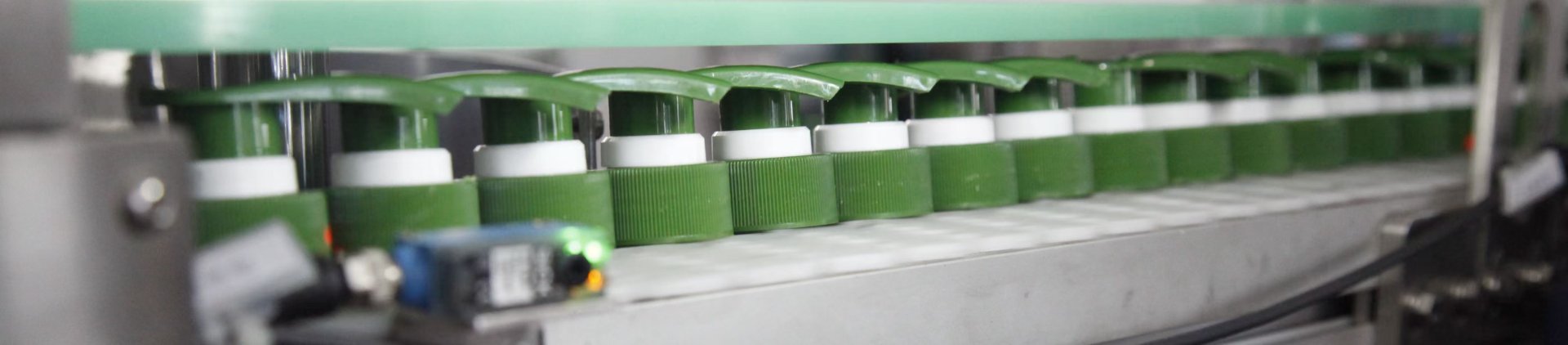
This is the specified equipment for the application discussed here. Its published bottle dimensions and 1 L output condition make it a relevant reference for a compatible bottle format; actual liquid and package suitability still require review.
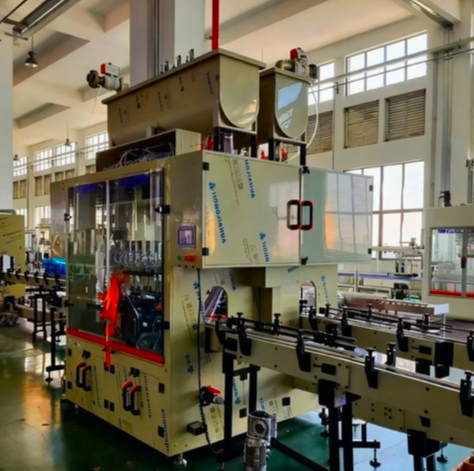
Actual equipment image from RUNTECH’s corrosive liquid filling machine page.
For each proposed cleaner, the most useful supporting information is concise: the actual formulation or product sample, bottle drawing and external dimensions, closure sample, label dimensions, and the target filling quantity. These items let the proposed package be assessed against the published equipment information without assuming an unverified fit.
Questions before the next step
Does a 1 L capacity confirm bottle compatibility?
No. Nominal capacity does not establish dimensional compatibility. The actual bottle needs to be assessed against the 40–100 mm diameter and 80–230 mm height ranges, with its shape and closure reviewed separately.
Can the 1 L output figure be applied to another volume?
Not without confirmation. The published capacity of ≤4,000 bottles/hour refers specifically to 1 L filling; output under another filling condition has not been established by that figure.
What should be confirmed for bleach and toilet cleaner separately?
Each formulation’s relevant chemical properties and compatibility requirements, its target filling quantity, and the actual bottle, closure and label arrangement should be reviewed individually.
NEXT STEP
Review the actual bottle and cleaner with RUNTECH
Before specifying the line, have RUNTECH review the actual cleaner, bottle dimensions, closure and target fill quantity against the proposed configuration.
| Discuss Your Cleaner Filling Application | View the Corrosive Liquid Filling Line |